
Last updated: September 5, 2026
Golf tournaments are one of the highest-yield fundraising vehicles a charity can run — because you’re combining a $50-100 per player registration fee with a captive audience for 4-5 hours who came expecting to spend more. Your job as an organizer is to give them fun, memorable ways to open their wallet again. That’s what these 25 ideas are for.
I’ve played in a lot of charity tournaments over the years. Some raised $5,000. Some raised $50,000. The difference wasn’t the cause, the course, or the size of the field. It was how many revenue streams the organizer built into the day. This is a golfer’s-eye view of what actually works — from the games we love to buy into on the course, to the sponsorship structures that get local businesses to say yes.
Quick Verdict: The Highest-Margin Golf Fundraiser Ideas
Not every fundraiser idea is created equal. If you have time for only a handful, these are the highest-margin — they cost almost nothing to run and every team will buy in:
- Mulligans, Foot Wedges, Throws, Gimmie Rope — bundled as a “team advantage pack” for $100-150 per team. Nearly 100% take rate.
- 50/50 raffle — half the pot to the winner, half to the charity. Universal appeal, no cost to run.
- Hole sponsorships — sell as many as you have holes and then some. $250-500 per sponsor is standard.
- Hole-in-one contest with a sponsored prize — vehicle from a local dealership is the buzz-generator. The dealership pays for insurance, you charge golfers $10 each for the shot.
- Silent auction — donated items, no cost, high spend. Best-run tournaments raise 20-40% of their total from the auction alone.
Below, the full 25 ideas, organized by category, with the “how to actually run it” details on each one.
Why Golf Tournaments Work as Fundraisers
Before the ideas, understand why the format works. Golfers self-select into a specific demographic: relatively affluent, willing to spend $50-100 on a Saturday round without thinking about it, and largely coming to the event to have fun rather than to scrutinize where their money goes. Combine that with 4-5 hours of captive audience, natural on-course promotional real estate, and the community’s built-in willingness to support local causes, and you have a much richer environment than a typical fundraising dinner or auction.
The trade-off: tournaments require real planning time. A well-run event typically has 6-9 months of runway. If you’re organizing one for the first time and you’re less than 4 months out, be honest about what’s realistic — sponsor outreach, course reservation, and marketing all take time.
Tournament Formats You Can Use
The format you choose affects who signs up. Most charity tournaments use a scramble because it’s inclusive of beginners and pace-of-play is fast. Here are the four common options:
- Scramble (best for fundraisers). All four players on a team hit from the tee, the group picks the best shot, and everyone plays from that spot. Repeats until the ball is holed. Fast, fun, beginner-friendly, and everyone contributes even if their swing is rough. Approximately 80% of charity tournaments use this format.
- Best Ball. Each player plays their own ball; the lowest score on each hole counts as the team score. Slower than scramble, more competitive, better for a low-handicap field.
- Alternate Shot. Team members take turns hitting the same ball. Fun for corporate team-building, brutal for beginners. Rarely used for charity tournaments.
- Shamble. Everyone hits from the tee, the group picks the best drive, then everyone plays their own ball into the hole from there. Compromise between scramble and best ball.
Unless your field is stacked with single-digit handicaps, go scramble. Faster rounds mean more time for the post-round dinner and auction, which is where a lot of your revenue comes from.
Sell Ways to Lower a Team’s Score
Here’s the beauty of these ideas: they cost you almost nothing. No donations needed, no fancy prizes. Golfers pay to bend the rules a little in their favor, and every dollar goes to your cause.
These sell best as a bundled “team advantage pack.” A few example price tiers I’ve seen work:
- $100 for 2 mulligans and a foot wedge
- $120 for 2 mulligans, a foot wedge, and a throw
- $150 for mulligans, foot wedge, throw, and gimmie rope
Every team will buy in. The trick is bundling — offer a straight menu of “$25 per mulligan” and you’ll get sporadic sales; offer three package tiers with clear escalation and you’ll get a stack of $150 bills. Adjust the tier prices based on the demographic of your field; corporate teams will pay more, community teams less.
1. Mulligans
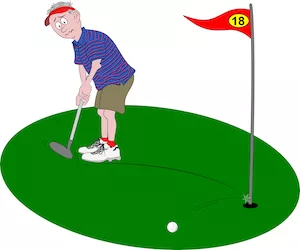
A mulligan is a do-over for a golfer — hit a bad shot, take a mulligan, hit again. Not allowed in real golf, but every golfer knows what it is and every scramble team wants a couple.
Sell them individually or as part of the team pack. Two per player (eight per team) is a common allocation. Easy $100 per team.
2. Foot Wedge
A foot wedge is an “allowed” kick of the ball — useful for getting out of a bad spot on the course. Not as valuable as a mulligan, so sell one per team rather than per player. Include it in the team advantage pack.
3. Throw
A throw lets one player on the team pick up the ball from its current spot and throw it — one time in the round, no penalty stroke. If a good arm holes it out, that shot counts as the final stroke of the hole. Sell one throw per team. The novelty of it makes people willing to pay.
4. Gimmie Rope
Possibly the best fundraiser idea I’ve seen at a tournament, but only a few organizers use it. Gimmie rope lets a team declare a putt “in the hole” if the ball is within a specific distance from the cup. You sell them the rope; they cut and use it during the round.
Two ways to run it:
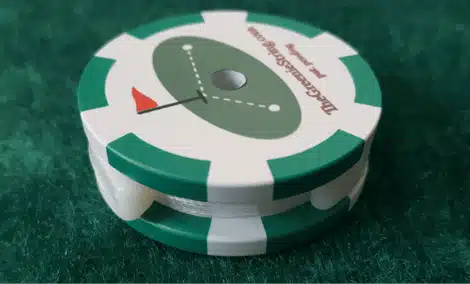
Option 1 — Reusable Greenie Strings
Sell teams a set number of one-foot gimme strings for $20-25 per team. You can pick up reusable Foot Gimme Strings from Objective Golf for around $4 each. As you sell them to teams, remind everyone to return them at the end of the round so you can reuse them next year. Much lower hassle than option 2.
The strings are pre-measured to 1 foot. If a team’s putt lands within a string’s length of the cup, they can use one of their gimme strings and count the ball as holed. Sell each team 2-4 strings depending on your tournament length and desired revenue.
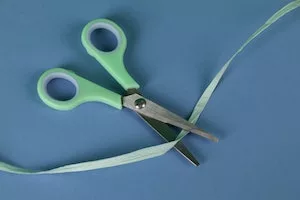
Option 2 — DIY Scissors and Twine
Sell teams a specific length of gimmie rope — 12 feet is typical — for $20 minimum. You’ll need ziplock bags, some cheap twine (~$5), and scissors (~$22 for a 24-pack).
Have each team’s ziplock ready at registration with their 12 feet of twine and a pair of scissors. On any hole, if their ball comes up short of the cup, they can cut off the equivalent length of twine and count the ball as holed. Each cut is thrown out — once they run out of twine, no more gimmies. Remind them to return the scissors, which you can reuse next year or donate to a local school.
5. Ball Drop
Sell numbered golf balls (like a raffle ticket) for $10-25 each, in advance and on event day. At the end of the tournament, drop all the balls from a crane, cherry picker, or helicopter onto a target on the course. Closest ball to the target wins the prize (typically the largest single individual prize of the day — a fitting, a set of clubs, a trip). Every ball sold is a straight donation minus the prize cost.
A local business almost always sponsors the crane or helicopter cost. Advertise the ball drop heavily in your pre-event marketing — the visual spectacle draws a crowd and boosts pre-sale.
On-Course Contests
On-course contests do two things at once: they generate excitement mid-round, and they give you sponsorship inventory. Sell each contest to a local business as an advertising opportunity, then charge the golfers small entry fees where it makes sense.
6. Hole-in-One Contest
For each par-3 on the course, you can get a local business to sponsor a hole-in-one prize. The business puts up something significant on the line:
- A vehicle from a car dealership
- An ATV or boat from an outdoor sports shop
- A new set of clubs from a local golf shop
- A vacation package from a travel agency
The business buys hole-in-one prize insurance (typically $200-500 for a policy that covers the prize if someone hits an ace). Almost nobody wins these, so the business rarely pays out — they get the marketing exposure without the risk. If a car dealership is hesitant to pay a sponsorship fee, structure it differently: they cover the insurance, you charge each golfer $10 for the chance at the shot, and if someone wins the car, it becomes a marketing story for the dealership. Everyone gets what they want.
7. Closest to the Pin
Standard par-3 contest — winner is whoever hits their tee shot closest to the hole. Run one for men and one for women. Sponsor it with a local restaurant or business (“Closest to the Pin, sponsored by [Local Restaurant]”) — the winner gets a $50-100 gift card, the restaurant gets on-course signage and mentions during the awards ceremony. Don’t charge golfers for this one; it’s a free contest funded by the sponsor.
8. Long Drive
Pick a straight, long hole. Winner hits the longest drive that stays in the fairway. Separate contests for men and women. Sponsor it the same way as closest to the pin. Prize is usually a gift card or in-kind donation. No charge to golfers for participation.
9. Putting Contest
Held before or after the round on the practice green. Golfers pay $5-10 to enter, sink a long putt or a series of putts, and win a prize. Because it’s held off the course, you can invite spectators and non-golfers to participate too — a good way to boost engagement from dinner-only attendees.
10. Chipping Contest
Set up during any delay in the round or as a pre-round warm-up activity. Golfers pay $5-10 to hit three chip shots at a target from 25 yards. Closest to the target wins. Good use of dead time and cheap to run.
11. Beat the Special Guest / Beat the Pro
Set up a special guest — a local golf pro, celebrity, board member, or well-known personality — on a specific hole. Golfers pay $10-20 to compete head-to-head on that hole. Winner gets a prize; losers’ entry fees fund the charity. The person on the hole doesn’t have to be a legitimate pro — a local news anchor, a college athlete, or your executive director works just fine. It’s the head-to-head novelty that sells.
Sponsorship Packages
Sponsorships are usually your single largest revenue category. Structure your sponsorship tiers ahead of time and communicate them in your event marketing — sponsors need to know the packages before they commit. I’ve played tournaments where the only pre-event materials were a flyer with the cost per team; if I’d known there were sponsorship tiers with team-entry included, I would have taken it back to my company. Don’t leave that money on the table.
12. Hole Sponsorship
The workhorse sponsorship. You are not limited to 18 sponsors — you can sell multiple per hole. Sponsors get their business name on a sign at the tee box. Typical price: $200-500 per hole depending on your market. Share the opportunity on social media well ahead of time; local businesses are the target audience.
13. Diamond / Elite Sponsorship
Higher-tier sponsors get exclusive holes (their sign is the only sign on holes 1, 9, and 18), larger signage, a mention during the dinner, and often a team entry included. Limit to 2-3 sponsors at this tier. Price is typically $1,500-3,000. These sponsors also frequently provide swag for goodie bags (branded golf balls, tees, hats).
14. Premier / Title Sponsor
If you land a major sponsor for the entire tournament, congratulations. They get top billing everywhere — the tournament is “[Company Name] Charity Classic,” their logo is on every printed piece, they get public thanks multiple times during the day. Price is $5,000-10,000+ depending on your event’s scale. Often includes 2 team entries plus a hole.
15. Pin Flag Sponsorship
Custom pin flags with a sponsor’s logo, replacing the course’s regular flags for the day. Golfers see the sponsor’s brand on every green all round. Sell one sponsor for all 18 pins, or split front-nine and back-nine, or sell per hole. Bonus: the flags become keepsakes for the sponsor after the event. Custom pin flags cost $15-30 each to produce; the sponsor pays $1,500+ for all 18. Great margin.
16. Hole-in-One Sponsor
Distinct from the “hole-in-one contest” — this is the business (car dealership, outdoor shop, jeweler) that provides the prize. Sell it as an add-on to a regular hole sponsorship, or negotiate the deal described in the contest section above (they pay for insurance, you charge golfers $10 for the shot).
17. Matching Donation Sponsor
A sponsor pledges to match donations up to a set cap. Announce it at check-in and during the awards ceremony (“Every dollar donated today will be matched by [Sponsor], up to $10,000”). The urgency plus the multiplier drives the total higher than either would separately. Sponsor gets visible credit for the multiplier effect, which they love.
Raffles and Auctions
18. 50/50 Raffle
Sell tickets throughout the day. Half the pot goes to the winning ticket, half to the charity. Extremely popular because the win is guaranteed and the amount can be substantial. Sell tickets at registration, before the round, at the turn, and at the dinner. Check local raffle laws — some states require permits, and online sales are restricted in many jurisdictions.
19. Silent Auction
Solicited donated items displayed at the pre- or post-round dinner. Bidders write bids on sheets next to each item; highest bid at close wins. Best-performing tournaments raise 20-40% of their total revenue from the auction. Items work best when they’re experiences (foursome at a private course, celebrity golf lesson, weekend getaway) rather than physical goods. Push your board and volunteers hard to solicit items — this is where the money is.
20. Merchandise Entry Tickets
Instead of one big raffle, run 10-20 smaller raffles with sponsor-donated items — each raffle has its own ticket bucket. Golfers buy tickets and drop them in the bucket for the item they want. Cheap tickets ($1 each or $20 for a stack) mean high volume. Golfers love this because they can target the items they actually want; you love it because the volume adds up quickly.
21. Pot Shot Raffle Tickets
A twist on the standard raffle: sell tickets for a single high-value item (a set of clubs, a golf trip, a big-ticket electronic). Limit ticket sales to a set number (say 100 tickets at $50 each) so the odds are known and the ceiling is defined. Sells out fast when the prize is right. Great fit for a Premier Sponsor’s flagship item.
Event-Wide Revenue Enhancers
22. In the Money
Sell teams into a pooled “In The Money” bracket for $50-100 per team. The top few finishing teams (typically 1st, 2nd, 3rd) split the pool of buy-ins. Adds a competitive edge and captures money from teams that want a shot at a payout. Position it as a supplement to the standard tournament prizes.
23. Skins Game
Teams buy into a skins pool for $50-100. On each hole, the team with the lowest unique score wins that hole’s “skin.” If two or more teams tie for lowest, no one wins that skin — it rolls over to the next hole. The pot is split between winning teams at the end. High-margin because it takes no additional resources to run. Announce running skins totals during the round to boost engagement.
24. Pledge Drive
Golfers get their friends and family to pledge donations tied to their performance in the tournament. “Pay $5 for every birdie I make,” or “Pledge $50 if my team wins closest to the pin.” Extends the fundraising reach beyond the tournament attendees themselves. Set this up with a simple online form or use your donation platform of choice.
25. VIP Package
An upsell on the standard team registration. VIP teams get premium parking, an exclusive gift package, complimentary raffle tickets or mulligans included, and sometimes a meet-and-greet with the special guest or beneficiary. Price at $200-500 above the standard team fee. Even a 15-20% take rate on VIP upgrades adds up fast.
Planning Timeline: 6-9 Months Out
The most common mistake I see with first-time organizers is starting too late. Here’s a realistic timeline for a well-run event:
- 9 months out: Book the course and lock in the date. Popular courses fill up 8-12 months in advance for weekend availability. Confirm the price and any nonprofit discounts — many courses offer reduced green fees or donate a portion of proceeds to the charity.
- 6 months out: Launch the event page or website. Begin sponsor outreach. Start soliciting silent auction items. Design your sponsorship tier packages.
- 4 months out: Open team registration. Start promotional campaigns via email, social media, and local press. Confirm major sponsors (Premier, Diamond).
- 2 months out: Finalize on-course contests, food/drink logistics, printed materials. Confirm hole-in-one insurance if applicable. Reach out to committed teams to sell add-ons (mulligans, VIP upgrades).
- 1 month out: Confirm final head count with the course. Print signage. Send reminder emails with the schedule of events. Line up volunteers.
- Event week: Confirm weather backup plan. Communicate day-of details to all attendees. Prep raffle inventory and check-in materials.
You can pull off a tournament in 3-4 months if you have to, but you’ll leave money on the table because sponsor outreach takes time to close.
How Much to Charge Per Golfer
Pricing depends on your market, course quality, and what’s included. Typical ranges:
- Municipal or public course, basic package: $75-125 per golfer
- Nicer public or semi-private course, includes lunch + dinner + goodie bag: $125-200 per golfer
- Private country club, premium package: $200-400+ per golfer
Sell as teams of four at a small discount ($300 individual → $1,100 for a team of four). Corporate teams often pay the higher end without blinking, so build the package so a corporate signup feels like a natural fit.
Don’t undersell. Golfers regularly pay $75-100 for a normal round; charity tournaments should command a modest premium for the cause + the extras (food, prizes, contests).
How to Attract Non-Golfers
Some of your best donors don’t play golf. Give them a way to participate:
- Sell dinner-only tickets at a lower price ($40-75)
- Invite non-golfers to enter the putting contest — no skill required, held on the practice green
- Include auction bidding access — they can bid on items without playing the round
- Offer a beginner golf clinic in the morning as a companion event
- Promote volunteer opportunities to community members who want to help without paying
Position the tournament as an event, not just a round of golf. Every non-golfer who buys a dinner ticket adds to the total.
Outreach: Getting Courses and Companies Involved
Two categories of outreach worth putting real effort into:
Golf Courses
Beyond the course you’re playing at, other local courses will often donate rounds or foursomes to the auction — they get exposure to your entire field of potential customers. Ask 5-10 courses in a 30-mile radius. Not everyone will say yes; enough will. Foursome vouchers at popular courses are usually the highest-bid items in a silent auction.
Golf Companies
Reach out to golf equipment brands, apparel companies, and accessories makers. Most have community-giving budgets and will donate product for goodie bags, raffle prizes, or auction items in exchange for a mention. Local shops (pro shops, big box golf retailers) are usually easier to close than corporate. Getting a set of TaylorMade wedges donated for a raffle prize goes further than any generic gift card.
Also encourage your players to work through their own companies. If someone is playing in your event and their employer has a corporate-giving program, the sponsorship might already be waiting to be asked for. I’ve seen a corporate sponsor pay $7,500 for two teams and a hole simply because someone on the sponsored team took the packet back to their office.
Frequently Asked Questions
How much can a golf tournament fundraiser realistically raise?
Wide range depending on scale. A community tournament with 20 teams (80 golfers) at $100 per player plus modest sponsorships and add-ons typically raises $10,000-15,000 net. A larger event with 30+ teams, premier sponsors, and a strong silent auction can raise $50,000-100,000+. The single biggest lever is sponsorship — the tournaments raising the most money have secured 5-figure sponsors before opening team registration.
What tournament format is best for a fundraiser?
A scramble. About 80% of charity tournaments use this format, and for good reason — every player contributes, pace of play is fast (4 hours or less), and beginners aren’t embarrassed by their scores. Save best ball for competitive events with low-handicap fields. Alternate shot punishes beginners and rarely fits the fundraising context.
Which single fundraiser idea makes the most money?
The silent auction, at most tournaments I’ve been to. A well-run auction with 20-30 desirable items regularly raises 20-40% of total tournament revenue. Sponsorships are typically the largest single revenue category overall, but sponsorships are spread across many buyers; the auction is a concentrated push in a single evening. If time is limited, invest in getting great auction items — one weekend at a member’s beach house often outperforms a dozen $50 gift cards.
How far in advance should we start planning?
6-9 months is ideal. Popular courses book weekend availability 8-12 months out, and sponsor outreach — especially for larger sponsors — needs 3-4 months of runway to close. You can do it in 3-4 months if forced, but you’ll leave money on the table because sponsors who might have said yes with 6 months of lead time will decline with 6 weeks.
Do I need hole-in-one insurance?
Only if you’re putting up a significant prize (typically valued over $2,000) that requires an ace on a specific hole to win. Insurance runs $200-600 for a policy covering a single event. The prize sponsor usually pays the premium as part of their commitment. Without insurance, you could theoretically be on the hook for the full prize if someone hits it — unlikely, but not worth the risk on a big-value prize. Small prizes (up to a few hundred dollars) don’t need insurance; the risk is manageable.
Are golf tournament raffles legal in every state?
Raffles are regulated at the state level and rules vary considerably. Most states allow charitable raffles with a permit or nonprofit-status verification. Some states restrict online ticket sales even when in-person sales are legal. A few states prohibit certain raffle formats entirely. Check your state’s charitable gaming rules with your Secretary of State or Attorney General’s office before you run any raffle at your tournament. It’s a small step that saves major headaches.
Final Thoughts
The best golf tournament fundraisers all have one thing in common: multiple revenue streams stacked together. Sponsorships bring the base. Team registrations cover course costs. Add-ons (mulligans, VIP packages) pad the margin. Contests and games make the day memorable. The silent auction closes the evening on a spending crescendo. Every idea in this list is designed to layer on top of the others, not replace them.
If you’re organizing your first tournament, pick 8-10 of these ideas rather than trying all 25. Start with the highest-margin ones (mulligan pack, hole sponsorships, 50/50, silent auction, hole-in-one contest) and add complexity in year two. Every year that follows gets easier because you’ll have the templates, the relationships, and the reputation with the local sponsor community.
Good luck. Charity golf tournaments are legitimately fun to organize and hugely rewarding when they land — you’re spending a day at a golf course with your community and everyone leaves feeling like they did something meaningful. That’s a rare kind of event.