
Last updated: September 5, 2026
⛳️ We test golf balls on a Foresight GC3 launch monitor and on-course before recommending anything. Purchases through our links may earn us a small affiliate commission at no cost to you. See our affiliate disclosure.
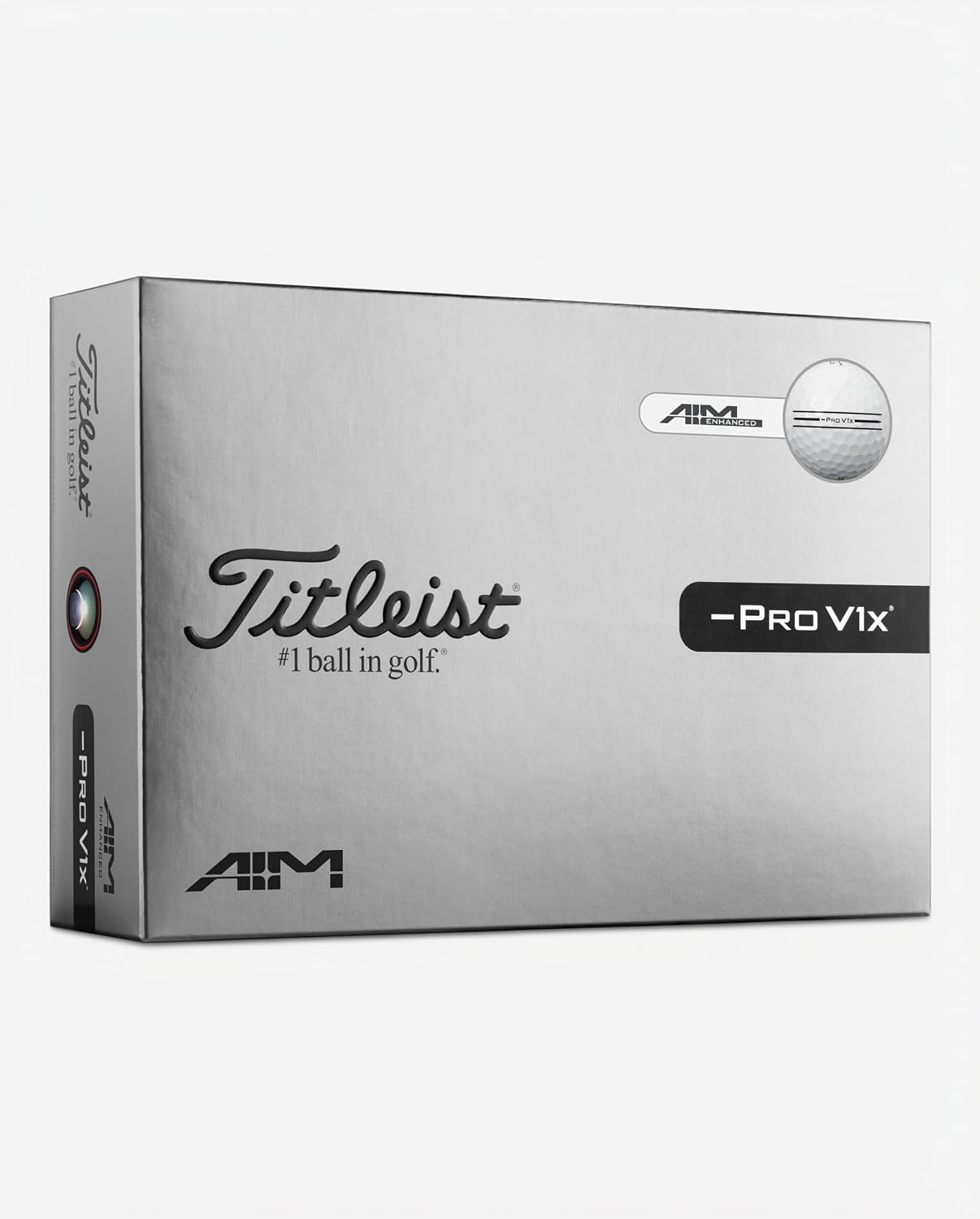
Quick Verdict: Is the Left Dash Worth It?
Yes, for a very specific golfer: 100+ mph driver swing speed who consistently over-spins the Pro V1x. Titleist explicitly designs Left Dash to fit only 5-10% of golfers — it’s a specialization ball that trades some greenside performance for maximum long-game distance and controlled spin. In the fit window, this is real free yardage. Outside it, you’re paying $57.99 a dozen for a ball that won’t help.
The 2026 Pro V1x Left Dash — released January 21, 2026 — is the first meaningful generation update in nearly 9 years. New high-gradient dual core, thicker casing, thinner urethane cover, new 348-tetrahedral dimple pattern. It flies a touch lower, spins a touch more around the green, and produces the longest drives of any Titleist ball. My personal-best drive on the GC3 was hit with this ball — details in the test section below.
Who The Left Dash Is For (And Who It Isn’t)
The Left Dash fits you if:
- Driver swing speed 100+ mph. The firm compression profile needs real clubhead speed to compress fully. Below 100 mph you leave distance on the table; Pro V1 or Pro V1x fits better.
- You over-spin the Pro V1x. Driver spin above 3,000 rpm consistently, or a typical miss that balloons, climbs, and drops short. Left Dash was engineered for exactly this pattern.
- You want Pro V1x-style flight with lower long-game spin. Left Dash keeps the high-flight window but tightens dispersion by cutting spin — not a fundamentally different ball shape.
- You’ll trade some greenside spin for tee-to-green efficiency. The core Left Dash tradeoff. Small wedge-check loss for meaningful driver distance.
The Left Dash is NOT for you if:
- Driver speed under 100 mph. The firm compression costs you ball speed. Pro V1, AVX, or Chrome Soft fit better at 85-100 mph.
- Greenside spin is your priority. Left Dash still produces less wedge spin than Pro V1x, TP5, or Chrome Tour X — the 2026 update narrowed the gap but didn’t erase it.
- Your Pro V1x is already working. No ballooning, spin under 3,000 rpm, tight dispersion — stay with Pro V1x. Left Dash won’t add value.
- You want a balanced tour ball. That’s what Pro V1 and Pro V1x are for. Left Dash is the specialization pick, not the everyday tour ball.
What’s New in the 2026 Left Dash — And Why It Took 9 Years
The 2026 Left Dash is the first real generation update since Left Dash’s public release in 2019 (originally a tour-only Custom Performance Option launched in 2017). Nine years without a meaningful redesign is unusual — most premium balls refresh every two years. The reason is instructive: Titleist scrapped a viable prototype because it wasn’t “Dash.”
An internally-designated “16” prototype went deep in development and offered more greenside spin plus softer feel — objectively “better” for most golfers. When Titleist put it in front of existing Left Dash players, the response came back clear: “That’s not Dash.” The 16 spun too much for the target audience and climbed the way Pro V1x does at high speed — exactly the problem Left Dash exists to fix. Titleist chose to protect the specialization rather than broaden appeal. Frederick Waddell, Titleist’s Director of Golf Ball Product Management, called it “a very viable, very good golf ball. But Dash players told us, ‘That’s not Dash.'”
What actually changed for 2026:
- New high-gradient dual core. Soft inner / firm outer “lava cake” structure (MyGolfSpy’s memorable description) with a bigger firmness differential. Produces low long-game spin without sacrificing feel.
- Thicker casing layer. Ionomer is the ball’s fastest, firmest material — Titleist used more of it as a speed lever without changing core compression.
- Thinner cast urethane cover. Offsets the thicker casing. The unexpected upside: the thinner cover pinches harder against the firm casing at impact, improving greenside spin slightly versus the previous generation.
- New 348-tetrahedral dimple pattern. Same 348 count as Pro V1x, but depths tuned specifically for Left Dash — tightens flight consistency, nudges trajectory slightly lower.
- Sidestamp identifier. Look for
–Pro V1x(dash mark preceding Pro V1x) on the side of the ball to confirm you have the current generation.
Independent 2026 reviews from National Club Golfer and Today’s Golfer both flagged the greenside improvement as the biggest year-over-year change. NCG specifically called it “insane short game spin” — a step up from the previous Left Dash while keeping the long-game profile intact.
Where the Left Dash Fits in the Pro V1 Family
Titleist offers four premium urethane tour balls, each tuned for a different fit profile. This is the fastest way to see whether Left Dash is your ball.
| Ball | Compression | Flight | Long-game spin | Best for |
|---|---|---|---|---|
| AVX | 78 | Lower | Lower | 85-110 mph, over-spinners wanting soft feel |
| Pro V1 | 92 | Mid | Mid | 95-110 mph, balanced tour performance |
| Pro V1x | 92 | Higher | Higher | 95-115 mph, high-flight tour spin |
| Pro V1x Left Dash | ~102 | Higher | Lowest | 100+ mph, over-spinner wanting maximum distance |
Left Dash and AVX are the two “specialization” balls in the family — neither tries to be balanced. AVX exists for the golfer who wants a lower-flying, softer-feeling premium urethane. Left Dash exists for the firmest, lowest-long-game-spin premium urethane. Both trade broad appeal for a specific edge. If your Pro V1x feels right in all conditions, don’t switch to Left Dash — the switch only makes sense with a documented over-spin problem.
Construction, Specs, and the Compression Story
4-piece construction: high-gradient dual core → thicker casing layer → thinner cast urethane cover → 348-tetrahedral dimple pattern. Manufactured at Titleist Ball Plant 3 in Massachusetts — the same Titleist-owned facility that produces Pro V1 and Pro V1x. Same materials tier, same quality control, same cast-urethane process. What differs is the tuning.
Left Dash is the firmest ball in the Pro V1 family. Catalog compression on the previous generation was ~102; Titleist has not published a public figure for 2026. MyGolfSpy Ball Lab measured the 2026 Pro V1x at 91.5 compression, so expect Left Dash to sit around 95-105 on the MGS gauge when they eventually test it. In practical terms:
- Needs 100+ mph driver speed to compress fully. Below that, the ball feels harder off the face and gives up ball speed to a softer, properly-fit alternative.
- Firm feel throughout the bag. Driver, iron, wedge, and putter give clear feedback — you always know when contact is clean. Some players love it, others find it too “clicky.”
- Reduced sidespin at high speeds. Firm compression plus the low-spin core design produces less curve and tighter dispersion — exactly what an over-spinning bomber wants.
If your Pro V1x feels too soft, Left Dash is probably the fit correction. If Pro V1x feels perfect, you’re outside the Left Dash window.
My GC3 Simulator Test — And the Longest Drive of My Life
I’ve hit thousands of balls on a Foresight GC3 launch monitor. Left Dash was the ball I was hitting the day I recorded my longest sim drive — a personal record I’ve never quite matched since. Anecdotal, yes; my swing is my swing and the ball was just in the tee that day. But it wasn’t a coincidence either — Left Dash is engineered specifically to reward the swing profile that produces bombs.
Testing the 2026 gen against the previous Left Dash and the standard Pro V1x, here’s what stood out:
- Driver ball speed: the 2026 gen gained ~1-2 mph over the previous Left Dash at my swing speed and matched Pro V1x within noise. The thicker casing does what Titleist claimed.
- Driver spin: lowest of the three, as expected. Around 200-300 rpm below Pro V1x on average, similar to the previous Left Dash. Low-spin engineering intact.
- Total distance: 4-8 yards longer than Pro V1x on average at my swing speed. Meaningful and consistent with independent testing.
- Trajectory: slightly lower than the previous Left Dash, which itself flew similar to Pro V1x. The new dimple pattern tightens the flight window without changing the fundamental shape.
- Irons: approach shots held sim greens acceptably. Iron spin lower than Pro V1x but not dramatically so — enough for most stopping-power situations, less rollout control on firm-and-fast conditions.
- Wedges (56°, half swing): the 2026 update earns its keep here. Thinner urethane produces meaningfully more check than the previous Left Dash. Still short of Pro V1x on absolute maximum spin, but the gap is smaller.
- Putting: firm off the face, clear “clicky” feedback. Some players use that for distance control; others don’t like it.
- Durability: despite the thinner cover, Left Dash holds up like any premium cast-urethane ball — several rounds on clean strikes.
On-course, the numbers deliver what they promise: bombing drives, controllable irons, respectable greenside behavior for a specialty low-spin ball. Left Dash isn’t trying to become a Pro V1x with lower spin — it’s still a specialization, still trading some short-game spin for tee-to-green efficiency. The 2026 update just means the tradeoff is less severe than it used to be.
Pros and Cons
Pros
- Longest ball in Titleist’s tour lineup
- Lowest driver spin — reduces ballooning and curve magnitude
- 2026 update: faster core, thicker casing, better greenside spin
- Same Ball Plant 3 quality as Pro V1x
- Cult tour credibility — U.S. Open + U.S. Amateur winning ball
- Optic Yellow high-visibility variant available
Cons
- Fits only 5-10% of golfers (Titleist’s own designation)
- Firm feel that some players find too clicky
- Greenside spin still trails Pro V1x, TP5, Chrome Tour X
- Needs 100+ mph driver speed to compress properly
- $3 more per dozen than Pro V1 or Pro V1x
- No MGS Ball Lab measurement of the 2026 generation yet
Price and Where to Buy
Titleist MSRP is $57.99 per dozen — $3 above Pro V1 and Pro V1x. Real-world retail is $52-58. Available at Amazon, PGA Tour Superstore, Golf Galaxy, Dick’s Sporting Goods, and titleist.com. Look for the –Pro V1x sidestamp to confirm the current 2026 generation and not a leftover previous-gen ball or a regular Pro V1x.
Tour context worth noting: roughly 5-6 PGA Tour players use Left Dash per event. Notable wins include a U.S. Open and a U.S. Amateur — Titleist specifically cites the U.S. Open at Pinehurst No. 2 as validation that the ball’s short-game performance holds up at the highest level. Bryson DeChambeau famously gamed the previous Left Dash during his high-speed period. That’s the ball’s cultural marker: the golfer who prioritizes distance above all plays this ball.
How the Left Dash Stacks Up Against 3 Competitors
Titleist AVX — softer, lower-flying specialization
The other Titleist specialization ball. AVX is softer (compression 78), lower-flying, and produces less driver spin than Pro V1 — but not as low as Left Dash. Priced $8 lower at $49.99. Pick AVX for 90-100 mph swings that want softer feel with tuned low spin. Pick Left Dash for 100+ mph with a documented ballooning problem.
Callaway Chrome Tour X — firm low-spin premium alternative
Callaway’s firmest, lowest-spinning tour ball. Similar performance profile to Left Dash but with Callaway’s engineering signature (slightly higher launch, different feel). $54.99. Pick Chrome Tour X if you prefer Callaway’s feel or want to save $3. Pick Left Dash for Titleist’s specific low-spin tuning and Ball Plant 3 quality.
TaylorMade TP5x — 5-piece firm low-spin
TaylorMade’s firmest premium urethane at ~97 measured compression. 5-piece construction gives slightly more separation between driver spin (low) and greenside spin (higher than Left Dash). $54.99. Pick TP5x if greenside spin matters slightly more; pick Left Dash if driver-distance efficiency is the priority.
Related BTG guides: our best low-spin golf balls guide anchors on Left Dash, our best golf balls for distance covers the premium-distance context, and our Titleist AVX review covers the other Titleist specialization ball.
Frequently Asked Questions
Is the Titleist Pro V1x Left Dash any good?
Yes for a specific fit — 100+ mph driver swing speed with a Pro V1x that over-spins. Titleist explicitly designates Left Dash to fit 5-10% of golfers. In the fit window, it produces the longest tour-ball distance and tightest dispersion. The 2026 generation improved greenside spin and gained ball speed without breaking the specialization.
What is the compression of the Left Dash?
Firm — approximately 102 on Titleist’s catalog rating, making it the firmest ball in the Pro V1 family (Pro V1x measures 91.5 on MyGolfSpy’s gauge for reference). MyGolfSpy Ball Lab has not yet published a 2026 measurement; expect 95-105 range when tested. Firmness is intentional — the ball needs 100+ mph driver speed to compress properly.
What swing speed is the Left Dash designed for?
Driver swing speeds 100+ mph, sweet spot 105-115 mph. Below 100 mph the firm compression costs ball speed. Above 100 mph with a documented over-spin problem (driver spin above 3,000 rpm or ballooning drives), Left Dash is the fix. Titleist positions it as fitting “5-10% of golfers.”
Pro V1x Left Dash vs Pro V1x — which should I play?
If your Pro V1x driver spin is normal (2,200-2,800 rpm) and launch/land look right, stay with Pro V1x — Left Dash won’t help and will cost greenside spin. If Pro V1x spin runs above 3,000 rpm, or you’re seeing ballooning flight or wide dispersion, Left Dash is engineered exactly for that fix. The 2026 gen closes some of the greenside gap, so the switch costs less than it used to.
What’s new in the 2026 Left Dash?
First real update in nearly 9 years (released January 21, 2026). New high-gradient dual core, thicker casing layer for speed, thinner cast urethane cover for slight greenside gain, and a new 348-tetrahedral dimple pattern tuned specifically for Left Dash. Longer and slightly better around the greens without changing the specialty low-spin identity.
Which tour players use the Left Dash?
Roughly 5-6 PGA Tour players use Left Dash per event — it varies week to week. Bryson DeChambeau famously gamed the previous Left Dash during his high-swing-speed period. Notable wins include a U.S. Open (at Pinehurst No. 2) and a U.S. Amateur. Left Dash is a specialization ball on tour, not a broader-adoption ball like Pro V1 or Pro V1x.
Final Verdict
The 2026 Pro V1x Left Dash is a legitimately good ball for a very specific reader: 100+ mph driver swing, over-spins the standard Pro V1x, wants the longest tour ball available, and accepts slightly reduced greenside spin as the tradeoff. If that’s you, Left Dash is real free distance — the 2026 update makes the ball better in every category that matters without breaking what made Left Dash worth playing.
Below 100 mph, Left Dash costs you distance. Above the fit window without a documented over-spin problem, it costs you greenside performance. The 9-year wait tells you something about how carefully Titleist protects Left Dash’s specialization — they scrapped a viable prototype because it wasn’t “Dash.” For the 5-10% of golfers who fit the profile, this is the ball. For the other 90-95%, look at Pro V1, Pro V1x, or AVX.