
Last updated: September 8, 2026
⛳️ Our experts spend hours testing golf balls on the launch monitor, on-course, and reading every independent lab report we can find, before recommending anything. When you make a purchase through one of our links, we may earn a small affiliate commission, at no cost to you. Find out more about how we test products.
Quick Verdict: The Short Answer
If you’re new to golf, the single most useful thing I can tell you is this: you will lose most of the balls you buy this year. That one fact should drive your entire decision. Not compression numbers, not layer counts, not what the guy on TV plays. Every ball below costs $30 per dozen or less, because spending more than that right now is money you’re leaving in the woods.
- Best Overall: Titleist TruFeel — soft feel, alignment stripe, a name you trust, $30
- Best Cheap Ball to Lose: Wilson Duo Soft — 37 compression, $20, softest thing on the shelf
- Best Feel for Slow Swings: Callaway Supersoft — 44 measured compression, hybrid cover, $25
- Best Distance Under $20: TaylorMade Noodle Long & Soft — roughly a dollar a ball
- Best Straight Flight: Bridgestone e6 Soft — the anti-slice ionomer
- Best Budget Name Brand: Srixon Soft Feel — straightest of the soft ionomers
- Best Delivered-to-Your-Door Value: Vice Drive — $17 per dozen in bulk
- Cheapest Playable Ball: Callaway Warbird — $20, tough as a rock
- Best Step-Up (with one big caveat): Kirkland Signature Performance+ — real urethane at $25
My honest recommendation for a true beginner: buy three dozen Noodles or a six-pack of Vice Drive and don’t think about golf balls again until next season. Then read the “should you just play used balls” section below, because that’s probably the smartest thing on this page.
Does the Golf Ball Even Matter When You’re a Beginner?
Mostly no. And you’re not going to read that anywhere else on this search page.
Ball fitting works at the margins — a few hundred rpm of wedge spin, a yard or two of carry, how the ball feels off the putter face. Those margins are real. I’ve measured them on my own launch monitor.
But margins only matter when everything upstream is repeatable. If your contact varies by half an inch on the face from swing to swing, that variance is worth 20 or 30 yards. The ball is worth two. You can’t feel a two-yard difference inside a thirty-yard scatter pattern.
So what does the ball do for you right now? Three things, in order:
- It costs you money or it doesn’t. Losing six $4 balls in a round is $24. Losing six $1.60 balls is $10. Over a season that’s the price of a decent wedge.
- It curves less or it curves more. A low-spin two-piece ball amplifies your slice less than a high-spin urethane ball does. Same swing, less curve, more balls in play.
- It survives or it doesn’t. Thin wedges, cart paths, sprinkler heads. Softer covers scuff faster.
That’s it. Everything else on the box is aimed at a golfer you aren’t yet. Related – if you want the mechanics behind what makes a ball do what it does, I broke it down in golf ball construction.
What Actually Matters in a Beginner Golf Ball
Four things, and they’re not the four things the marketing talks about.
1. Price per ball, not price per dozen. Divide by twelve and think in those terms. A Pro V1 is $4.75 a ball. A Noodle is $1.67. A Vice Drive bought six dozen at a time is $1.42. When you’re losing four or five a round, that gap is the whole story.
2. A two-piece ionomer or Surlyn cover — not urethane. Urethane’s advantage is greenside spin, and greenside spin requires clean, descending wedge contact to happen at all. If you’re thinning or fatting most of your wedges, that spin never gets generated. You paid an extra $25 a dozen for a feature your swing can’t switch on yet.
3. Low driver spin. This is the one genuine performance lever available to a beginner. Sidespin is what curves the ball, and total spin amplifies sidespin. Two-piece ionomer balls spin less off the driver, so the same sliced swing finishes ten yards closer to the fairway. More balls in play, fewer lost, lower score. It compounds.
4. Visibility. Nobody ranks balls on this and it’s the most practical consideration on the list. A yellow ball you find is worth more than a white ball you don’t.
What doesn’t matter: dimple count, layer count, the word “tour” anywhere on the box, and — I’ll say this louder — the compression number. Low compression does not create distance. That claim has been on golf ball boxes for twenty years and independent lab testing has never supported it. Compression changes how a ball feels at impact, which is worth something, because feel drives confidence. It just isn’t yards.
One more thing worth knowing before you compare spec sheets: compression numbers aren’t comparable between brands. Each manufacturer measures on its own gauge. Callaway markets the Supersoft at 50 while MyGolfSpy’s Ball Lab measured it at 44. TaylorMade calls the Noodle “Long & Soft” at a catalog 55; the same lab measured 69. Trust the bands (Soft / Mid / Firm) and ignore the digits.
Best Golf Balls for Beginners 2026 (At a Glance)
| Ball | Cover | Compression | Price/doz | Best for |
|---|---|---|---|---|
| Titleist TruFeel | Ionomer | Soft (70 measured) | ~$30 | Best overall — the sensible default |
| Wilson Duo Soft | Ionomer | Ultra-soft (37) | ~$20 | Softest feel at the lowest price |
| Callaway Supersoft | Hybrid | Soft (44 measured) | ~$25 | Best short-game feel under $30 |
| TaylorMade Noodle | Surlyn | Mid (69 measured) | ~$20 | Best distance per dollar |
| Bridgestone e6 Soft | Ionomer | Soft (40) | ~$24 | Straightest flight for slicers |
| Srixon Soft Feel | Ionomer | Soft (60) | ~$25 | Best budget name brand |
| Vice Drive | Ionomer | Firm (95) | ~$25 ($17 bulk) | Best DTC value + durability |
| Callaway Warbird | Ionomer | Mid (90) | ~$20 | Cheapest genuinely playable ball |
| Kirkland Sig. Performance+ | Urethane (3-piece) | Firm (95) | ~$25 | Step-up value — but not if you slice |
1. Titleist TruFeel — Best Overall Beginner Ball
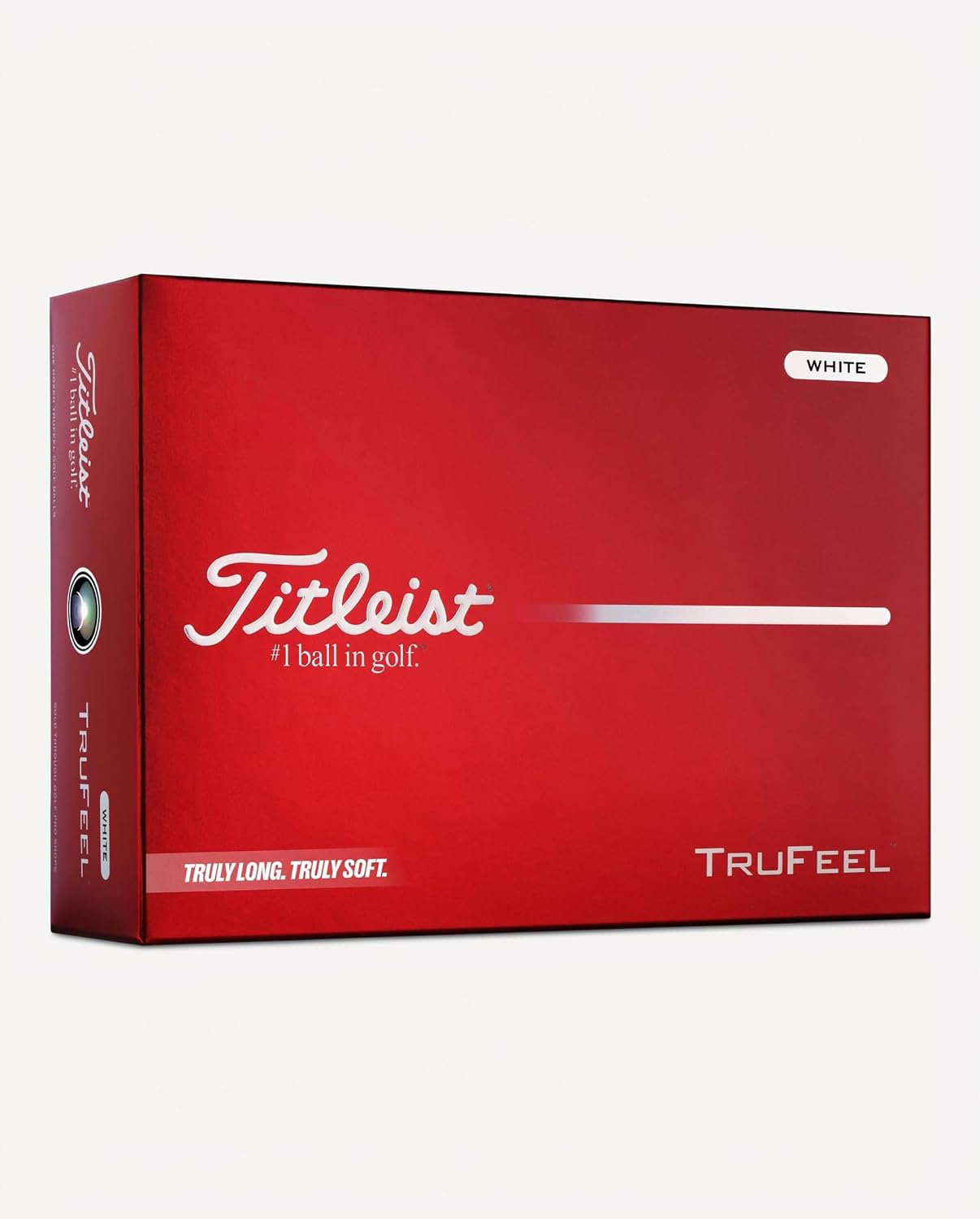
If you want one recommendation and no further thinking, this is it. The TruFeel is a two-piece ionomer ball with Titleist’s TruFlex cover, which sits somewhere between plain ionomer and urethane on feel. It’s genuinely soft off the putter, holds a mid flight that behaves in wind, and it comes from the company whose quality control is the benchmark for the industry.
The red alignment stripe printed on every ball is a small thing that does real work. If you’re new and struggling to aim putts, having a line already on the ball removes one decision.
Best for: Swing speeds between 70 and 95 mph. Anyone who wants a trusted brand without the tour-ball price. First-time buyers who don’t want to research nine options.
Honest weakness: at $30 it’s the most expensive ball on this list, and MyGolfSpy measured its actual compression at 70 rather than the catalog 60 — so it’s not as soft as the name implies. If you’re losing four a round, the Noodle or Warbird gets you further per dollar.
Related – full teardown in my Titleist TruFeel review, including launch monitor numbers.
2. Wilson Duo Soft — Best Cheap Ball to Lose
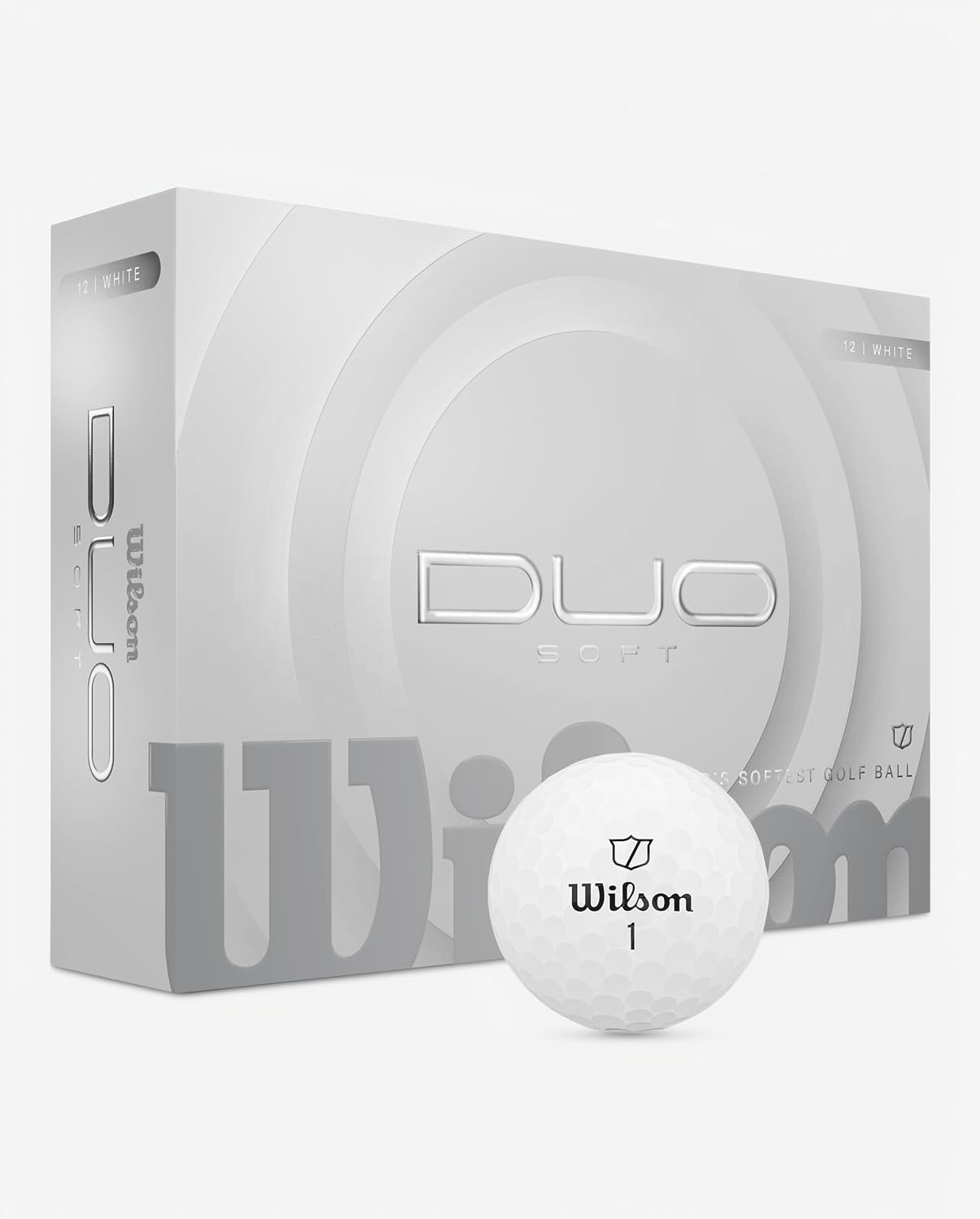
Wilson invented the soft-feel category back in 2011 and they’re still the softest thing on the shelf. The current Duo Soft sits at 37 compression, which is lower than anything else here, and it launches high — genuinely helpful if you’re still learning to get the ball airborne with mid irons.
At $20 a dozen it’s also cheap enough that watching one disappear into a pond registers as mildly annoying rather than infuriating. That matters more than people admit.
Best for: Swing speeds 70 to 90 mph. Golfers who struggle to get shots airborne. Anyone who prioritizes soft feel and low price over everything else.
Honest weakness: greenside spin is near the bottom of this list, and it’s not alone at this price. Supersoft, Soft Feel, e6 Soft and TruFeel all compete in the same $20-30 window with functionally similar performance. Buy a sleeve of two and putt with both before committing to a box.
3. Callaway Supersoft — Best Feel for Slow Swings
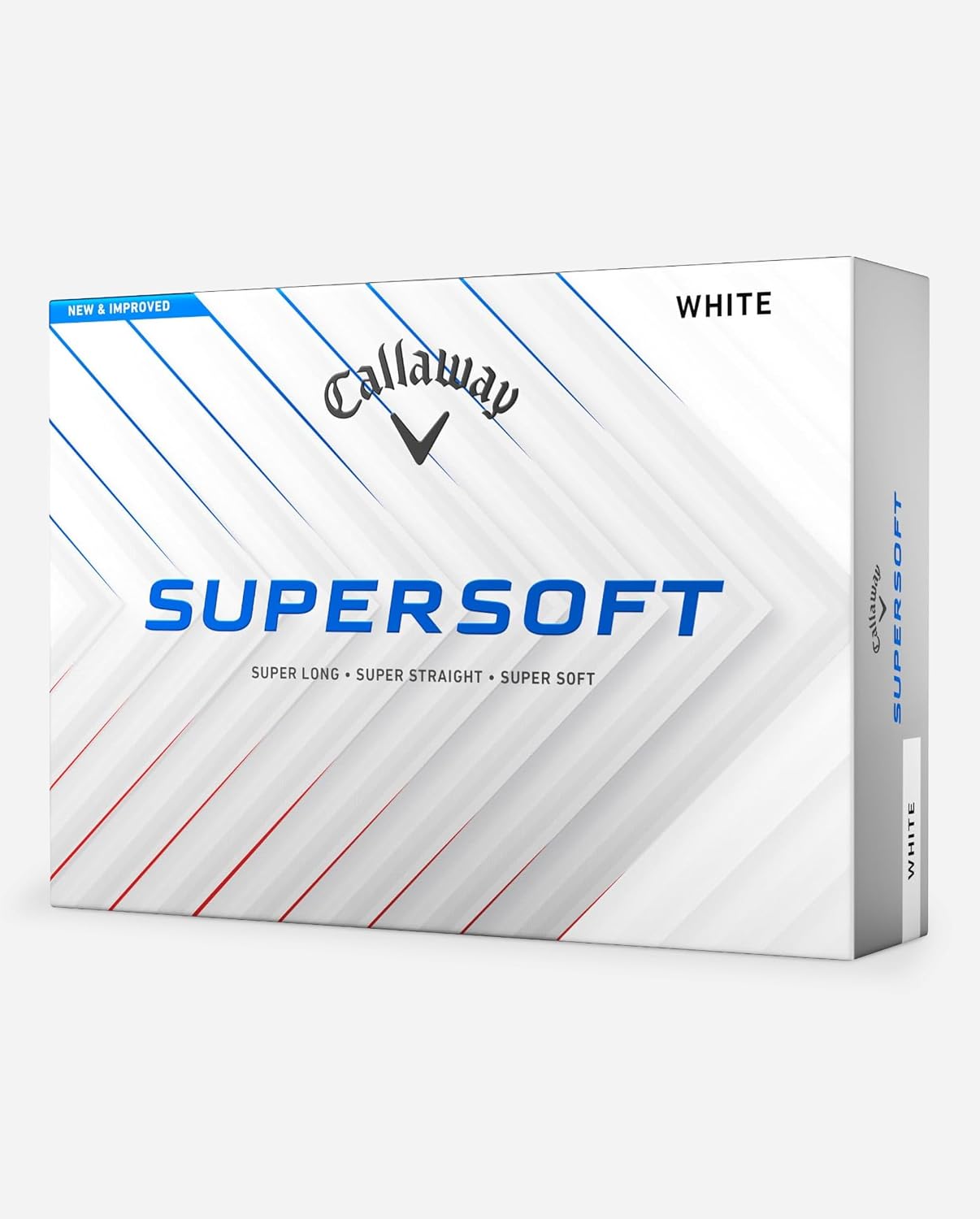
The Supersoft has been Callaway’s slow-swing ball for over a decade, and the thing that separates it from the rest of the sub-$30 pile is the hybrid cover — thinner than standard ionomer, closer to urethane in behaviour. Around the greens you get noticeably more grab than a plain two-piece, which is rare at $25.
It also comes in more colors and patterns than anything else here, including the Truvis soccer-ball design. Easy to spot in rough.
Best for: Driver swing speeds under 90 mph who want the softest feel with actual short-game performance behind it.
Honest weakness: two of them. MyGolfSpy’s 2026 Ball Lab audit gave the Supersoft a quality score of 74 — a C grade, and a “not recommended” flag on consistency. And Callaway’s compression marketing has drifted across generations; the measured number is 44 now, not the 38 you’ll still see quoted. Neither is disqualifying at this price, but you should know.
Related – I went deeper on this one in my Callaway Supersoft review.
4. TaylorMade Noodle Long & Soft — Best Distance Under $20
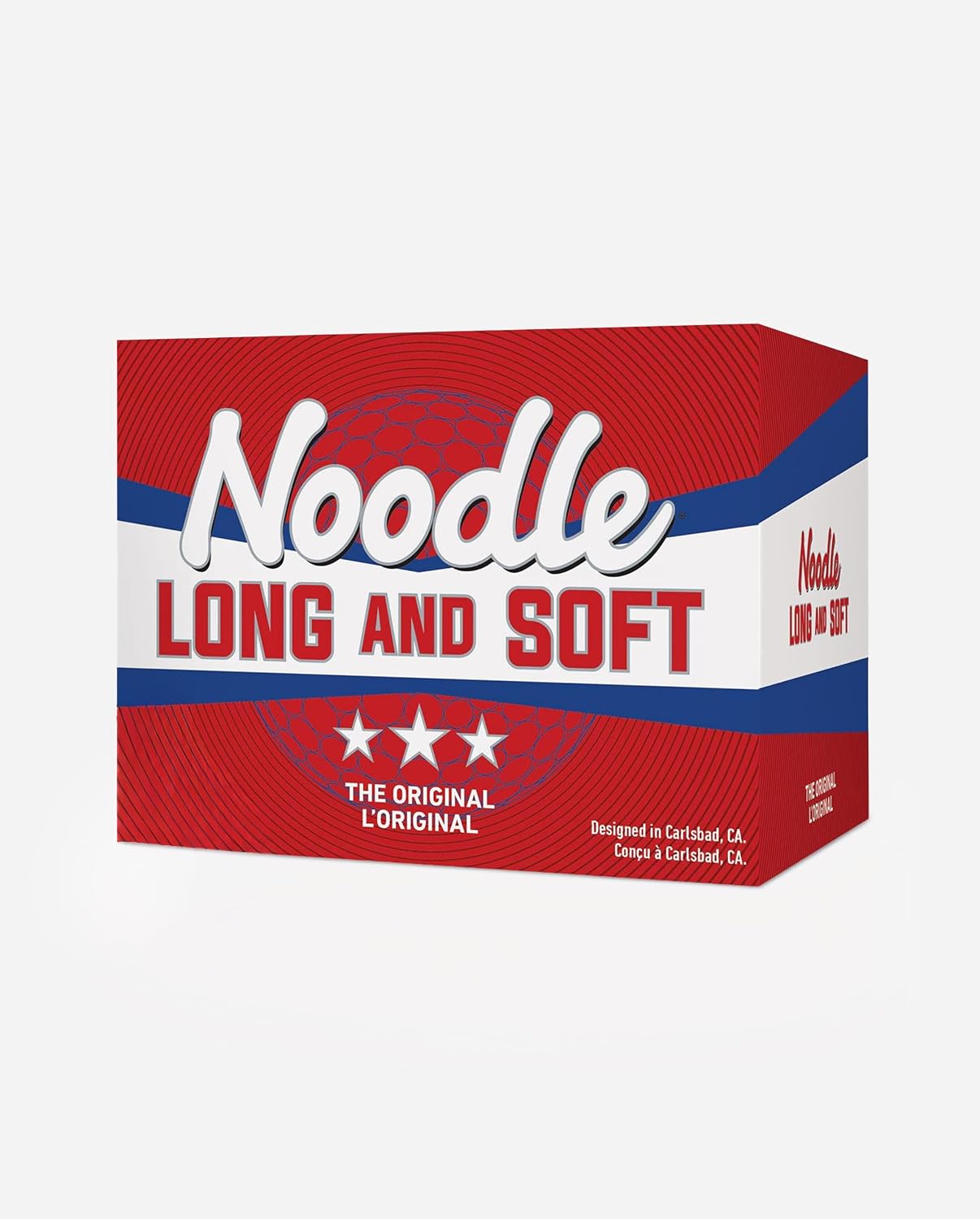
Roughly a dollar a ball, sometimes less on sale, and it’s a real TaylorMade build — 342 dimples, Surlyn cover, not a discount-bin special. The flight is low-spin and straight, which is exactly what you want while you’re still figuring out where the clubface points.
This is the ball I hand people who are three months into golf. Not because it’s the best ball on this page, but because it’s the one where losing it doesn’t change the math.
Best for: Brand-new golfers. Anyone losing two or more balls per round. Simulator practice, where durability against clubface marks matters.
Honest weakness: the name oversells it. MyGolfSpy measured 69 compression, so “Long & Soft” is half right. Their audit also flagged an 11% bad-ball rate on layer concentricity and noticeable box-to-box variance. At a dollar a ball I can live with that; at $30 a dozen I couldn’t.
Related – the full breakdown lives in my Noodle golf balls review.
5. Bridgestone e6 Soft — Best Straight Flight
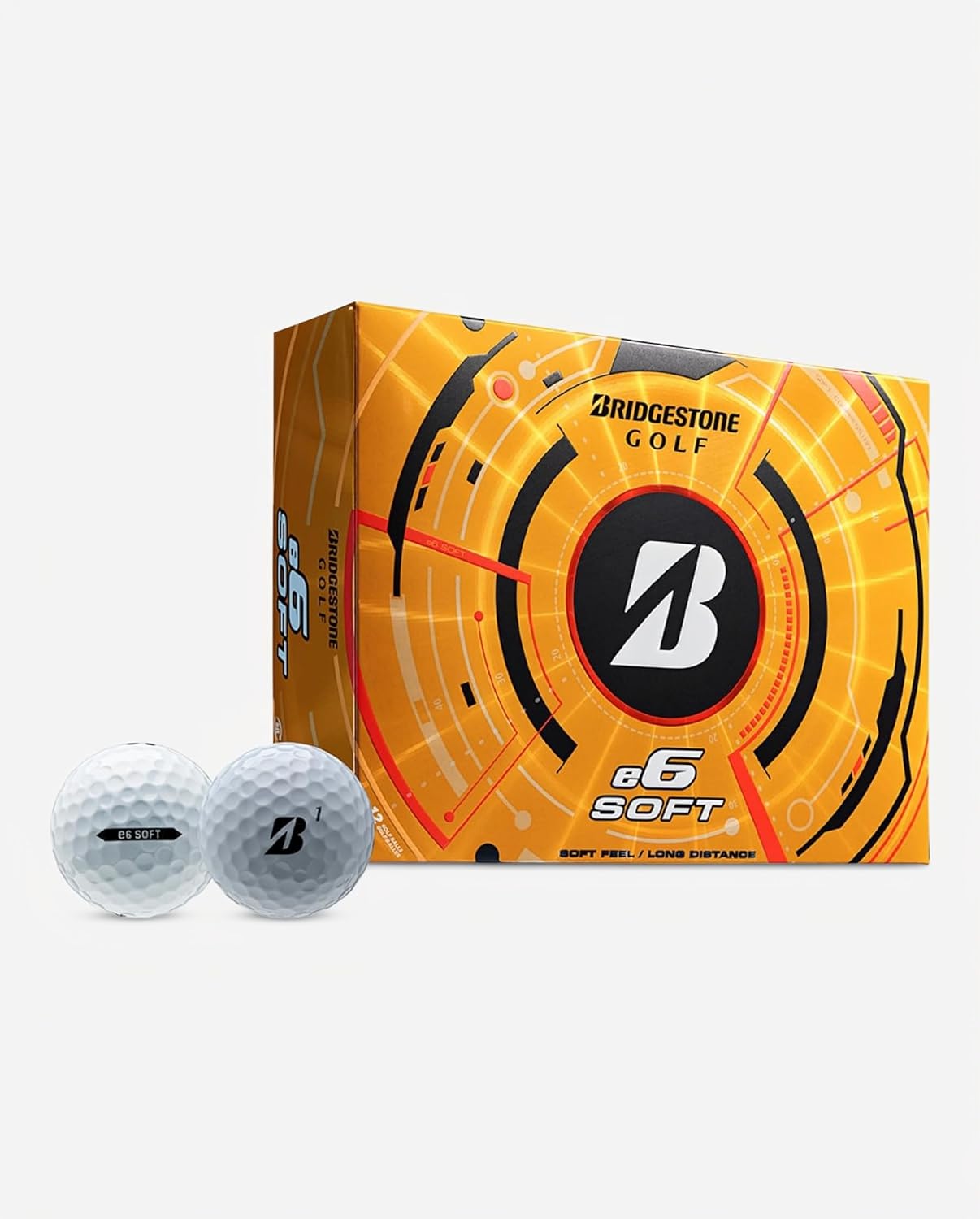
The e6 is the “aim between the trees and hit the fairway” ball. Bridgestone built it around a large, low-compression core that loads easily at slower speeds, and the whole design brief is reducing sidespin. If your miss is a big slice, this is the ball that punishes it least. It launches high too, which helps slower swings carry a bunker.
Best for: Slicers and hookers. Swing speeds 70 to 90 mph. Anyone whose scorecard is mostly a story about balls finishing off the fairway.
Honest weakness: straightening flight means killing spin, and killing spin means the ball releases when it lands. Don’t expect approach shots to check up. This is a fairways-and-greens ball, not a stop-it-by-the-pin ball.
6. Srixon Soft Feel — Best Budget Name Brand
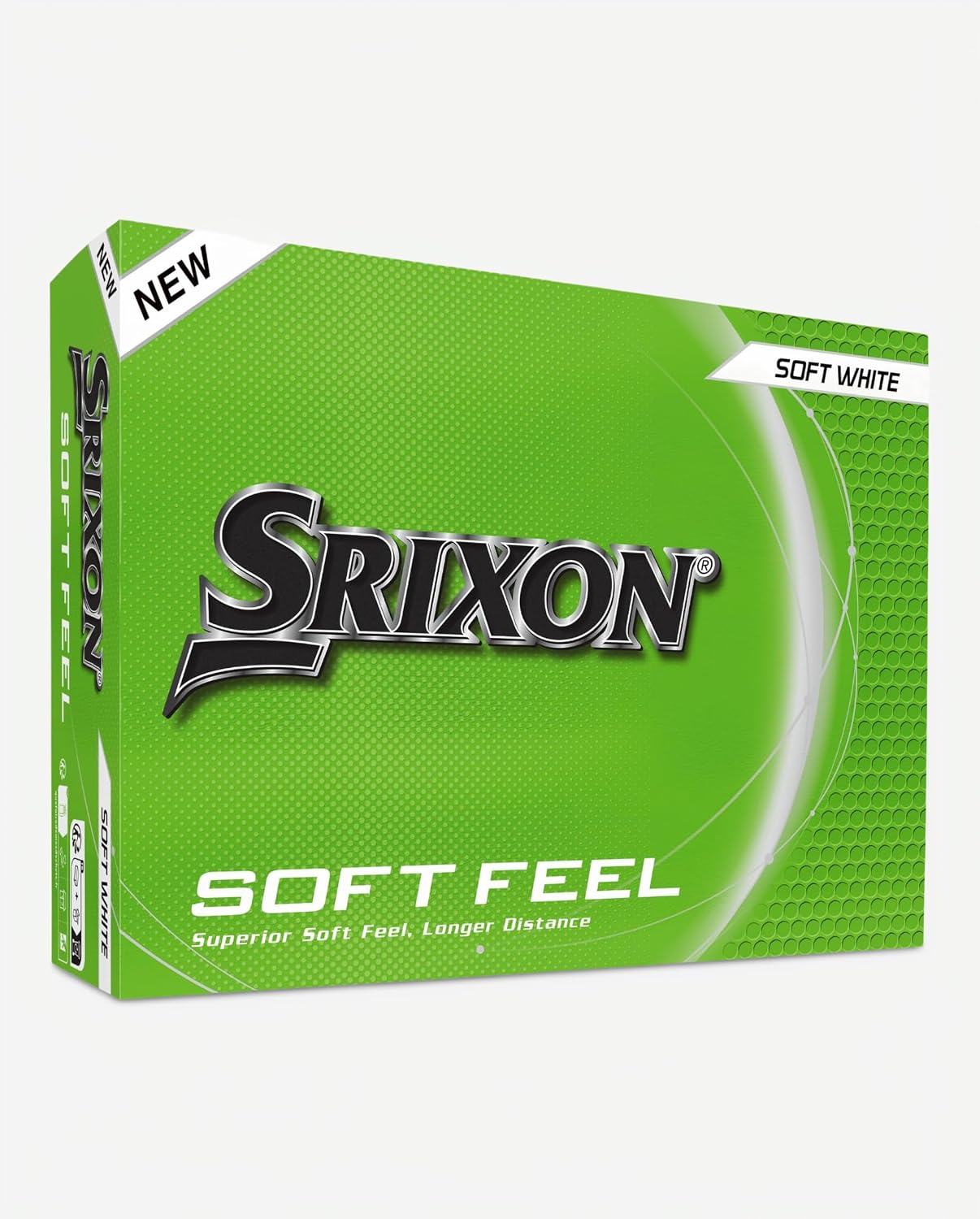
Srixon’s Soft Feel is the most boringly reliable ball in this price bracket. Soft, high-launching, and in the reviewer testing I trust, the straightest and most consistent in dispersion of the four big soft ionomers. Srixon is a Japanese manufacturer with genuinely tight tolerances — you’re getting real engineering at $25.
Best for: 70 to 95 mph swings. Golfers who want the safest possible pick and don’t want to think about it again.
Honest weakness: it’s not distinctive. The Supersoft feels softer, the Duo Soft is cheaper, the TruFeel has the alignment aid. The Soft Feel’s virtue is that nothing about it is wrong, which is a real virtue and a boring one.
Related – more detail in my Srixon Soft Feel review.
7. Vice Drive — Best Delivered-to-Your-Door Value

Buy six dozen at once from Vice and the Drive works out around $17 per dozen — $1.42 a ball, shipped. In GolfLink’s 2026 test of 43 balls it finished in the top ten for distance and the top third for accuracy, which is a genuinely surprising result for a ball at that price.
It’s also durable. Cart-path strikes that would scuff a soft cover mostly bounce off this one.
Best for: Anyone losing a full sleeve per round. Swing speeds 80 to 110 mph — this is the one ball here that suits a faster swinger. Golfers who’d rather buy a season’s worth once than restock monthly.
Honest weakness: at 95 compression the Drive is firm, not soft, and there’s no soft option in Vice’s budget line. If you like a soft feel off the putter you’ll dislike this ball. Wedge control scored 6.2 out of 10 in that same GolfLink test — low, as expected for the category.
Related – the whole Vice lineup is covered in my Vice golf balls review.
8. Callaway Warbird — Cheapest Genuinely Playable Ball
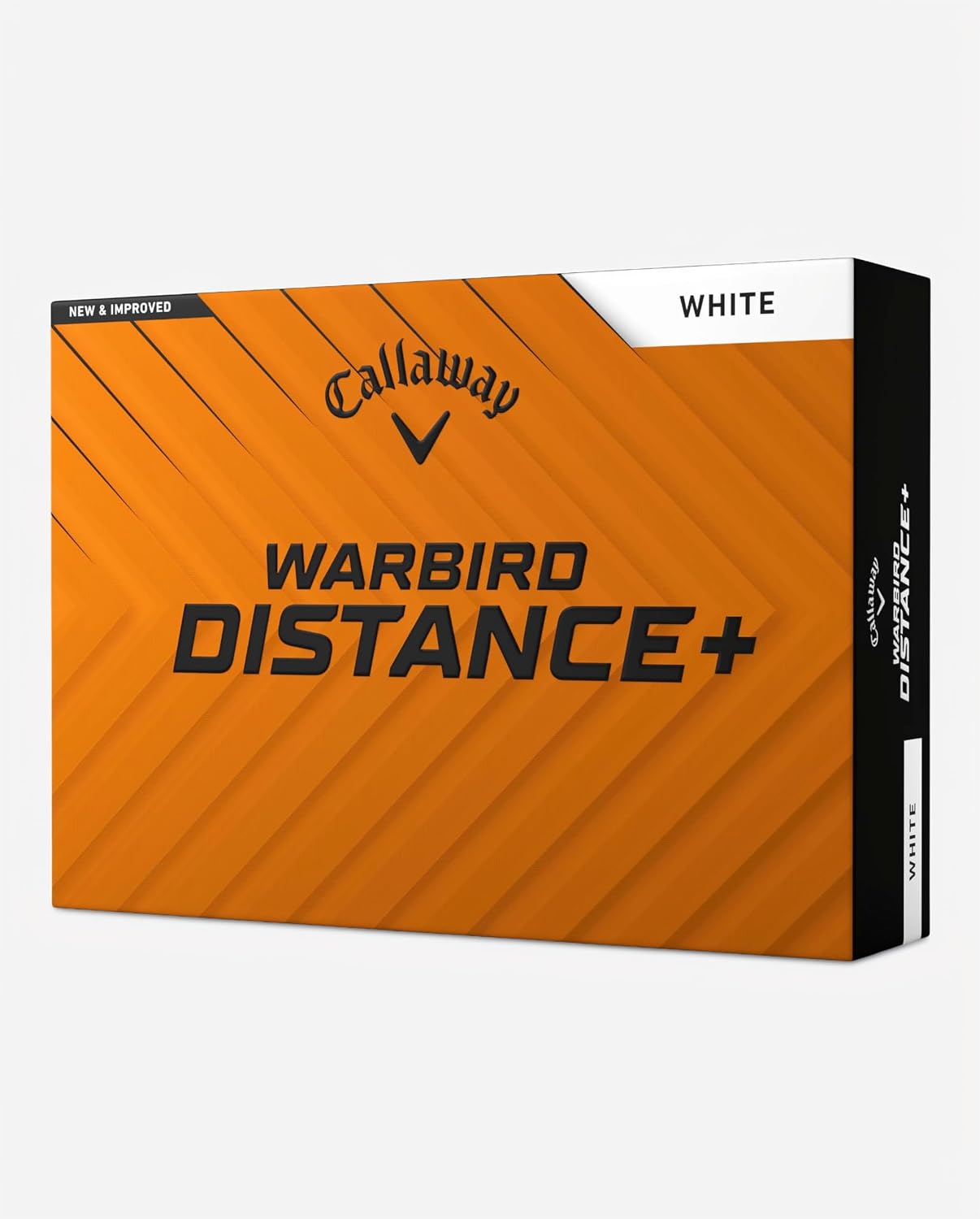
$20 a dozen, 90 compression, and effectively indestructible. The Warbird is a distance-first ionomer with a low-spin flight that takes some curve out of a slice, and it survives abuse better than any soft ball on this list.
Where it beats the Noodle: if your swing speed is up near 95-100 mph, the Warbird’s firmer construction won’t over-compress the way a 37 or 44 compression ball will.
Best for: Faster-swinging beginners (75-100 mph). Distance-first players. Simulator use. Anyone who wants the lowest cost per surviving ball.
Honest weakness: firm and clicky. Callaway’s “soft feel polymer cover” language on the box is generous. Greenside spin is minimal — approach shots will run out. If feel matters to you at all, spend the extra $5 on the Supersoft.
9. Kirkland Signature Performance+ — Best Step-Up, With One Big Caveat
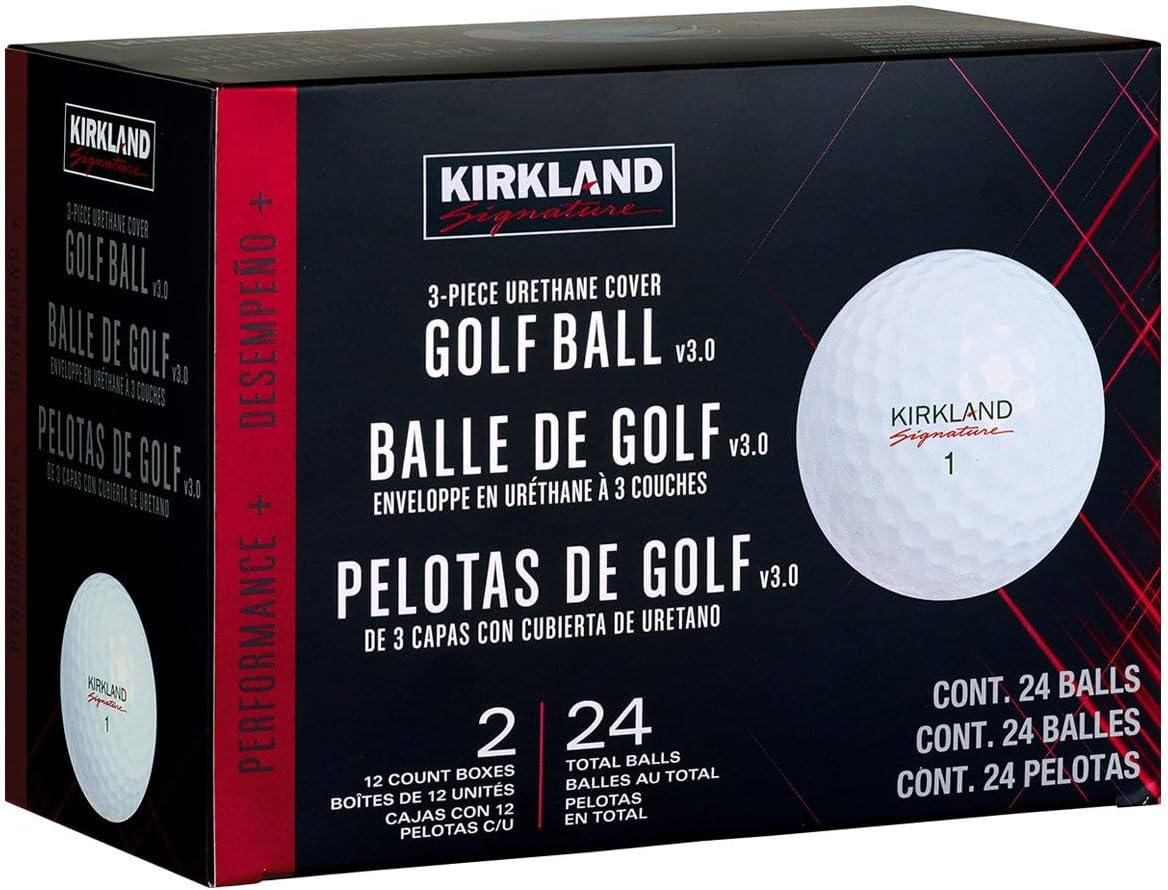
Costco’s ball is a genuine three-piece urethane — the same construction category as a Pro V1 — at roughly $25 per dozen when you buy the two-dozen box. MyGolfSpy’s head-to-head against the Pro V1 had it matching on total driver distance and coming within 100 rpm on greenside spin. That should not be possible at this price. It is.
Now the caveat, and it’s a real one for beginners: the Performance+ was the highest driver sidespin ball in GolfLink’s 43-ball 2026 field at 280 rpm. High spin amplifies curve. If you slice or hook — and most beginners do one or the other — this ball will make your bad shot worse, not better. It finished 37th of 43 for accuracy in that test.
Best for: Costco members whose ball flight is already reasonably straight, and whose wedge contact is clean enough to actually use urethane. It’s the cheapest way in golf to test whether a urethane cover helps your scoring.
Honest weakness: the sidespin issue above, a Costco membership requirement, a two-dozen minimum, and inconsistent stock. Buy the 2025 V3.0 yellow-box version — the earlier 2024 run tested noticeably worse for consistency.
Should You Just Play Used Balls?
Honestly? For your first season, probably yes — and nobody else on this search page will tell you that, because there’s no affiliate commission in it.
A dozen AAAA-grade used Pro V1s costs about the same as a dozen new Noodles. Same ball the tour pros play, one round of cosmetic wear, roughly a third of retail. If you’re going to lose it in the trees anyway, the wear doesn’t matter.
Two things to understand before you buy, because the grading language is deliberately slippery:
- “Recycled” or “lake balls” means found and washed. Original cover, original core, maybe a scuff or a logo. This is what you want. Grades run AAAAA (near mint) down to AA (visible wear, still round).
- “Refurbished” or “refinished” means stripped and repainted. The original cover has been sanded off and a new coat sprayed on. That process changes dimple depth, and dimple depth is aerodynamics. Refurbished balls fly differently than the ball printed on them. Avoid these.
One genuine caveat on lake balls: a ball that’s been submerged for months absorbs water through the cover and loses ball speed. Reputable sellers pull them quickly. Bargain-bin mesh bags at the pro shop have been down there a while.
Related – I compared the sellers and the grading systems in detail in the best place to buy used golf balls.
The Real Cost of Losing Golf Balls
Run the numbers once and the whole “which ball” question answers itself. Say you play weekly — 40 rounds a year — and you’re losing five balls a round while you learn. That’s 200 balls.
| Ball | Per ball | Per round (5 lost) | Per season (200) |
|---|---|---|---|
| Titleist Pro V1 | $4.75 | $23.75 | $950 |
| Titleist TruFeel | $2.50 | $12.50 | $500 |
| Callaway Supersoft | $2.08 | $10.40 | $416 |
| TaylorMade Noodle | $1.67 | $8.35 | $334 |
| Vice Drive (6-doz bulk) | $1.42 | $7.10 | $284 |
The gap between the top and bottom row is $666 a season. That’s a fitted driver. Or a launch monitor. Or thirty lessons, which would do more for your handicap than any golf ball ever made.
This is the argument, and it’s the only argument that matters until you stop losing balls.
Colored Balls: Worth It for Beginners?
Yes, and for a boring practical reason rather than a performance one.
Paint doesn’t change physics. A yellow TruFeel and a white TruFeel fly identically — same core, same cover, same dimples, different coating.
What yellow does is get found. In late-summer rough or against a low sun it’s meaningfully easier to spot, and at five lost balls a round even a small improvement in recovery rate pays for itself. TruFeel, Supersoft, Soft Feel and Duo Soft all offer yellow. Supersoft adds orange, pink and the Truvis pattern.
Take the yellow. There’s no downside beyond the opinions of the guy in your foursome.
When Should You Upgrade From a Beginner Ball?
There’s a clean trigger, and it isn’t your handicap number. It’s this: when you stop losing more than two balls a round, and your wedge contact is clean enough that you’d notice spin if you had it.
Those two things usually arrive together, somewhere around the point you start breaking 100 consistently. Before then, urethane is a feature you’re paying for and not using. After then, it starts showing up on the scorecard — approach shots that hold instead of running through, chips that check on the second bounce.
When you get there, the honest cheapest test is a two-dozen box of Kirkland Performance+ — assuming your driver isn’t already curving too much. If it is, look at the mid-handicap urethane options instead.
One rule regardless of where you are: play the same ball every round for a full season. Ball fitting works by comparison, and you can’t compare anything if you’re switching weekly. If your ball changes every round, you have no idea whether a bad shot was you or the equipment. Pick one, commit, and let your scores tell you when to move.
Related – when you’re ready, the next step up is covered in best golf balls for high handicappers, and after that best golf balls for mid handicappers. Not sure which fits? The golf ball selector tool will narrow it in about a minute.
Frequently Asked Questions
What is the best golf ball for beginners in 2026?
The Titleist TruFeel at around $30 per dozen is the best all-round pick — soft feel, an alignment stripe, and Titleist quality control without tour pricing. If you’re losing several balls a round, the TaylorMade Noodle at roughly $1.67 a ball or Vice Drive at $1.42 in bulk make far more financial sense and give up very little that a beginner can actually use.
Should a beginner use expensive golf balls like a Pro V1?
No. A Pro V1’s advantage is greenside spin, and generating that spin requires clean, descending wedge contact. If you’re thinning or fatting most wedge shots, the spin never happens and you’ve paid roughly $25 extra per dozen for nothing. At five lost balls a round over 40 rounds, playing Pro V1s instead of Noodles costs about $616 a season for no measurable scoring benefit.
What compression golf ball should a beginner use?
Match it to your driver swing speed rather than your ability. Under 85 mph, go soft (Wilson Duo Soft, Callaway Supersoft, Bridgestone e6 Soft). 85 to 95 mph, soft to mid (Titleist TruFeel, Srixon Soft Feel, TaylorMade Noodle). Over 95 mph, mid to firm (Callaway Warbird, Vice Drive). And remember that low compression does not create distance — it changes feel, which is worth having but isn’t yards.
How many golf balls should a beginner buy?
Enough to get through a season on one model. If you play weekly and lose four or five a round, that’s roughly 180 to 200 balls a year — so three to six dozen at a time from a bulk source, or a two-dozen Costco box. Avoid variety packs. Playing one ball consistently is what lets you tell the difference between your swing and your equipment.
Are used golf balls good for beginners?
Recycled or “lake” balls are an excellent choice — they’re original balls that were found and cleaned, so a dozen AAAA-grade Pro V1s costs about what a dozen new value balls does. Avoid anything labelled “refurbished” or “refinished,” though: those have been stripped and repainted, which alters dimple depth and changes how the ball flies.
Do two-piece golf balls really go straighter?
They curve less, which amounts to the same thing in practice. Two-piece ionomer balls generate less total spin off the driver, and since sidespin is what curves a shot, less spin means a slice or hook finishes closer to the fairway. The swing is identical; the ball just amplifies the error less. That’s the one genuine performance benefit available to a beginner from ball choice.
Final Verdict
Pick by how you actually play, not by what’s ranked first:
- You want one answer and no research: Titleist TruFeel.
- You’re losing four or more a round: TaylorMade Noodle or Vice Drive in bulk.
- Your swing speed is under 90 and you want soft: Callaway Supersoft or Wilson Duo Soft.
- You slice everything: Bridgestone e6 Soft.
- You swing hard for a beginner: Callaway Warbird or Vice Drive.
- You’re ready to test urethane and don’t slice: Kirkland Signature Performance+.
And if you take one thing away from this page, let it be the least commercial sentence on it: the money you’d spend upgrading golf balls this year buys more strokes as lessons than it ever will as equipment. Buy the cheap ball. Play it every round. Spend the difference on your swing.