
Last updated: September 4, 2026
⛳️ Our experts spend hours testing golf balls on the launch monitor, on-course, and reading every independent lab report we can find, before recommending anything. When you make a purchase through one of our links, we may earn a small affiliate commission, at no cost to you. Find out more about how we test products.
Quick Verdict: Best Low Spin Golf Balls
Before anything else: low-spin balls are for high-swing-speed golfers who spin the driver too much. If you’re a slow swinger looking for extra distance, or a soft-feel player who thinks “low spin” means “easy to hit,” you’re in the wrong article. Playing a Pro V1x Left Dash at 85 mph swing speed loses you 5-10 yards of carry. Read the slow swing speed guide instead.
Still here? Then you’re likely an experienced golfer with a 95+ mph driver swing, and your typical miss is a ballooning drive that comes up short, a fade that curves off the fairway, or a wedge shot that spins back off the green. All three problems have the same fix: reduce spin. Here are the picks.
- Best Overall Low Spin: Titleist Pro V1x Left Dash — lowest-spinning Pro V1 variant, tuned for 105+ mph swings
- Best 2-Piece Low Spin (Distance-First): Titleist Velocity — high-speed low-spin ionomer, $35
- Best 5-Piece Low Spin: TaylorMade TP5x — firmer TP5 variant, tour-level low-spin
- Best High-Compression Low Spin: Bridgestone Tour B X — firm urethane with tightest dispersion in the Tour B line
- Best Softer Premium Low Spin: Titleist AVX — lower spin than Pro V1 with a softer feel
- Best Value Urethane Low Spin: Maxfli Tour X — real premium urethane at $40
- Best Specialist Low Spin: Bridgestone e9 Long Drive — purpose-built for Long Drive Association distance
- Cheapest Low Spin Option: Callaway Warbird — 2-piece ionomer for under $20
Who Should Play a Low Spin Golf Ball?
Low-spin balls are engineered to solve very specific problems. If any of the following describe your game, you’re a candidate:
- Driver swing speed above 95 mph — this is the primary filter. Above this speed you generate enough spin that reducing it improves your distance and dispersion. Below this speed you don’t spin the driver enough for reduction to help.
- Your drives balloon and come up short — high launch + high spin = a shot that climbs, stalls, and drops short of its distance potential. Low-spin balls fix the physics.
- Your typical miss curves too far — a slice with 3,500 rpm curves way more than the same swing with a 2,200 rpm ball. Low-spin balls tighten dispersion by reducing the axis-tilt magnification effect.
- You currently play a Pro V1 or Chrome Tour and want a firmer, lower-spinning option — the “move down in spin” case. Pro V1x Left Dash and Chrome Tour X exist specifically for this player.
Who Should NOT Play a Low Spin Ball
- Driver swing speed under 90 mph. You don’t generate enough spin for reduction to be a benefit. You’ll actually lose distance because low-spin balls tend to launch lower, and low launch at slow speeds means the ball drops before it reaches its distance potential. See slow swing speed balls.
- You struggle to hold approach shots on firm greens. Low-spin balls also produce less greenside spin than “medium spin” tour balls. If your problem is your wedges releasing across the green, you need MORE spin, not less. See the mid-handicap balls for higher-spin urethane picks.
- You’re chasing extra distance at slow swing speeds. Ball choice isn’t the answer. See swing speed training.
What “Low Spin” Actually Means (Driver Spin vs Wedge Spin)
The most common misunderstanding in this category: “low spin” refers specifically to driver spin off the tee — 2,000-2,500 rpm for low-spin balls versus 2,800-3,500 rpm for mid or high-spin balls at the same swing speed. It does NOT mean “low spin everywhere.”
A well-designed low-spin urethane ball (Pro V1x Left Dash, TP5x, Tour B X) delivers:
- Low driver spin — 2,000-2,500 rpm at 105+ mph swing speed. Reduces ballooning drives and tightens dispersion.
- Moderate iron spin — 5,500-6,500 rpm on 7-iron. Enough to hold greens but not so much that the ball stops abruptly and spins back off firm surfaces.
- Full greenside spin — 9,000+ rpm on wedges. The urethane cover still grabs the greens; the “low spin” doesn’t sacrifice short-game control.
2-piece low-spin balls (Velocity, Warbird, e9 Long Drive) are a different category. These reduce driver spin AND greenside spin. That’s fine for a golfer who prioritizes distance above short-game control, but you should understand the trade-off before buying.
Best Low Spin Golf Balls 2026 (At a Glance)
| Ball | Cover | Compression | Price/doz | Best for swing speed |
|---|---|---|---|---|
| Titleist Pro V1x Left Dash | Urethane | Firm (102) | ~$58 | 105+ mph |
| TaylorMade TP5x | Urethane | Firm (97) | ~$55 | 100+ mph |
| Callaway Chrome Tour X | Urethane | Firm (100) | ~$58 | 100+ mph |
| Bridgestone Tour B X | Urethane | Mid-Firm (95) | ~$55 | 95-110 mph |
| Titleist AVX | Urethane | Mid (78) | ~$55 | 90-100 mph (softer + lower spin) |
| Maxfli Tour X | Urethane | Firm (100) | ~$40 | 95+ mph (value pick) |
| Titleist Velocity | Ionomer (2-piece) | Mid (90) | ~$35 | 95+ mph (distance-first, ionomer) |
| Bridgestone e9 Long Drive | Ionomer (2-piece) | Mid-Firm (82) | ~$30 | 110+ mph (specialist Long Drive) |
| Callaway Warbird | Ionomer (2-piece) | Mid (90) | ~$20 | 90-105 mph (cheapest low-spin) |
1. Titleist Pro V1x Left Dash — Best Overall Low Spin
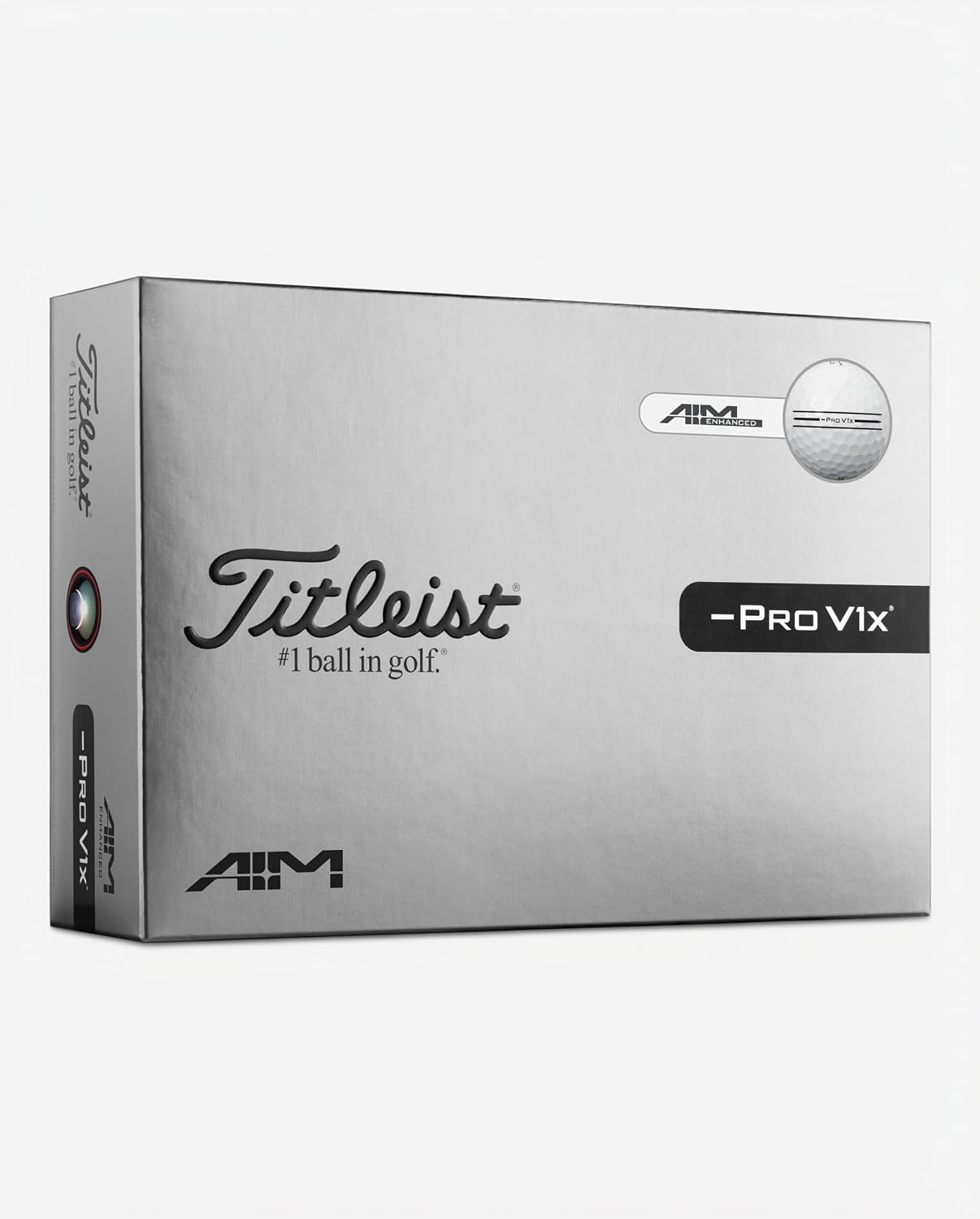
The Pro V1x Left Dash is the firmest, lowest-spinning ball in Titleist’s Pro V1 lineup. Compression 102, engineered specifically for 105+ mph swing speeds. If your driver is currently a Pro V1x and you’re producing ballooning drives or want tighter dispersion, this is the direct upgrade — same tour-level urethane greenside behavior, meaningfully less driver spin.
The “Left Dash” name comes from the specific side-stamp variant Titleist uses to identify this ball. It’s not a distinct model number — it’s a Pro V1x with the “Left Dash” tuning that reduces spin across the bag. Every Tour player who plays it (a growing number of long-hitters) uses the identical construction.
Best for: 105+ mph driver swing. Current Pro V1x players wanting less spin. Long-drivers, big hitters, tournament players.
Honest weakness: $58 per dozen. At swing speeds below 100 mph the firm compression starts costing you distance — wrong ball for the mid-swing over-spinner.
2. TaylorMade TP5x — Best 5-Piece Low Spin
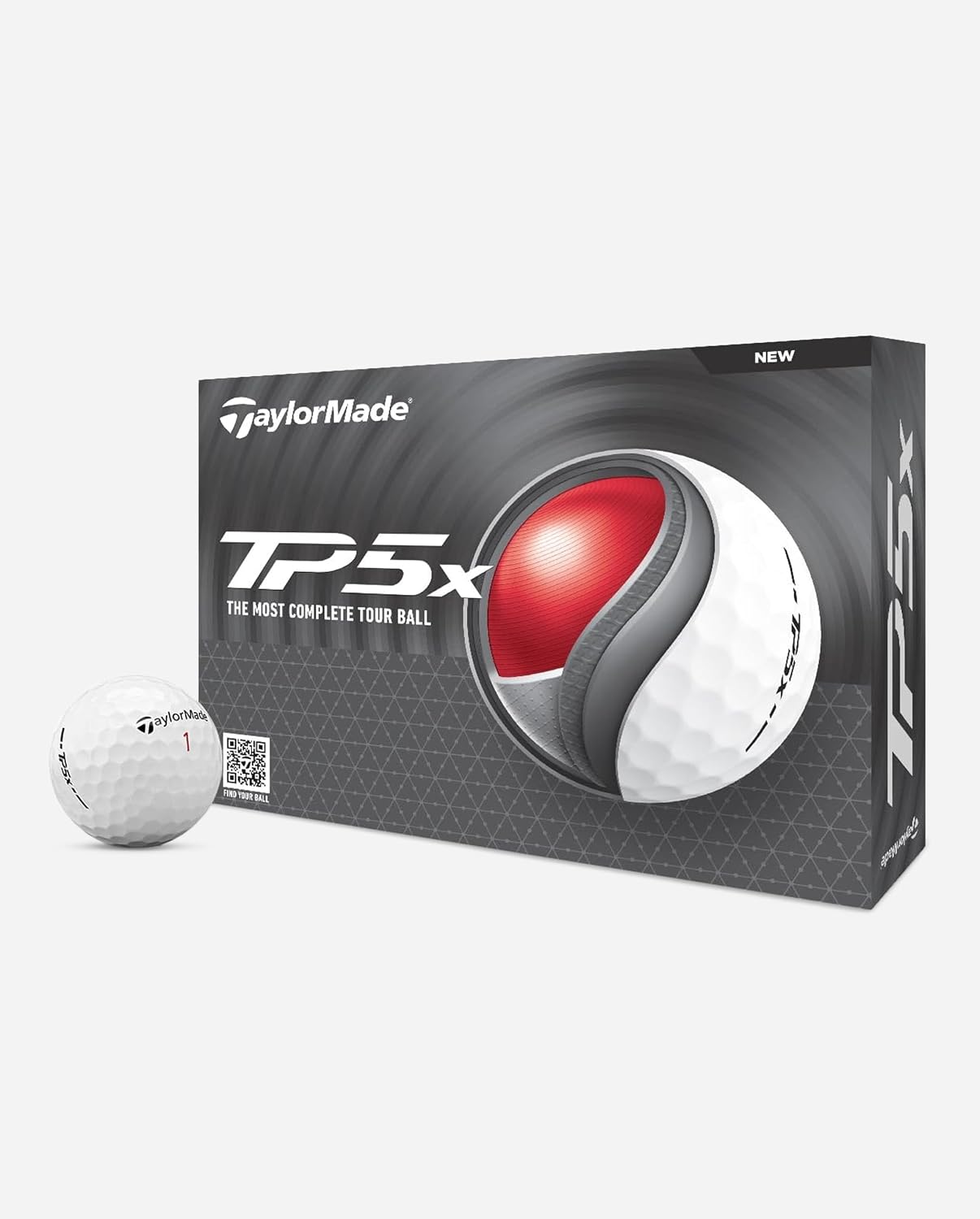
The TP5x is TaylorMade’s firmer, lower-spinning TP5 variant. 97 compression, 5-piece construction with a firm inner mantle designed to reduce driver spin without sacrificing greenside performance. Rory McIlroy played this ball for years specifically because of the low-spin driver characteristic.
Where the TP5x wins vs Left Dash is feel — the 5-piece construction produces a slightly softer feel around the greens than the firmer Pro V1x variant. Where it loses is at very high swing speeds — above 115 mph the Left Dash outperforms it on tightest dispersion.
Best for: 100+ mph driver swing. Golfers who like TaylorMade’s feel signature and want a low-spin premium ball.
Honest weakness: $55 per dozen. Not as pure a low-spin ball as the Left Dash at extreme swing speeds.
3. Callaway Chrome Tour X — Best Premium Callaway
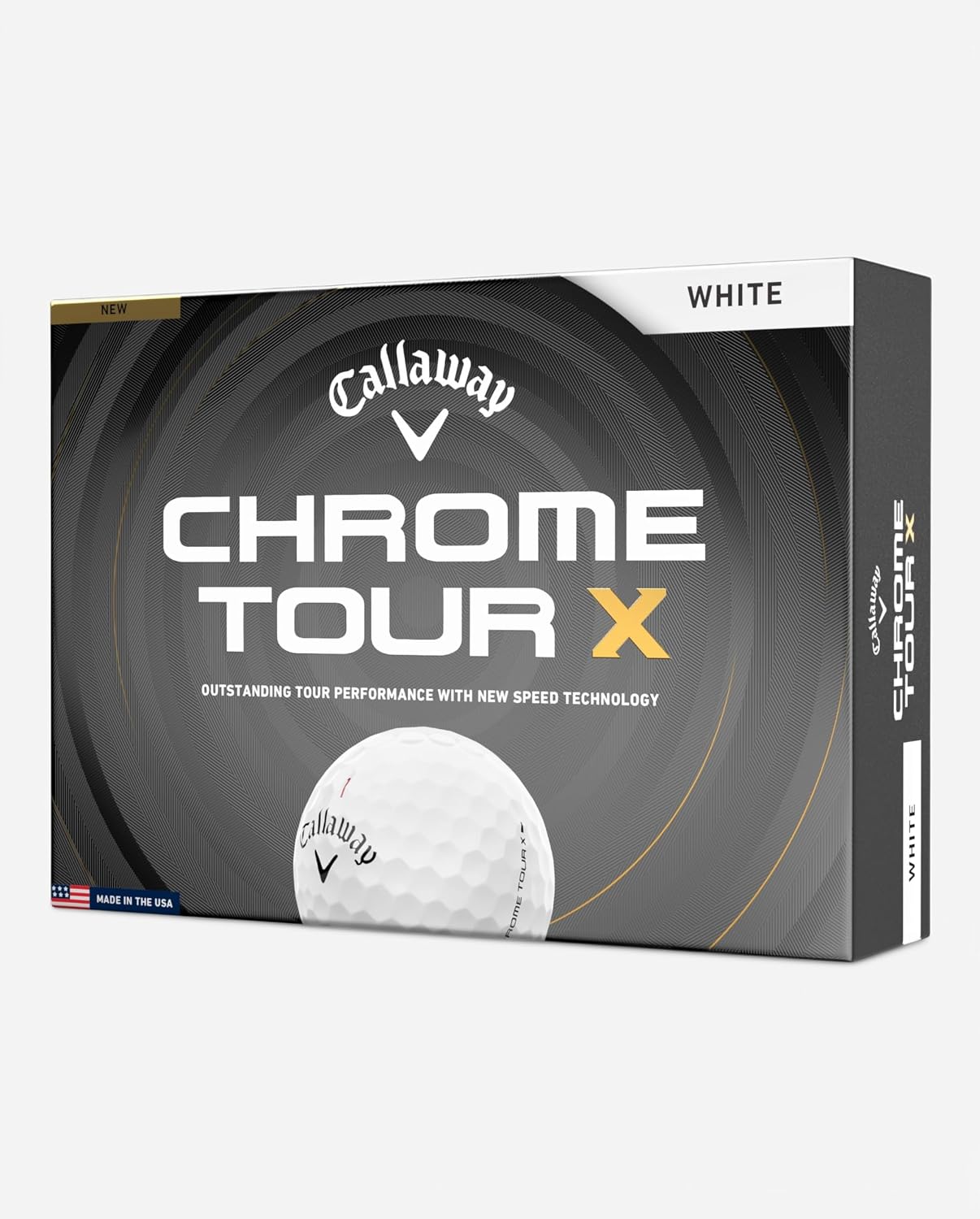
The Chrome Tour X is Callaway’s firmer, higher-swing-speed variant of the Chrome Tour. 100 compression, engineered to produce lower spin off the driver while maintaining the Chrome Tour’s greenside behavior. Xander Schauffele and Jon Rahm are among the Tour players in this ball.
Note: Chrome Tour X’s driver spin isn’t as low as the Left Dash or TP5x — it’s in the “moderate-low” range rather than “ultra-low.” That’s a feature for players who want some spin retention on wedge shots but want to cut ballooning off the tee. Not the right choice for someone specifically hunting the lowest spin possible.
Best for: 100+ mph driver swing. Chrome Tour players wanting a step firmer without switching brands entirely.
Honest weakness: $58 per dozen and the “X” tuning is slightly less extreme than Left Dash or TP5x. If lowest possible spin is the goal, look at those first.
4. Bridgestone Tour B X — Best High-Compression Low Spin
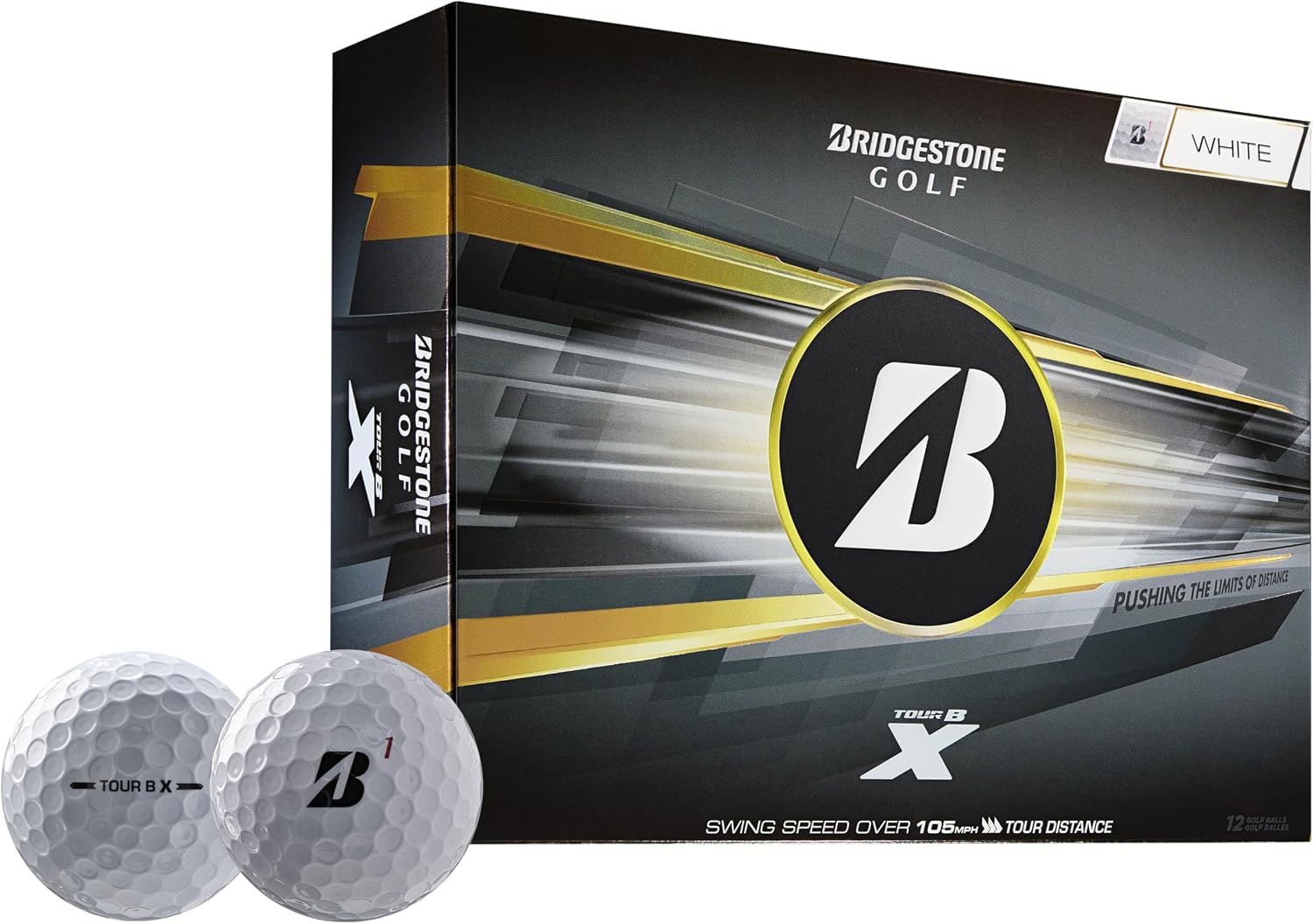
The Tour B X is Bridgestone’s firmest urethane premium ball at 95 compression. The dual-dimple pattern and Reactive iQ cover deliver a genuinely tight ball flight — Bridgestone’s marketing emphasizes reduced sidespin, and the ball speed and dispersion data support the claim. Tiger Woods and Jason Day have both played variants of this line at different points.
Where the Tour B X differentiates from Left Dash and TP5x: it’s slightly softer at 95 compression, which some players find gives better feedback on shorter clubs while still reducing driver spin meaningfully. For a golfer whose 100-mph driver over-spins but who also cares about feel through the bag, this is the “low-spin with feel” pick.
Best for: 95-110 mph driver swing. Golfers who want low driver spin but prefer softer feel than Left Dash.
Honest weakness: $55 per dozen. Slightly less “low” on the spin scale than the Left Dash — a spectrum choice, not a hierarchy issue.
5. Titleist AVX — Softer Premium Low Spin
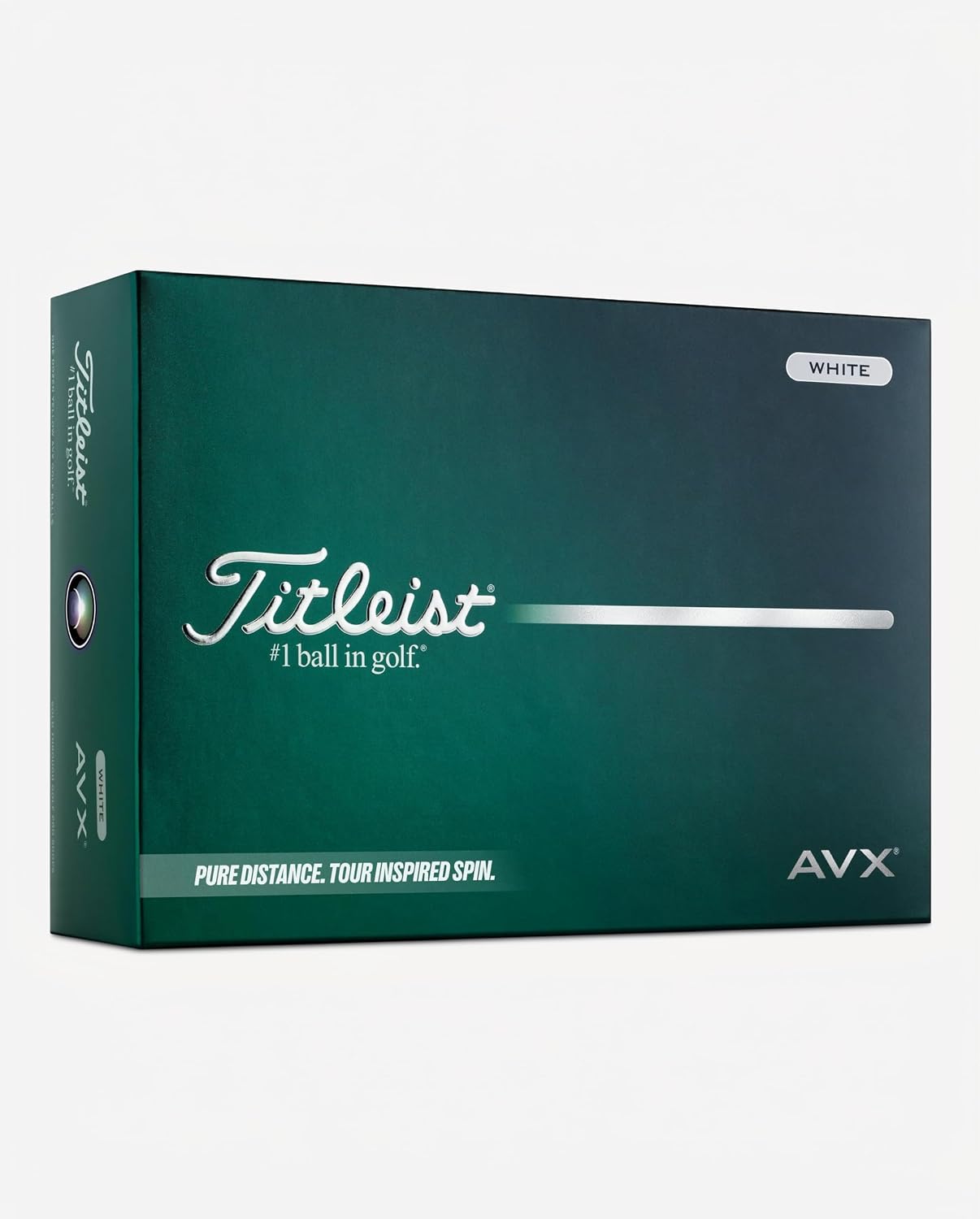
The AVX is Titleist’s softer, lower-spinning premium urethane ball. Compression 78 — significantly softer than the Pro V1x line — with a lower ball flight and less driver spin than the Pro V1. This is the low-spin ball for the player whose swing speed is in the 90-100 mph range and who finds the Left Dash or TP5x too firm.
The AVX exists specifically for golfers who like Pro V1 tour-level construction but want a softer feel and a slightly lower-spinning flight profile. It’s not the lowest-spinning ball on this list, but it’s the softest of the premium urethane low-spin options.
Best for: 90-100 mph driver swing. Pro V1 players who want a softer, lower-launching, lower-spinning alternative.
Honest weakness: $55 per dozen for a ball whose spin reduction vs a Pro V1 is meaningful but not dramatic. Above 105 mph the Left Dash or TP5x will out-perform it on dispersion.
6. Maxfli Tour X — Best Value Premium Low Spin
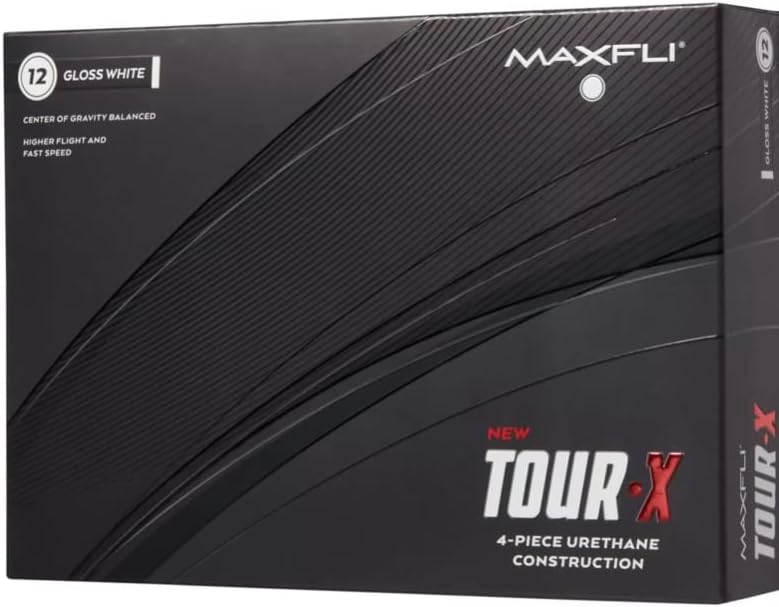
Maxfli’s Tour X is one of the best-kept value secrets in the premium ball category. 100 compression urethane construction — the same architectural approach as Pro V1x, TP5x, and Chrome Tour X — at $40 per dozen instead of $55+. Made at the same manufacturing partners as several other premium balls, but marketed at a substantially lower price point.
For a golfer who wants low-spin urethane performance but can’t stomach the Titleist / TaylorMade / Callaway premium tax, the Maxfli Tour X delivers 90-95% of the performance at 70% of the price. That’s real value if you’re playing 40+ rounds a year and lose 2 balls per round.
Best for: 95+ mph driver swing. Value-conscious players who want tour-level urethane low-spin performance.
Honest weakness: less brand cachet than the big three. Some players find the feel slightly firmer than they’d prefer — a minor complaint at this price.
7. Titleist Velocity — Best 2-Piece Distance-First Low Spin
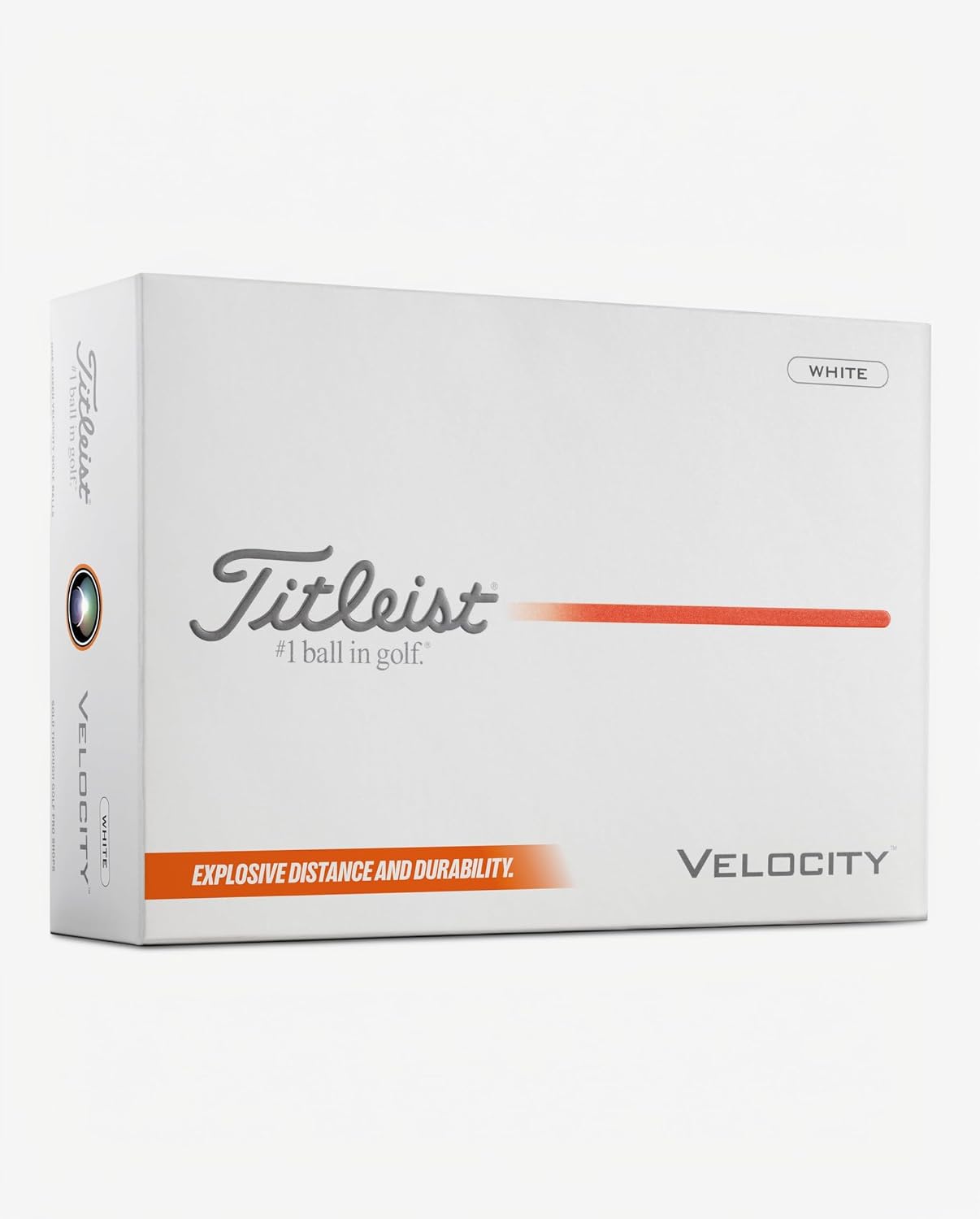
The Velocity is Titleist’s 2-piece low-spin distance ball. Ionomer cover, 90 compression, aggressive core design engineered specifically to produce low spin off the driver at high swing speeds. Where the urethane picks above give you low driver spin AND high greenside spin, the Velocity gives you low spin across the entire bag — distance-first, greenside control secondary.
MyGolfSpy’s 2026 62-ball robot test named the Velocity as the total-distance winner at 100 mph swing speed, though they noted the distance came largely from rollout (low spin = firmer landing, more roll). If you play firm-fairway conditions and prioritize maximum total distance, the Velocity is a legitimate pick.
Best for: 95+ mph driver swing on firm-fairway courses. Golfers who prioritize total distance over greenside spin.
Honest weakness: minimal greenside spin — wedge shots release forward, no check-up on chip shots. If your short game is your strength, this is the wrong ball.
8. Bridgestone e9 Long Drive — Best Specialist Low Spin
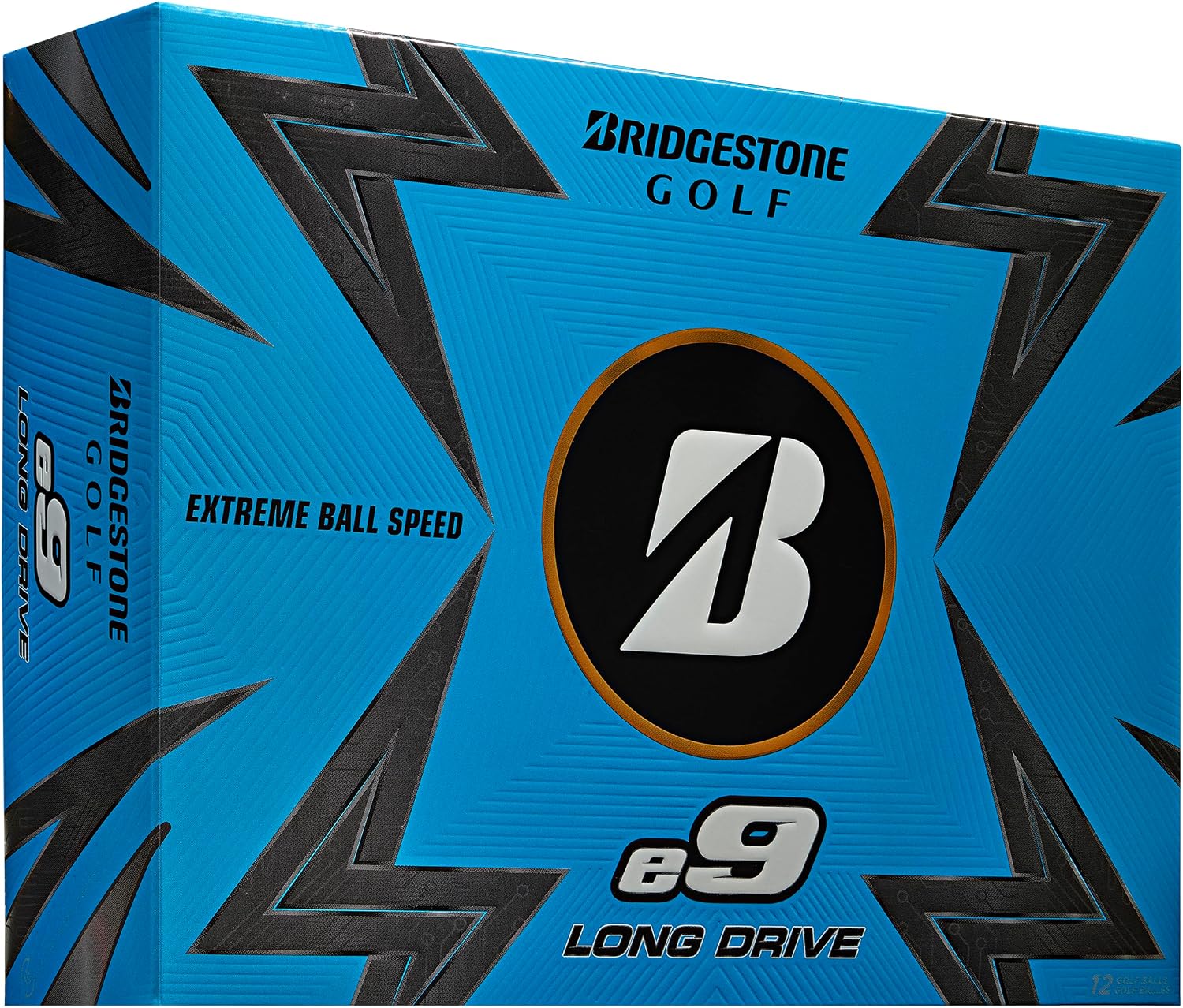
The e9 Long Drive is Bridgestone’s specialist purpose-built low-spin ball. Developed in partnership with the World Long Drive Association, this ball is engineered around one goal: minimum spin off the driver at maximum swing speed. 82 compression, ionomer 2-piece construction, low-launch aerodynamic dimple pattern.
The e9 is a genuine outlier ball — it’s not trying to be a full-round performer. At 110+ mph swing speeds it delivers the tightest driver dispersion and lowest driver spin of any ball on this list. But at any swing speed under 100 mph, or on greenside shots, it gives up performance to the rest of the picks.
Best for: 110+ mph driver swing specifically. Long drive contest players, distance-obsessed high-swing golfers.
Honest weakness: not a well-rounded ball. Terrible greenside spin. Wrong ball for full-round play unless you’re a very specific type of golfer.
9. Callaway Warbird — Cheapest Low Spin Option
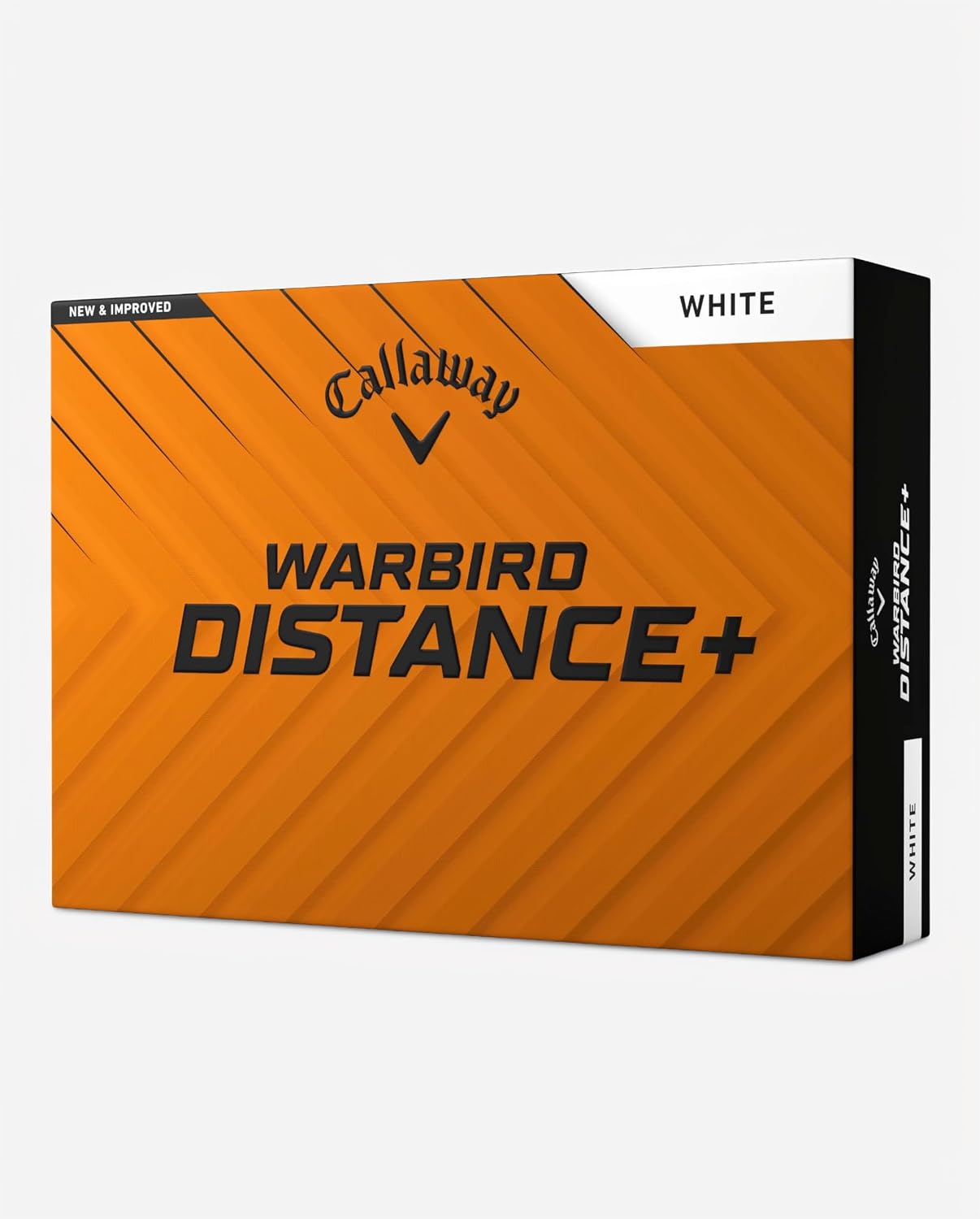
The Warbird is Callaway’s under-$20 low-spin option. 90 compression, 2-piece ionomer with aggressive HEX aerodynamics tuned for low drag and low spin. It’s the ball for a golfer who wants low-spin distance characteristics but doesn’t want to pay $55 per dozen — accepting that the greenside performance and ball-to-ball consistency won’t match the premium picks.
For a range-heavy practice player, or a golfer at a high-loss-rate course, the Warbird is a legitimate low-spin choice. Firm feel, aggressive flight, cheap enough to buy in bulk.
Best for: 90-105 mph driver swing. Budget players, range practice, high-loss-rate courses.
Honest weakness: firm feel is polarizing. Zero greenside grab. Not a full-performance ball.
When to Move Down in Spin from Your Current Ball
If you’re already playing a premium tour ball but your drives balloon or your fade curves too much, here’s the practical migration path:
| Current ball | Move down to | Why |
|---|---|---|
| Titleist Pro V1 | Pro V1x Left Dash or AVX | Left Dash for lower spin at high speed; AVX for softer + lower spin at moderate speed |
| Titleist Pro V1x | Pro V1x Left Dash | Same construction, lower-spin tuning |
| Callaway Chrome Tour | Chrome Tour X | Firmer, lower-spinning variant |
| TaylorMade TP5 | TP5x | Firmer, lower-spinning variant |
| Bridgestone Tour B RXS | Tour B X | Firmer, lower-spinning variant |
| Any premium urethane, want value | Maxfli Tour X | 90-95% of premium performance at 70% of the price |
Give the new ball a full season of play before evaluating. Ball-fitting is done through consistency, not one-round experiments. Track your driver dispersion, average carry, and greenside stopping distance from 100-150 yards. If those numbers move in the right direction, the switch was correct.
Benefits and Drawbacks of Low Spin Balls
✅ Benefits
- Lower driver spin → less ballooning, more carry at high swing speeds
- Tighter dispersion — less sidespin amplification means slice/hook curves are smaller
- Firmer feel some players prefer for feedback and control
- Distance-first design works well on firm fairways where rollout is a factor
- Premium urethane variants still deliver full greenside spin
❌ Drawbacks
- Wrong for swing speeds under 90 mph — you lose distance, not gain it
- 2-piece low-spin balls sacrifice greenside spin (Warbird, Velocity, e9)
- Firm compression can feel harsh at moderate speeds
- Lower launch means less carry on soft fairways where you need airtime
- Not a fit for wedge-heavy players who need aggressive check-up spin
Ball Fitting: How to Know If You Need Low Spin
Three quick tests to check whether a low-spin ball is right for your game:
- Driver spin measurement. Get on a launch monitor. If your driver spin is above 3,200 rpm at your normal swing speed, you’re a candidate for reduction. Under 2,800 rpm, you don’t need less spin — you might even need more launch. Between 2,800-3,200 is the neutral zone where either direction can work.
- Ball-flight observation. Do your drives climb, stall, and drop short? Are they landing steeper than they used to when you were younger and hitting them longer? Both are ballooning-spin signals. Low-spin ball fixes it.
- Miss-shape magnification. When you miss the fairway, is it a small fade that’s slightly off, or a big banana slice that’s 40 yards off line? Big curves indicate high sidespin — the low-spin ball’s tightened dispersion will help meaningfully.
If none of those apply to your game, save the money. Low-spin balls are engineered to solve specific problems, and they don’t add value for a golfer who doesn’t have those problems.
Frequently Asked Questions
What are low spin golf balls?
Low spin golf balls are engineered to produce less driver spin than typical premium balls — usually 2,000-2,500 rpm at 105+ mph swing speed versus 2,800-3,500 rpm for standard tour balls. This reduces ballooning drives and tightens dispersion for high-swing-speed golfers who spin the driver too much. Premium low-spin urethane balls (Pro V1x Left Dash, TP5x, Tour B X) still deliver full greenside spin — the “low spin” refers specifically to driver spin, not greenside.
Who should play a low spin golf ball?
Golfers with driver swing speed above 95 mph who over-spin the driver — producing ballooning drives that come up short, or slices that curve dramatically. Also current Pro V1, Chrome Tour, or TP5 players who want a firmer, lower-spinning variant. NOT for slow swings under 90 mph (they lose distance from low-spin balls), and NOT for golfers whose problem is wedge shots that don’t check up (they need more spin, not less).
What is the lowest spinning golf ball?
Among premium urethane balls: the Titleist Pro V1x Left Dash. It’s specifically tuned to produce the lowest driver spin in the Pro V1 line and is widely considered the lowest-spinning tour-level ball. Among specialist 2-piece balls: the Bridgestone e9 Long Drive, which is engineered for Long Drive Association distance with minimum spin at maximum swing speed. The e9 has lower driver spin than the Left Dash but sacrifices greenside performance to get there.
Will a low spin ball give me more distance?
Yes, if your swing speed is high enough that you’re currently over-spinning the driver (roughly 95+ mph with ballooning drives). Reducing driver spin from 3,300 to 2,300 rpm at 105 mph swing typically adds 8-15 yards of carry by keeping the ball penetrating instead of climbing and stalling. Below 90 mph swing speed, the same low-spin ball costs distance because you’re already spinning low and now launching too low as well.
Is the Left Dash better than the regular Pro V1x?
Better for a specific player: golfers with 105+ mph driver swing who currently over-spin the Pro V1x. Same tour-level urethane construction, greenside spin, and feel — just tuned firmer and lower-spinning through the mantle design. For a golfer whose Pro V1x drives launch and spin correctly, the Left Dash won’t help — you already have the right ball.
Can slow swingers play low spin balls to get more distance?
No — this is a common misconception. Low-spin balls need high swing speed to compress fully and reach their carry potential. At slow speeds, the low-spin ball launches too low and drops before reaching its distance ceiling. Slow swingers actually need MORE spin and higher launch, not less. See best golf balls for slow swing speed.
Final Verdict
Low-spin golf balls solve a real problem for a specific reader: the high-swing-speed golfer who over-spins the driver and produces ballooning drives or wide dispersion. Match the ball to your actual swing speed and current-ball spin profile:
- 105+ mph, want the lowest-spinning tour ball: Titleist Pro V1x Left Dash
- 100+ mph, TaylorMade preference: TP5x
- 100+ mph, Callaway preference: Chrome Tour X
- 95-110 mph, want softer feel with low spin: Bridgestone Tour B X
- 90-100 mph, want lower spin than Pro V1: Titleist AVX
- 95+ mph, value pick: Maxfli Tour X
- Distance-first, willing to give up greenside spin: Titleist Velocity or Callaway Warbird
- Long-drive specialist: Bridgestone e9 Long Drive
And if you clicked this article thinking “low spin” would help your slow swing — sorry, wrong article. Head to best golf balls for slow swing speed instead. The correct answer for your game is a soft, high-launch ball, not a low-spin one.
Related reading: Best Golf Balls for Distance 2026 | Best Golf Balls for Slow Swing Speeds (different intent — soft feel not low spin) | Best Golf Balls for Mid Handicappers | What Golf Ball Compression Actually Means | Estimate Your Swing Speed