
Last updated: September 4, 2026
⛳️ Our experts spend hours testing golf balls on the launch monitor, on-course, and reading every independent lab report we can find, before recommending anything. When you make a purchase through one of our links, we may earn a small affiliate commission, at no cost to you. Find out more about how we test products.
Quick Verdict: Best Ball for a High Handicapper
High handicap means different things for different golfers. You might be a beginner still figuring out where the ball is going. You might be a seasoned player who’s been fighting a slice for 15 years. You might lose 4 balls a round or you might lose one every three rounds. The right ball depends more on how many you lose per round and how fast you swing than it does on your handicap number. That’s why the picks below span $17 to $40 per dozen and cover every combination of swing speed and durability priority.
- Best Overall: Titleist TruFeel — the sensible default, soft feel, alignment aid, $30 per dozen
- Best Value (3-Piece Urethane at Ionomer Price): Kirkland Signature Performance+ — real urethane grab for $25 per dozen
- Best for Slow Swings: Callaway Supersoft — 50 compression hybrid cover, softest feel with real greenside grab
- Best Distance (for Ball Losers): TaylorMade Noodle Long & Soft — $20 per dozen, doesn’t hurt when you shank it OB
- Best Straight Flight: Bridgestone e6 Soft — the “aim between the trees, hit the fairway” ball
- Best DTC 3-Piece: Vice Tour — Vice’s mid-tier delivered to your door
- Cheapest Playable Ball: Wilson Duo Soft or Callaway Warbird — both under $22 per dozen
The honest truth: for most high handicappers, spending more than $30 per dozen is throwing money into the woods. A Pro V1 at $57 does nothing a $30 TruFeel doesn’t do for you until your contact quality improves. Buy accordingly.
What Makes a Ball Right for a High Handicapper
The three ball attributes that actually matter for a high-handicap golfer, in order of importance:
- Cover material. Ionomer, Surlyn, or hybrid — not urethane, for most high-handicap contact quality. Urethane greenside spin is a real benefit, but only when your wedge contact is clean enough to engage the cover. If you thin or fat 3-plus wedges a round, that spin never happens and you paid $30 more per dozen for nothing.
- Low compression. 60 or under for slower swings; up to 75 for faster ones. Not because low compression gives you distance — that’s a myth the lab data has debunked for 15 years. Low compression gives you a better feel at slower swing speeds, and feel drives confidence.
- Low driver spin. Two-piece ionomer balls naturally spin less off the driver. Less spin means less sidespin amplification, which means your slice curves less far off the fairway. That’s the single biggest scoring lever for a high handicapper — get more balls in play.
Everything else is noise. Dimple count, layer count, “flight” tag — those matter for tour pros hitting 300 balls a week. They don’t matter for the golfer trying to break 90.
One more thing worth knowing: manufacturer compression numbers are not comparable across brands. A Titleist “60” and a Callaway “50” are measured on different gauges. Compression bands (Soft / Mid / Firm) are more useful than absolute numbers when comparing balls from different companies. Independent labs like MyGolfSpy’s Ball Lab use a single gauge and publish cross-brand-comparable numbers if you want to go deeper.
Best Golf Balls for High Handicappers 2026 (At a Glance)
| Ball | Cover | Compression | Price/doz | Best for |
|---|---|---|---|---|
| Titleist TruFeel | Ionomer | Soft (60) | ~$30 | Best overall — sensible default |
| Kirkland Sig. Performance+ | Urethane (3-piece) | Mid (95) | ~$25 | Best value — real urethane at ionomer pricing |
| Callaway Supersoft | Hybrid | Soft (50) | ~$25 | Best for slow swings + soft feel |
| TaylorMade Noodle | Surlyn | Soft (55) | ~$20 | Best distance under $20 — for ball losers |
| Bridgestone e6 Soft | Ionomer | Soft (40) | ~$25 | Best straight-flight ionomer |
| Bridgestone e12 Straight | Ionomer | Soft (65) | ~$30 | Best 2-piece distance with slice-correcting flight |
| Srixon Soft Feel | Ionomer | Soft (60) | ~$25 | Best budget premium — cheapest name-brand tour balls |
| Wilson Duo Soft | Ionomer | Ultra-Soft (37) | ~$20 | Softest ball on the market at any price |
| Vice Tour | Ionomer (3-piece) | Mid (95) | ~$30 | Best DTC delivery + 3-piece construction |
| Callaway Warbird | Ionomer | Mid (90) | ~$20 | Cheapest playable ball for faster-swing high-hcap |
1. Titleist TruFeel — Best Overall High Handicap Ball
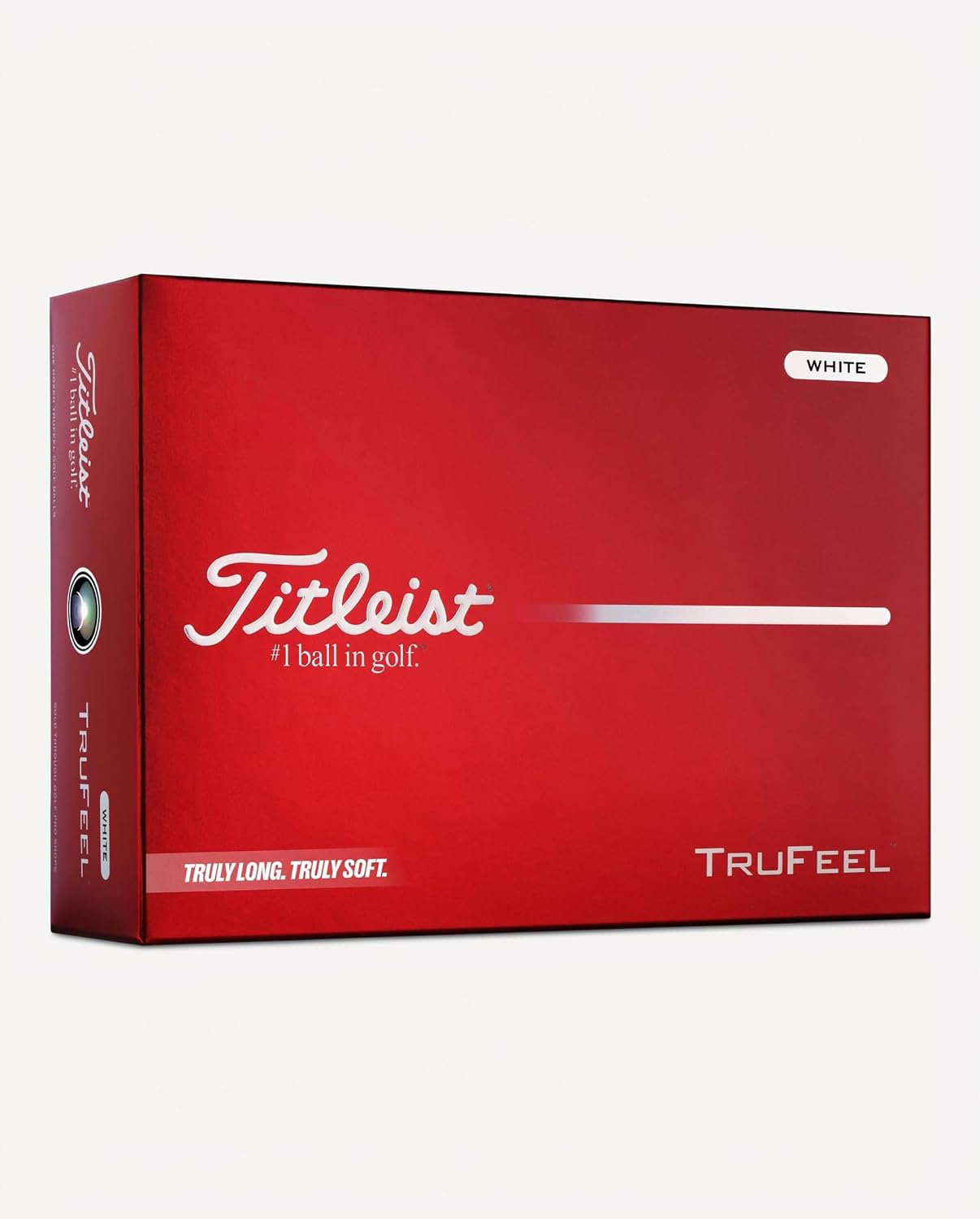
The TruFeel is my “sensible default” recommendation for any high handicapper who wants a well-known brand and a reliable ball without overspending. Titleist’s TruFlex cover isn’t full urethane, but it’s noticeably softer than pure ionomer around the greens, and the TruTouch core produces respectable ball speed off the driver. At 60 compression it fits swing speeds from 70 to 95 mph, which covers most high handicappers.
The visible differentiator is the red alignment stripe printed on every ball. It’s a small feature — but if you struggle to line up putts or drives, it’s genuinely useful. Titleist’s rationale: help the golfer start the ball on line and confidence follows. Reasonable premise.
Best for: High handicappers who want a trusted brand, soft feel, and one clear improvement lever (alignment aid) without paying urethane premiums.
Honest weakness: at $30 per dozen, this is one of the pricier balls on the list. If you lose 3+ balls per round, the Kirkland Performance+ or Wilson Duo Soft delivers more value per stroke.
2. Kirkland Signature Performance+ — Best Value in the Category
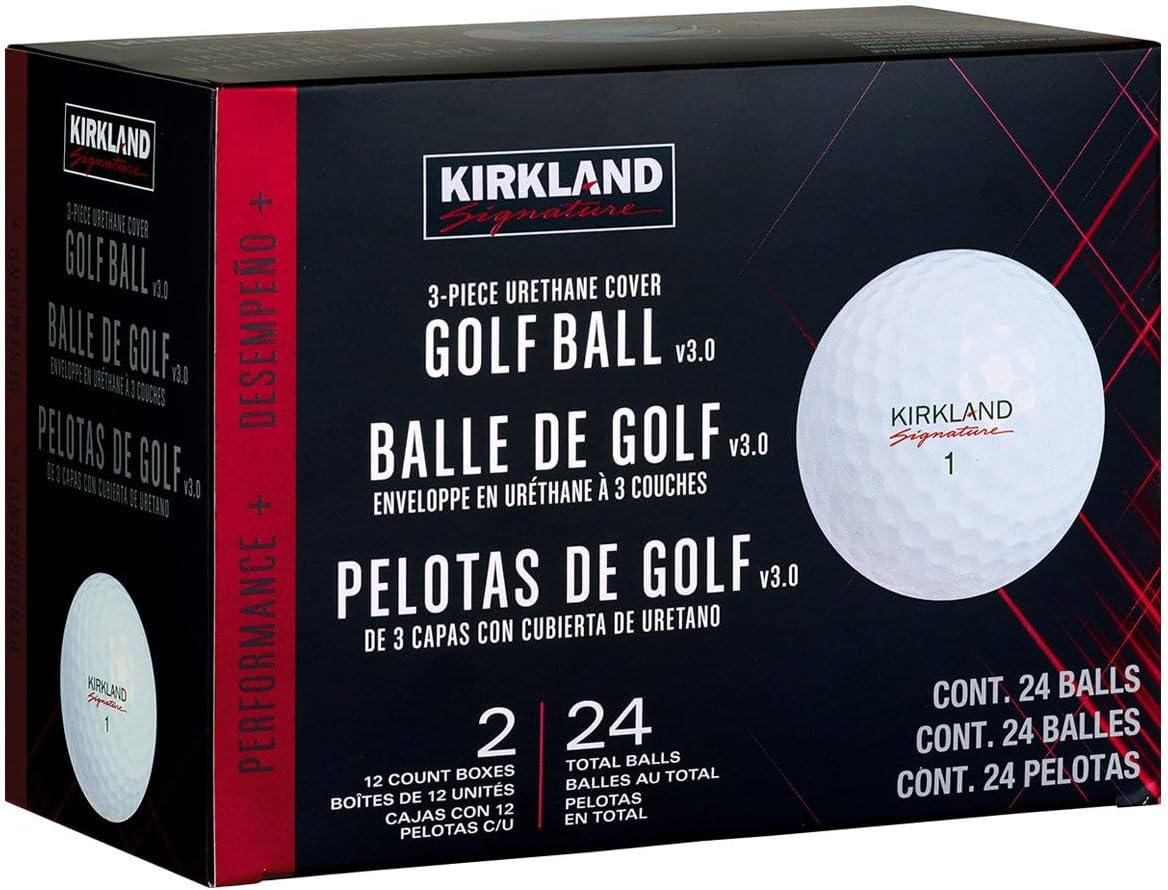
Costco’s Kirkland Signature Performance+ is the weird one on this list. It’s a genuine 3-piece urethane ball — the same construction category as Pro V1 and Chrome Tour — and it sells for around $25 per dozen at Costco. That’s not a typo. That’s the price of many ionomer balls.
The 2025 refresh (V3) fixed most of the diameter-consistency complaints that plagued earlier versions. It’s not identical to a Pro V1, but for a high handicapper it delivers 90-plus percent of the performance for less than half the price. The greenside spin is real. The feel is real. If your contact quality can engage a urethane cover, this is the best-value ball on this entire list — and it’s not close.
Best for: Costco members. High handicappers who can consistently hit clean wedge shots. Anyone who wants to test whether urethane actually helps their scoring before committing to premium prices.
Honest weakness: you have to be a Costco member. And Kirkland balls occasionally sell out for months at a time — availability is inconsistent.
3. Callaway Supersoft — Best for Slow Swings
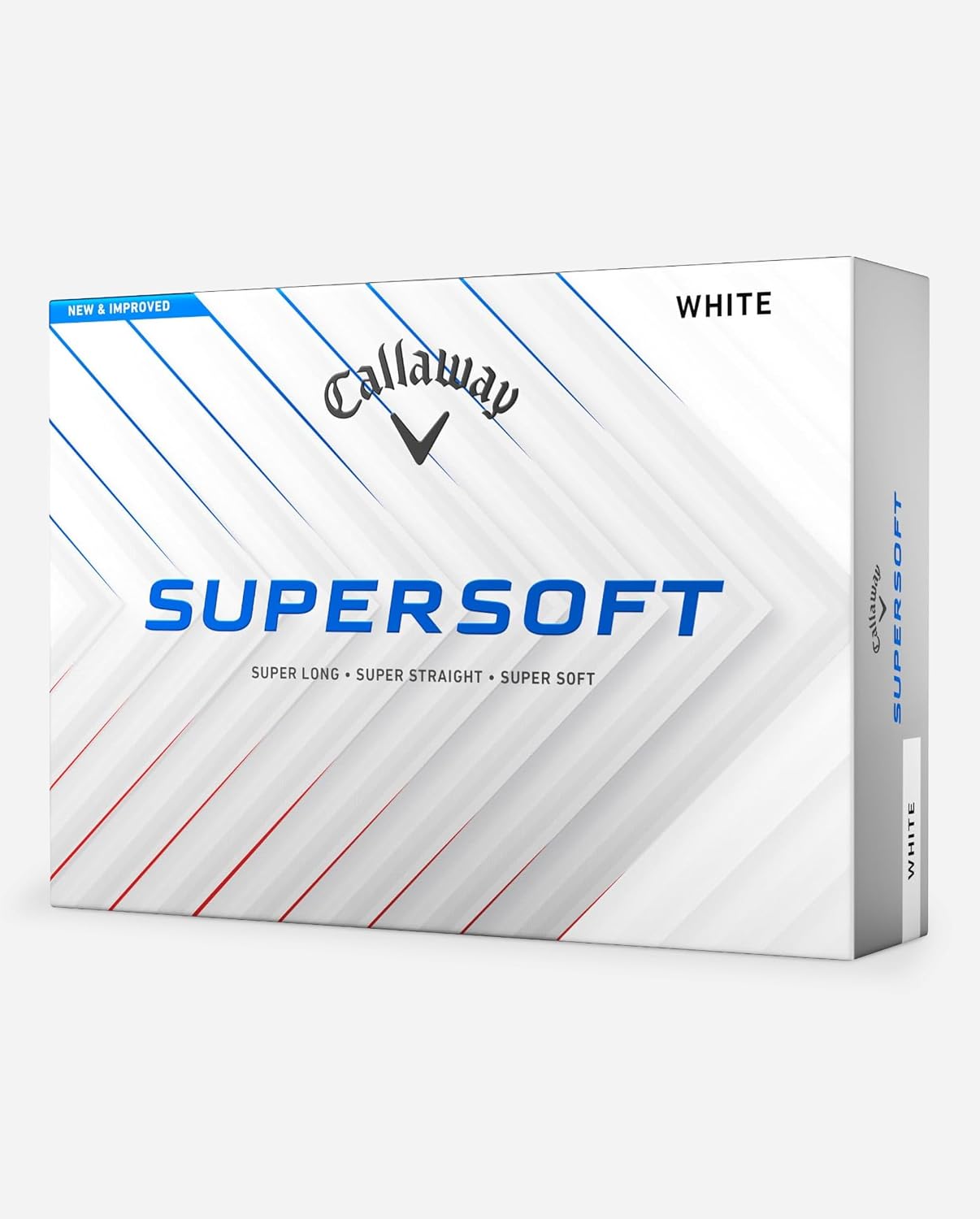
The Supersoft has been Callaway’s slow-swing champion for years and the 2026 version keeps that identity. 50 catalog compression is one of the lowest in the industry, and the hybrid cover — thinner ionomer with a urethane-like feel — is a genuine step up from pure Surlyn balls in the same price range. If your driver swing speed is under 90 mph and you want a soft feel, this is the ball.
What Supersoft is not: a distance boost for slow swingers. The “low compression = more distance” claim shows up in marketing constantly, and the lab data does not support it. You’ll feel the softness, you’ll like the feel, and your ball speed at 85 mph swing will be within 1 mph of a firmer ball. Buy it because you want the feel, not because you’re chasing an extra 5 yards.
Best for: Swing speeds under 90 mph who value soft feel. Anyone who came from the Duo Soft or Precept Lady Softness world and wants a small step up in short-game feel.
Honest weakness: at higher swing speeds (95+ mph), the ball over-compresses and you’ll lose distance. Wrong ball for that reader.
4. TaylorMade Noodle Long & Soft — Best Cheap Distance
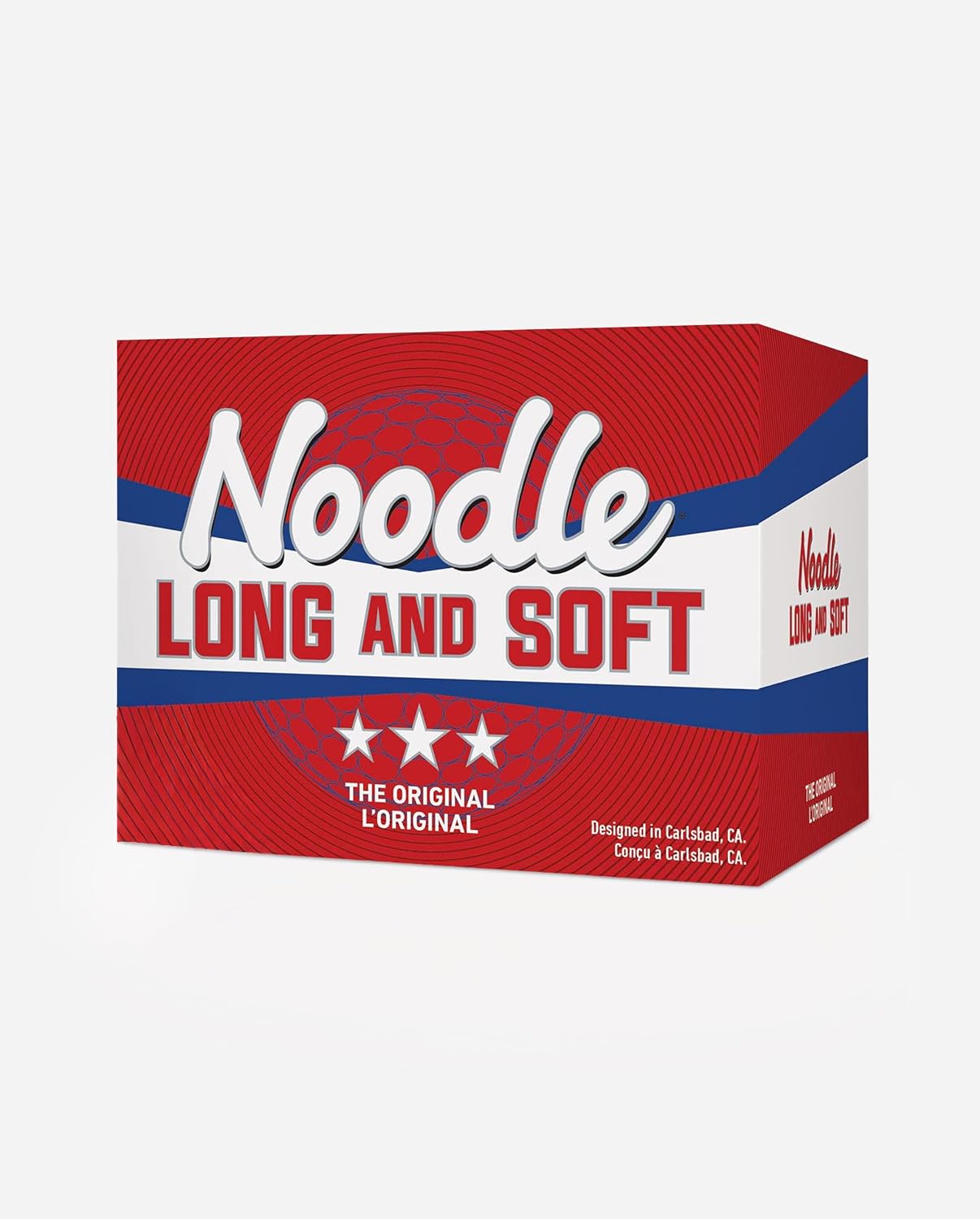
Full disclosure: I’ve watched someone win the long-drive contest in a scramble with the Noodle. Cheap ball, aggressive core, low compression. It’s the ball I recommend to anyone who’s losing 4-plus balls per round and doesn’t want to weep every time one goes OB. The 2-piece Surlyn cover isn’t going to check up on the green — the ball is going to release forward on every wedge and stop when it stops rolling. But most high handicappers aren’t sticking wedge shots inside 15 feet consistently anyway, so the greenside spin loss doesn’t cost you strokes.
What the Noodle does deliver is distance off the driver. The name is honest — long and soft. Combine that with $20 per dozen pricing and you’ve got the ball that never punishes you for a bad decision to hit driver on a hole you shouldn’t.
Best for: Beginners, weekend players who lose a lot of balls, and anyone whose priority is “hit it long, don’t cry when I lose it.” Anyone in the 15+ handicap range with a swing speed above 90 mph.
Honest weakness: zero greenside grab. Your wedges will release across the green. If your short game is your strength, buy something else.
5. Bridgestone e6 Soft — Best Straight-Flight Ball
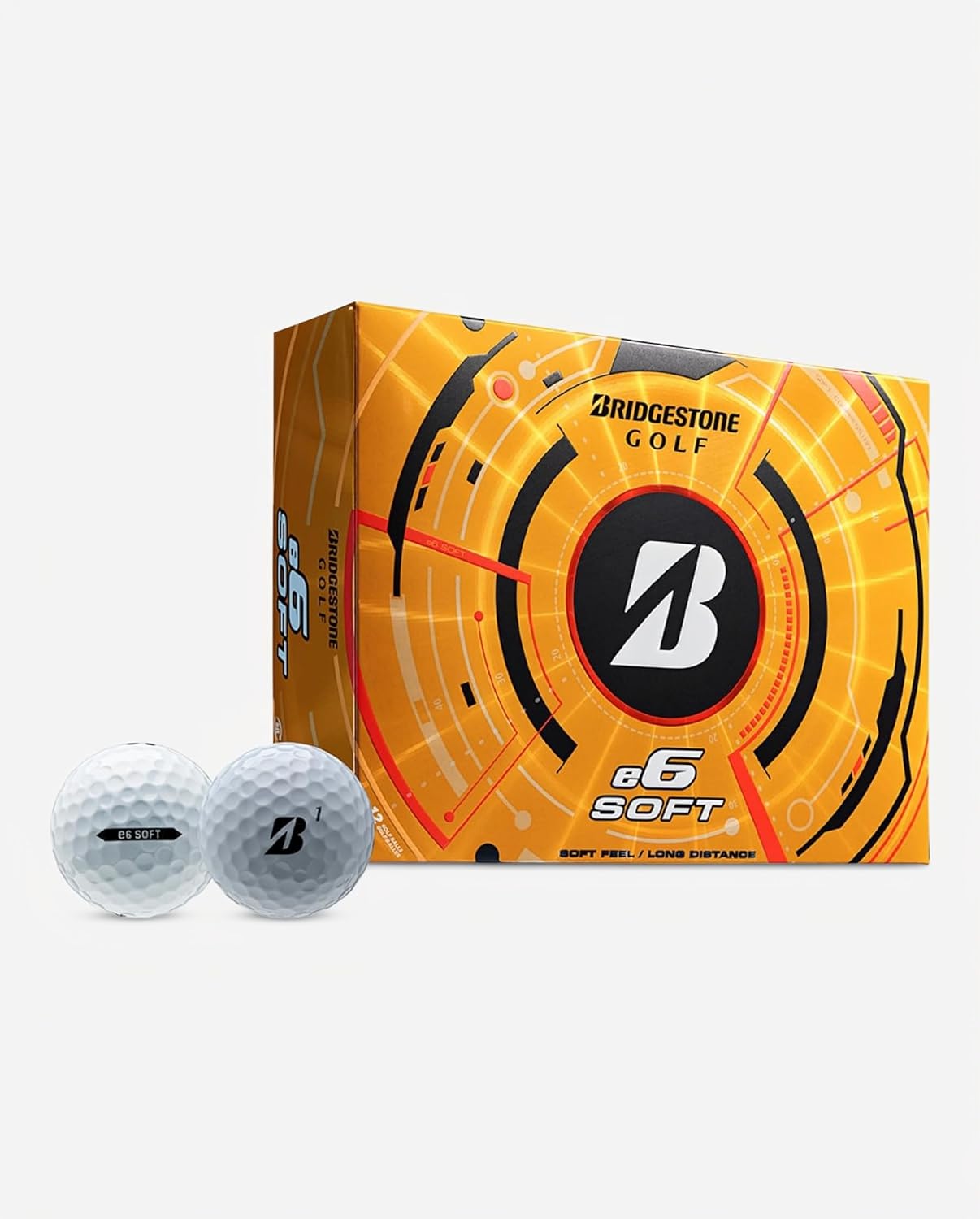
Bridgestone’s e6 line has been marketed for decades as “the straight ball” and there’s real design work behind that claim. The dimple pattern and mantle are tuned to reduce sidespin off the driver — that translates to less curve on your slice, which means more fairways hit. If your miss is a fade or slice, this is the ball that fights it.
The 40 compression makes it feel soft at impact, and the ionomer cover gives you enough greenside behavior for chip-and-runs. Not a wedge-check ball, but for a high handicapper who prioritizes finding the fairway, that trade is worth it.
Best for: Slicers. Chronic short-side missers. Anyone who’s tried to swing “less” to hit fairways and still can’t stop the ball from curving.
Honest weakness: if your miss is a hook, the e6 won’t help — its straightening design is symmetric, not slice-specific.
6. Bridgestone e12 Straight — Best 2-Piece Distance

Newer than the e6, the e12 Straight combines slice-correcting flight design with a firmer 65-compression core for a bit more ball speed. Two-piece ionomer construction, which means low driver spin and durable cover. Today’s Golfer’s 2026 robot test rated the e12 series as the best 2-piece ball for tee-to-green performance across three swing speeds — that’s meaningful third-party validation, not just marketing.
Think of the e12 as the modern successor to the e6 for players with a slightly firmer swing preference. Same slice-correcting design philosophy, more distance ceiling.
Best for: High handicappers with driver swing speeds 85+ mph who like the e6 straight-flight idea but want more ball speed.
Honest weakness: firmer feel than the e6. If you want the softest ball possible, look at Duo Soft or Supersoft.
7. Srixon Soft Feel — Best Budget Name Brand
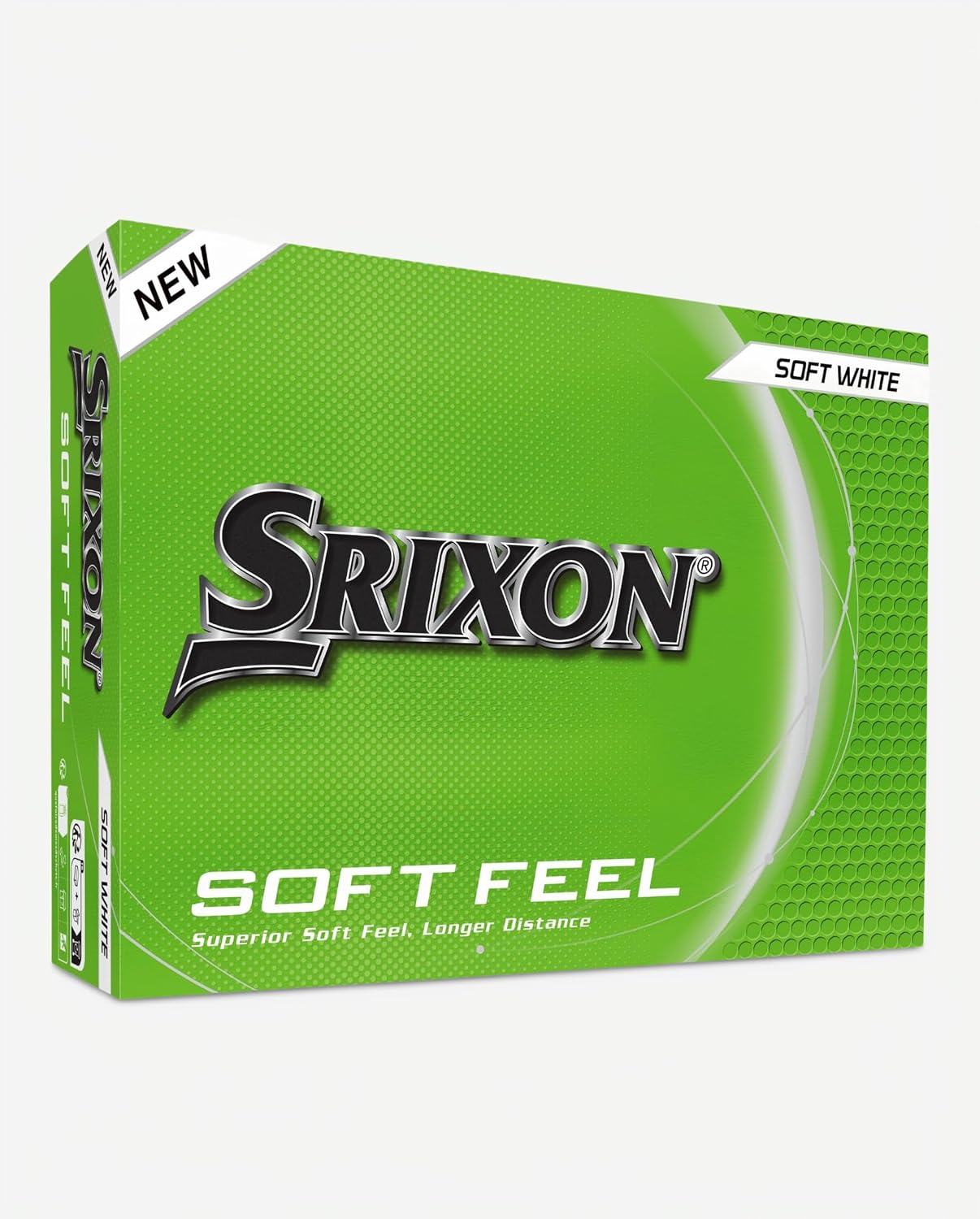
Srixon’s Soft Feel is the cheapest name-brand ball from a company that also makes tour-level products. At $25 per dozen and 60 compression, it competes directly with the Callaway Supersoft on price and softness while adding Srixon’s 338 Speed Dimple pattern, which is genuinely better in wind. If you play courses with a lot of exposed holes, the Soft Feel flies straighter through crosswinds than most balls in this price range.
Not a big greenside grab, but that’s not the pitch. This is a distance-and-flight ball with a soft impact feel, at a price that lets you buy 3 dozen without thinking about it.
Best for: Windy-course players. High handicappers who want a name brand and a soft ball but don’t need urethane grab.
Honest weakness: if you’re inside 30 yards of the green a lot and need spin to hold, look elsewhere. Soft Feel releases forward on chips.
8. Wilson Duo Soft — Softest Ball on the Market
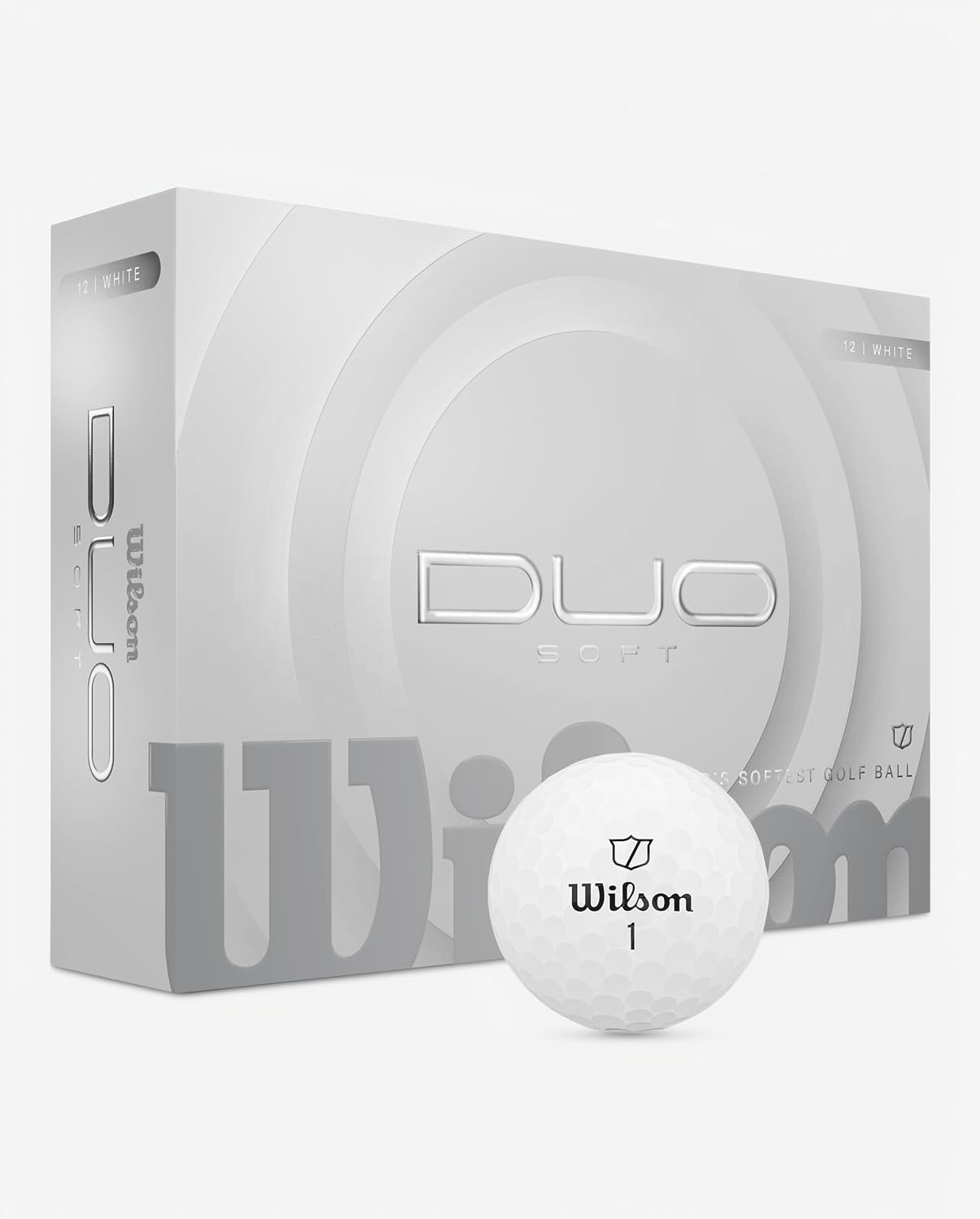
Wilson has been marketing the Duo Soft as “the softest ball on the market” for years and the 37-compression rating backs the claim. This is genuinely a specialty ball for slow swings and feel-first players. At sub-70 mph swing speeds it gets airborne easily and gives you a genuinely different feel off the putter than any other ball on this list.
The trade-off: at 90+ mph swing speeds the Duo Soft over-compresses and you lose distance. This isn’t a jack-of-all-trades ball. It’s a specialty tool for a specific reader.
Best for: Swing speeds under 80 mph, senior golfers, feel-first players who value soft impact above all else.
Honest weakness: not enough ball speed for faster swings. If you’re a 100 mph driver swinger, this is the wrong ball regardless of your handicap.
9. Vice Tour — Best DTC Delivery
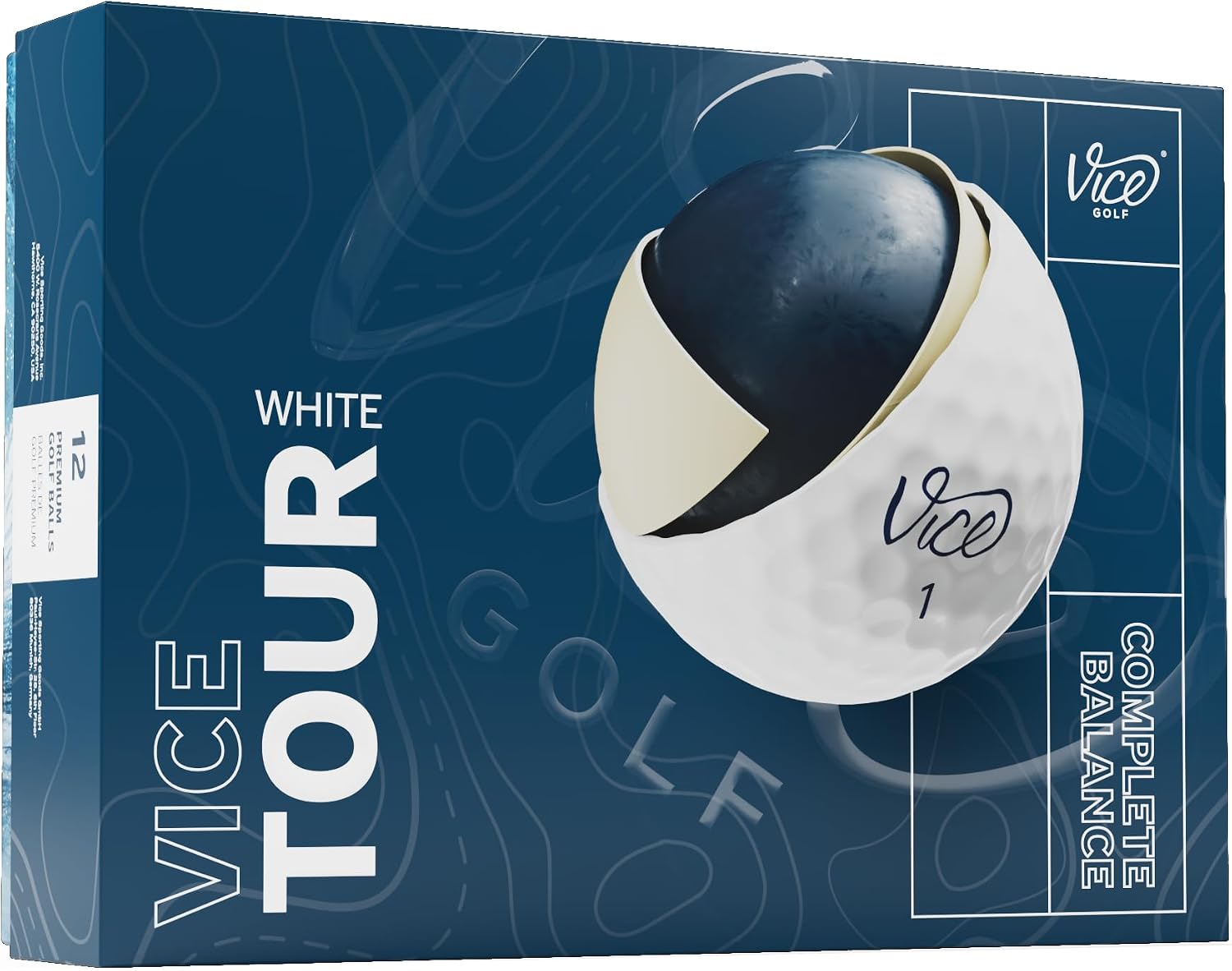
Vice’s Tour is a 3-piece ionomer ball delivered direct-to-consumer from Vice’s website — no retail markup, no distributor. The 3-piece construction produces a slightly softer feel and marginally better greenside behavior than most 2-piece ionomer balls in this price range, though it doesn’t grab like true urethane. Compression is 95 which puts it in mid-firm territory — this is the higher-swing-speed pick within the ionomer tier on this list.
Where Vice wins is the subscription model. You buy 3 dozen at once, they show up at your door, and you never rummage around the pro shop for balls before a round. For a golfer who plays weekly, the “auto-refill” experience is genuinely different from the retail cycle.
Best for: Faster-swinging high handicappers (90+ mph). Anyone who wants the DTC subscription convenience.
Honest weakness: not available in retail, so you can’t try a sleeve before committing to 3 dozen. Higher compression makes it a poor fit for slower swings.
10. Callaway Warbird — Cheapest Playable Ball
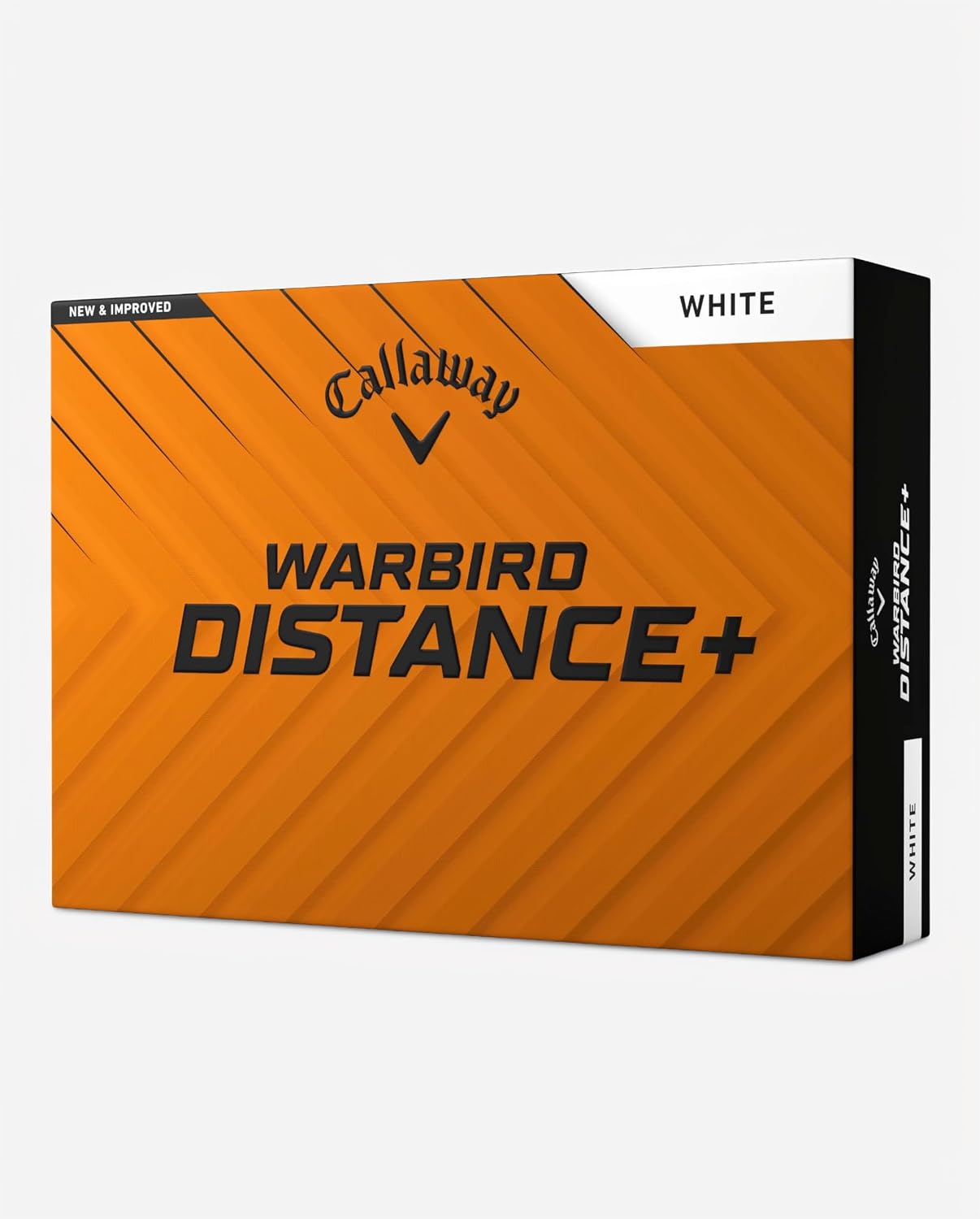
The Warbird is Callaway’s answer to “give me a decent ball for under $20.” It’s 90 compression, aggressive HEX aerodynamics for reduced drag, and a firm ionomer cover for durability. Not a soft-feel ball. Not a spin ball. But if your priority is “acceptable distance at the lowest possible cost per dozen,” the Warbird earns its place.
This is the ball you buy 4 dozen of at Walmart for a range session or when you’re going to a course where you lose 5 per round. It’s built to survive impacts and keep flying.
Best for: Practice-heavy players, high-loss-rate courses, faster-swing high handicappers who don’t care about feel.
Honest weakness: firm feel is polarizing. If you played a soft ball for years, the Warbird will feel like a rock. And slower swings (under 90 mph) can’t compress it enough to hit its distance ceiling.
Cost Analysis: How Many Balls Do You Lose Per Round?
Here’s the math nobody in this category runs. If you lose 3 balls per round and play once a week, ball cost isn’t a rounding error — it’s a real line item. Below is what each ball on this list actually costs you per round at 2 and 3 balls lost.
| Ball | Price/doz | Cost per ball | 2 balls lost/round | 3 balls lost/round |
|---|---|---|---|---|
| Titleist Pro V1 (for comparison) | $57 | $4.75 | $9.50 | $14.25 |
| Titleist TruFeel | $30 | $2.50 | $5.00 | $7.50 |
| Callaway Supersoft | $25 | $2.08 | $4.17 | $6.25 |
| Bridgestone e6 Soft / Srixon Soft Feel | $25 | $2.08 | $4.17 | $6.25 |
| Kirkland Sig. Performance+ | $25 | $2.08 | $4.17 | $6.25 |
| TaylorMade Noodle / Wilson Duo Soft / Callaway Warbird | $20 | $1.67 | $3.33 | $5.00 |
The gap between a $57 Pro V1 and a $20 Noodle at 3 balls lost per round is $9.25 per round. That’s $481 per year if you play 52 rounds. And unless you’re consistently hitting wedge shots that use the Pro V1’s greenside spin advantage, that $481 isn’t buying you strokes — it’s buying you the branding on the ball.
The Kirkland Performance+ at $25 per dozen breaks this math open. It’s a 3-piece urethane ball at the same price as a 2-piece ionomer. If your contact quality can engage the urethane cover, you’re getting Pro V1-adjacent performance for 44 cents on the dollar.
Should You Play a Colored Ball?
Most balls on this list are also sold in yellow. Some are available in orange, pink, red, or green. For a high handicapper who loses 3-plus balls per round, colored balls aren’t a gimmick — they’re a real cost saver. A yellow Noodle in tall rough is a lot easier to find than a white one.
- Yellow: the highest-visibility color across most lighting conditions. Every ball on this list except Kirkland Performance+ is available in yellow.
- Orange: excellent for autumn play — stands out against fallen leaves.
- Pink / Red / Green: personal preference. Vice offers a paint-splatter design (“Vice Neon”) for maximum visibility.
Performance is identical across colors — the paint doesn’t change the ball’s physics. You’re paying for visibility, not distance. If you find 30% more of your balls in the rough because you can see them, you break even on ball cost within a few rounds.
Should a High Handicapper Play a Premium Ball?
Direct answer: usually no. A Pro V1, Chrome Tour, or TP5 delivers three specific advantages over the balls on this list — greenside spin, tighter dispersion, and premium feel. All three are real. None of them meaningfully help a golfer who can’t already do the following consistently:
- Strike a wedge shot on the sweet spot 6 out of 10 attempts
- Hit driver in the fairway 6 out of 14 attempts on a full round
- Reach greens in regulation on more than 20% of holes
If you’re not there yet, the greenside spin gap between a TruFeel and a Pro V1 doesn’t affect your scorecard. You’re still not landing approach shots close enough for spin to matter. Save the $32 per dozen difference and put it toward lessons or the Stack System to build swing speed.
The one exception: if you’re a high handicapper whose short game is your strength, and you break 90 regularly on holes where you can chip and putt out of trouble — try the Kirkland Performance+. It’s the cheapest way to test whether urethane spin actually helps your scoring, without the $57 commitment.
Compression and Cover Material Explained
Two variables drive most of the differences between the balls on this list:
Compression
Compression is how firm the ball feels at impact. Low compression (under 60) feels soft; high compression (90+) feels firm. Match compression to your driver swing speed:
- Under 85 mph: Soft compression (Duo Soft, Supersoft, TruFeel, Soft Feel, e6 Soft)
- 85-95 mph: Soft to Mid compression (TruFeel, e12 Straight, Noodle)
- 95+ mph: Mid to Firm compression (Warbird, Vice Tour, Kirkland Performance+)
Compression is a feel lever, not a distance lever. Playing a soft ball at 95 mph doesn’t give you more distance — it just feels softer. Match compression to your swing speed for the best feel, and pick within your speed band based on cover material and price.
Cover Material
- Surlyn / ionomer: hard, durable cover. Low greenside spin. Common on 2-piece balls. Cheapest to make and buy.
- Hybrid: thinner ionomer with urethane-adjacent feel. Some greenside grab. Callaway Supersoft, some Bridgestone e-series.
- Urethane: soft, grippy cover. Real greenside spin. Common on 3-piece and higher. Wears faster, costs more. On this list only Kirkland Performance+ has genuine urethane.
For most high handicappers, ionomer is the correct choice — durable, low-spin off the driver, and the greenside spin gap versus urethane doesn’t affect scoring at your contact quality yet. Test urethane (via the Kirkland Performance+) once your contact quality is consistent enough to notice the difference.
How to Choose Based on Your Swing Speed
The handicap number on your card doesn’t tell you which ball to buy. Swing speed does. A 20-handicap golfer swinging 105 mph needs a different ball than a 20-handicap swinging 80 mph. If you don’t know your swing speed, get it measured — a local pro shop with a launch monitor can tell you in 3 minutes, or use the swing speed calculator to estimate from your driver distance.
| Your driver swing speed | Best picks |
|---|---|
| Under 80 mph | Wilson Duo Soft, Callaway Supersoft, Bridgestone e6 Soft |
| 80-90 mph | Titleist TruFeel, Srixon Soft Feel, Callaway Supersoft |
| 90-100 mph | Bridgestone e12 Straight, Titleist TruFeel, TaylorMade Noodle |
| 100+ mph | Kirkland Performance+, Vice Tour, Callaway Warbird |
Also worth knowing: swing speed and handicap correlate loosely at best. Plenty of 20-handicap golfers swing 105 mph and can’t find fairways; plenty of 5-handicap golfers swing 85 mph and hit every green. Ball fitting is done against actual swing speed, not the number on your handicap card.
Frequently Asked Questions
What counts as a high handicap in golf?
A high handicap generally means an 18+ handicap index, or a golfer who breaks 90 occasionally but not consistently. Some sources widen the range to 15+. Practically, the “high handicap” reader is anyone whose scoring is bottlenecked by contact quality, distance, or ball-in-play consistency, rather than by putting or short-game touch.
What is the best golf ball for high handicappers in 2026?
For most high handicappers, the Titleist TruFeel at $30 per dozen is the best all-around pick — soft feel, alignment aid, trusted brand, priced right. If you’re a Costco member and your wedge contact is decent, the Kirkland Signature Performance+ at $25 per dozen delivers 3-piece urethane at ionomer pricing and is the highest-value ball in the entire category. For slow swings, the Callaway Supersoft.
Should a high handicapper play a urethane ball like Pro V1?
Usually no. Urethane’s main benefit is greenside spin, which only helps if your wedge contact is clean enough to engage the cover. Most high handicappers thin or fat 3-plus wedge shots per round, and those don’t produce the spin conditions urethane needs. You pay $32 per dozen more for a Pro V1 versus a TruFeel and get zero scoring benefit until your contact improves. The one exception: the Kirkland Signature Performance+ delivers urethane at ionomer pricing, so testing whether urethane helps your game is affordable.
What compression should a high handicapper use?
Match compression to your driver swing speed, not your handicap. Under 85 mph, use soft compression (Duo Soft, Supersoft, e6 Soft). 85-95 mph, soft to mid (TruFeel, Soft Feel, e12 Straight). 95+ mph, mid to firm (Vice Tour, Kirkland Performance+, Warbird). Compression is a feel lever — it doesn’t add distance, it just changes how the ball feels at impact.
Do colored golf balls perform differently?
No — paint color doesn’t affect ball physics. Yellow, orange, red, or pink balls perform identically to white versions of the same model. What colored balls do give you is visibility. If you lose 3 balls per round, finding an extra one because you could see it in tall rough is a real cost saver. For high handicappers, colored balls are a genuinely practical choice.
How many golf balls should a high handicapper buy at once?
Enough to last a season without switching brands. Ball fitting depends on playing the same ball consistently so you can tell what changes when you change something. If you play weekly and lose 3 balls per round, that’s 156 balls per year — buy 3 dozen at a time from a DTC source like Vice, or grab 2-3 boxes at Costco (Kirkland Performance+). Do not buy variety packs. Do not switch balls mid-season. Consistency in equipment lets you diagnose your swing without ball-choice noise interfering.
Final Verdict
High handicap is a broad category — a beginner losing 6 balls a round has very different needs from a seasoned player who breaks 90 half the time. Match the ball to how you actually play:
- You lose 3+ balls per round: TaylorMade Noodle, Wilson Duo Soft, or Callaway Warbird — $20 per dozen, don’t cry when it goes OB.
- You want a name-brand default: Titleist TruFeel — soft feel, alignment aid, $30.
- Your Costco has Kirkland stocked: Kirkland Signature Performance+ — genuine 3-piece urethane at $25, unbeatable value.
- Your swing speed is under 90 mph and you want soft feel: Callaway Supersoft.
- You slice everything: Bridgestone e6 Soft or e12 Straight.
Whichever you pick, play the same ball every round for a full season. Ball fitting is done through consistency, not variety. If you’re switching balls week to week, you can’t tell what your equipment is doing versus what your swing is doing. Commit to one ball, track your scores, and let the data tell you if you need to move up (or down) the price ladder.
And when your handicap starts to drop — under 15, then under 10 — that’s when the conversation shifts to mid-handicap urethane picks. Not before.
Related reading: Best Golf Balls for Mid Handicappers | Best Cheap Golf Balls | Best Golf Balls for Seniors | Best Golf Balls for Slow Swing Speeds | What Golf Ball Compression Actually Means | Estimate Your Swing Speed