
Last updated: September 5, 2026
⛳️ Our experts spend hours testing golf balls on the launch monitor, on-course, and reading every independent lab report we can find, before recommending anything. When you make a purchase through one of our links, we may earn a small affiliate commission, at no cost to you. Find out more about how we test products.
Quick Verdict: Best Cheap Golf Balls of 2026
Cheap does not mean bad. Kirkland Signature Performance+ costs around $17.50 a dozen and is a 3-piece urethane ball — same construction category as balls that cost three times as much. Vice Drive comes in under $20 direct-to-consumer. Callaway Supersoft is $25 and shows up on the best-sellers list every year. All of these perform meaningfully well for the money.
My cutoff is $30 per dozen at typical street price, with one Titleist exception noted below. Every ball here is currently in production and rated in the same ball database we use for premium reviews.
- Best Overall Value: Kirkland Signature Performance+ — 3-piece urethane, ~$17.50/doz effective
- Best DTC Under $20: Vice Drive — clean 2-piece ionomer, no middleman
- Best Soft-Feel Cheap: Callaway Supersoft — category best-seller, $25
- Best “Trusted Brand” Cheap Ball: Titleist TruFeel — $39, closest to premium feel at cheap pricing
- Best Slow-Swing Cheap: Srixon Soft Feel — 60-compression, $22
- Best Cheap Distance Ball: TaylorMade Distance+ — 77-comp ionomer for speed, $25
- Best Cheap 3-Piece: Bridgestone e12 Straight — anti-slice 3-piece, $29
- Softest Cheap Ball: Wilson Duo Soft — 35-compression, $25
- Best Long & Soft Cheap Ball: TaylorMade Noodle Long & Soft — the classic, $25
- Best Cheap Soft-Straight: Bridgestone e6 Soft — soft anti-slice, $29
What Counts as “Cheap” in 2026?
Premium balls now start around $50. Pro V1, Chrome Tour, TP5 — all $55 a dozen. For this article, “cheap” means $30 per dozen or less at typical street price, roughly $2.50 per ball on the high end. Vice Drive, Kirkland Signature, and Wilson Duo Soft all land in the “under $10 per sleeve” value band. TruFeel gets a one-price exception at $39 because it appears on nearly every 2026 competitor list as the “cheap Titleist” option worth naming.
What “cheap” does not mean: refurbished, recycled, or pond balls. Those are a different market with different quality risks — covered in the second half of this article.
2-Piece Ionomer vs 3-Piece Urethane at Cheap-Tier Prices
Most balls under $30 a dozen are 2-piece ionomer construction — a solid rubber core wrapped in an ionomer (Surlyn-family) cover. Two-piece ionomer is durable, hits hard, produces low driver spin (good for most amateurs). The trade-off: the cover does not grip a wedge face the way urethane does, so greenside spin is lower.
Kirkland is the outlier. The Signature Performance+ is a 3-piece urethane ball at effectively $17.50 a dozen — the same category as a Pro V1 or a Snell MTB. Genuinely unusual at this price. A urethane cover only helps if your ball-striking is clean enough to actually engage it; on a thin or fat wedge shot, urethane doesn’t save the shot. If contact quality is still a work in progress, a $25 ionomer plays essentially the same as a $55 urethane on your typical short-game shot.
Best Cheap Golf Balls 2026 (At a Glance)
| Ball | Construction | Cover | Compression | Price/doz |
|---|---|---|---|---|
| Kirkland Signature Performance+ | 3-piece | Urethane | Mid (~90) | ~$17.50 |
| Vice Drive | 2-piece | Surlyn ionomer | Mid (80) | ~$17 |
| Callaway Supersoft | 2-piece | Hybrid ionomer | Low (38) | ~$25 |
| Titleist TruFeel | 2-piece | TruFlex ionomer | Low (60) | ~$39 |
| Srixon Soft Feel | 2-piece | Ionomer | Low (60) | ~$22 |
| TaylorMade Distance+ | 2-piece | Ionomer | Mid (77) | ~$25 |
| Bridgestone e12 Straight | 3-piece | Surlyn ionomer | Mid (85) | ~$29 |
| Wilson Duo Soft | 2-piece | Ionomer | Ultra-Low (35) | ~$25 |
| TaylorMade Noodle Long & Soft | 2-piece | Iothane ionomer | Low (34) | ~$25 (2-doz packs) |
| Bridgestone e6 Soft | 2-piece | Surlyn ionomer | Low (44) | ~$29 |
1. Kirkland Signature Performance+ — Best Overall Value
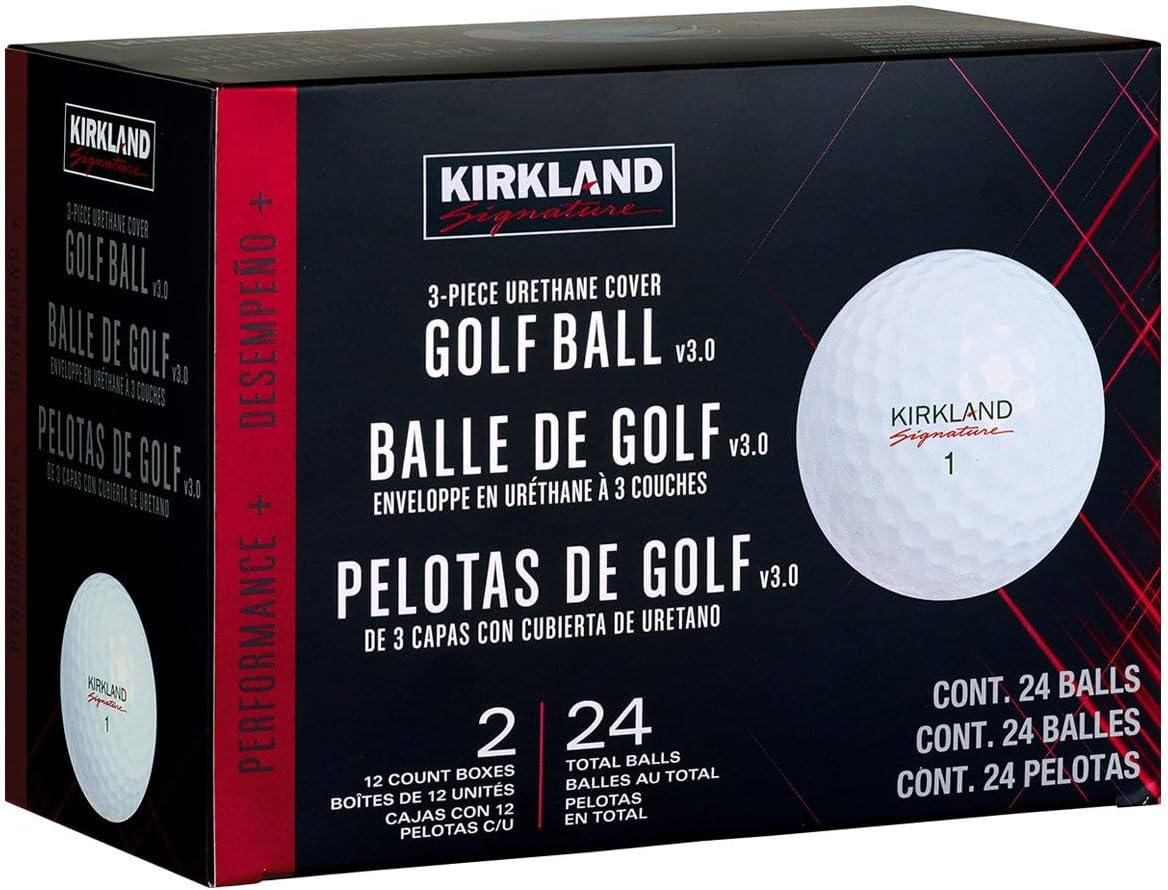
A 3-piece urethane ball at $17.50 a dozen is not supposed to exist. After the 2025 refresh — tightened diameter consistency, fixed QC issues that plagued earlier runs — it’s a legitimately competitive product. Independent robot testing (My Golf Spy, Todays Golfer) puts current Kirkland driver distance within 2-3 yards of Pro V1 and greenside spin in the cheap-urethane band alongside Snell and Vice Pro.
Best for: any golfer who wants a urethane cover without paying $50+. Buy in 3-dozen packs at Costco (24 balls) for the effective ~$17.50/doz price.
Honest weakness: availability — goes in and out of stock at Costco. Pre-2025 stock in bargain bins may be older, less-consistent runs.
2. Vice Drive — Best DTC Under $20

Vice ships direct — no retail markup. The Drive is their entry-level 2-piece ionomer at ~$17/doz with real bulk discounts at 3+ dozen. Compression 80 puts it in the mid range; the ionomer cover produces low sidespin, which helps keep slice tendencies in check. Hits like a mid-priced Titleist Velocity for less than half the price.
Best for: golfers who want a straightforward 2-piece ball and don’t mind ordering direct. Bulk discounts on 5-dozen orders are meaningful.
Honest weakness: firm-ish feel and low greenside spin, as with any 2-piece ionomer. Not the ball for a wedge-heavy short game.
3. Callaway Supersoft — Best Soft-Feel Cheap
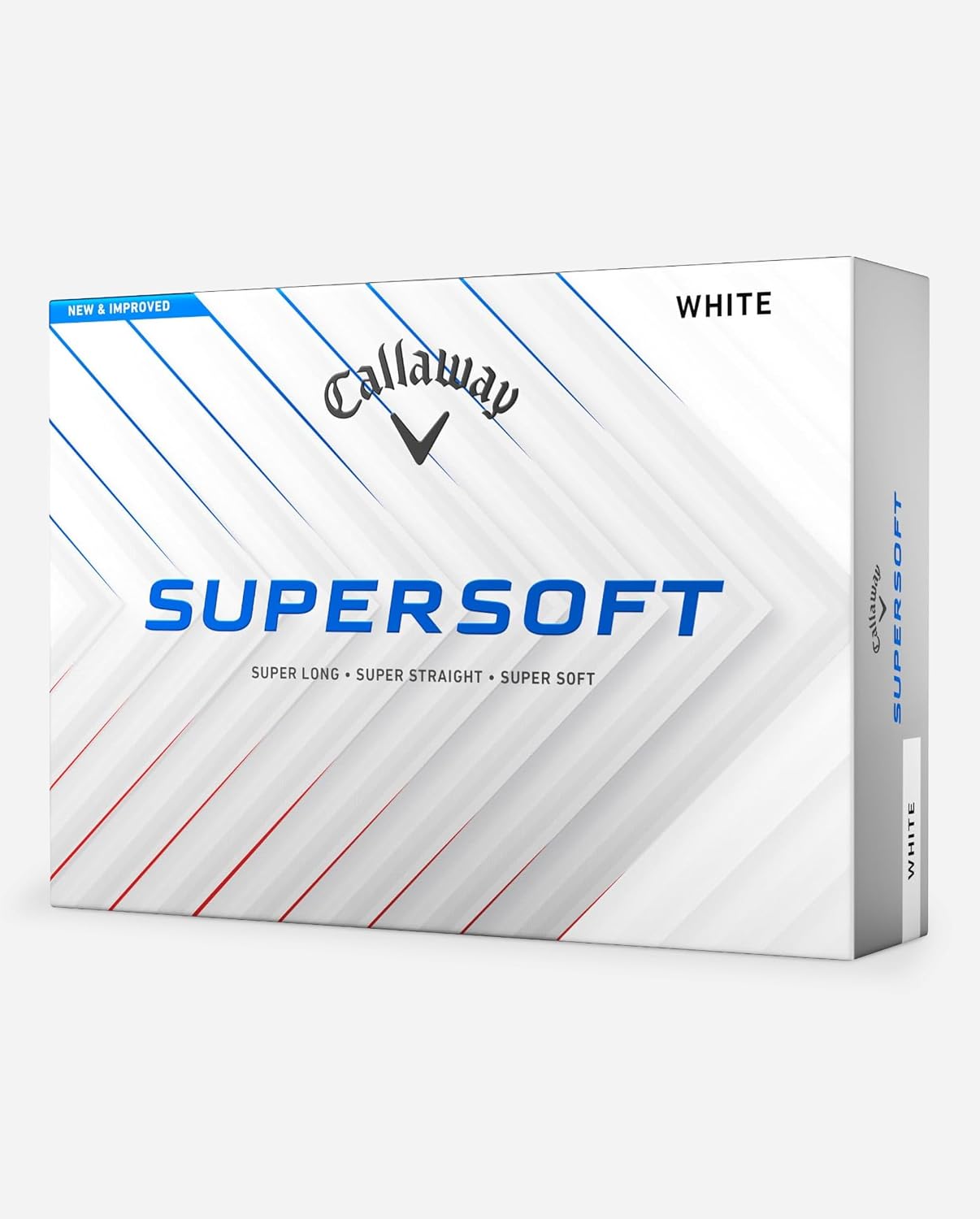
A top-selling golf ball in America year after year, and it earned the spot honestly. Compression 38 rewards moderate swing speeds with real distance, and Callaway’s hybrid cover produces a firm-but-not-hard feel with good durability. $25 for a ball that holds up in every independent test category, available in wild color options if you want it visible in the rough.
Best for: 80-95 mph driver, wants soft feel, prefers a big brand with wide retail. My default recommendation for a mid-handicap golfer who doesn’t want to overthink ball selection.
Honest weakness: above 95 mph, you’ll over-compress and give up distance. Look at Distance+ or a firmer option.
4. Titleist TruFeel — Best “Trusted Brand” Cheap Ball
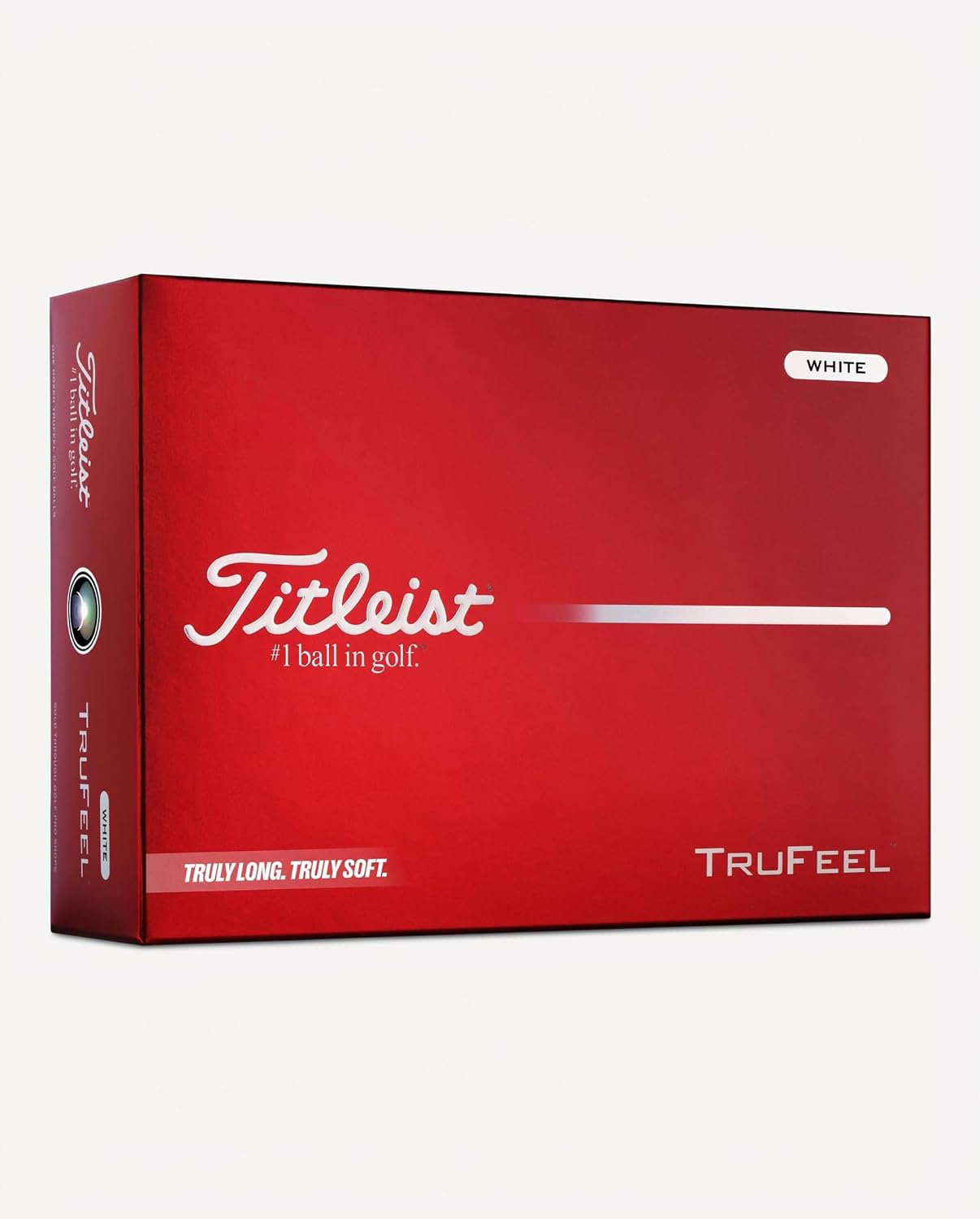
TruFeel is Titleist’s cheapest ball at $39 a dozen — the top of the cheap band. Titleist engineering shows up in the TruFlex cover: softer than traditional ionomer, better wedge feel than most 2-piece balls at any price. Compression 60 puts it firmly in “soft” territory but not as soft as Duo Soft or Supersoft. Plays firmer than Supersoft, softer than Velocity, with meaningfully better greenside behavior than either.
Best for: the Titleist loyalist on a budget. Also the golfer who wants a “cheap-but-not-really-cheap” step-down from Pro V1.
Honest weakness: $39 is $12-$22 more than everything else on this list. If price is the only criterion, look further down.
5. Srixon Soft Feel — Best Slow-Swing Cheap
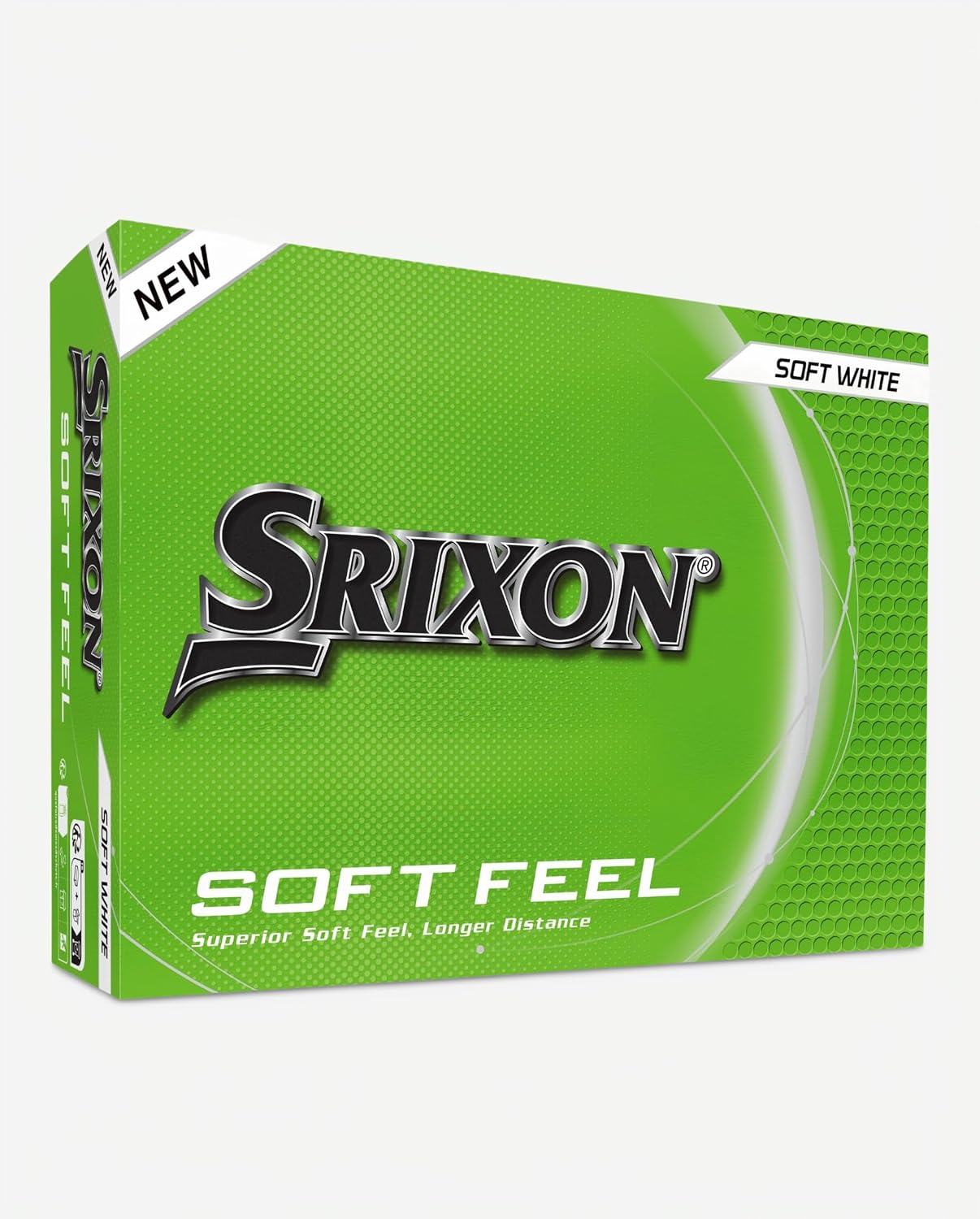
My default recommendation for slow-swing amateurs for years, and at $22 a dozen one of the best value plays in golf. Compression 60, thin ionomer cover, large soft core — genuinely low-effort feel off the face. Under 90 mph driver, this ball rewards you more than most balls twice the price. Vs Supersoft: a touch firmer at impact, slightly higher iron spin, $3 cheaper.
Best for: slow-swing amateurs under 90 mph, seniors, anyone who wants a “just works” cheap ball. Also see the senior golf ball guide.
Honest weakness: nothing at the price. Above 95 mph, you’ll want a firmer option.
6. TaylorMade Distance+ — Best Cheap Distance Ball
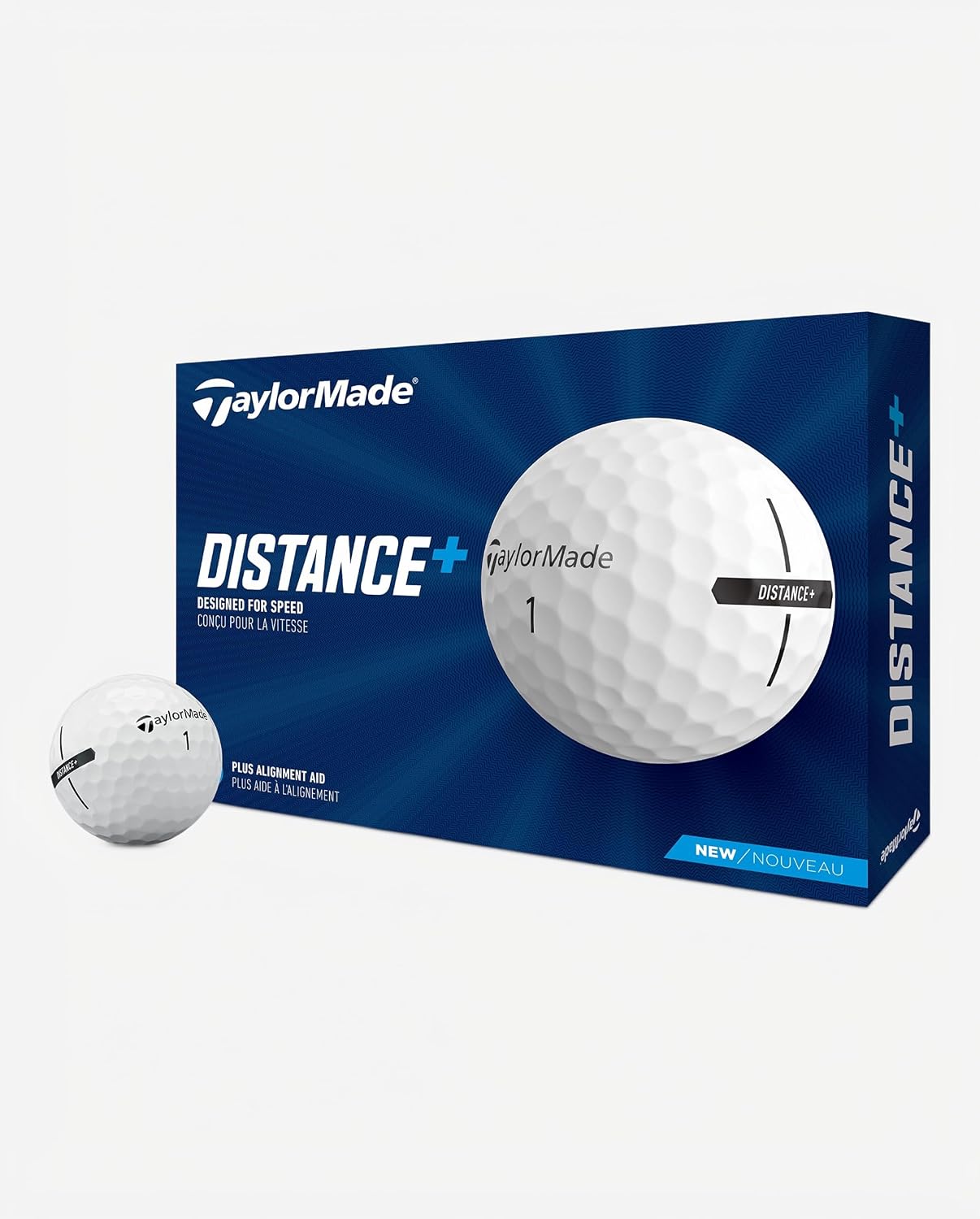
If your priority is raw carry distance and you don’t want to pay for it, Distance+ is the ball. Compression 77 in the mid range — firmer than Supersoft, softer than Pro V1x — with 2-piece ionomer construction engineered for speed. Todays Golfer’s robot testing consistently ranks it near the top for driver ball speed at moderate swing speeds. Firmer construction and ionomer cover means it won’t check up on greens the way urethane does.
Best for: 85-100 mph driver, wants max distance, willing to accept lower greenside spin.
Honest weakness: not a soft-feel ball. “Solid impact,” not “buttery.” If you like low-compression cushion, Supersoft or Duo Soft will feel better.
7. Bridgestone e12 Straight — Best Cheap 3-Piece

One of only two 3-piece balls on this list (the other is Kirkland). Three-piece construction — core, mantle, cover — gives more separation between low driver spin and higher iron/wedge spin, so the ball goes straighter off the tee and holds greens meaningfully better than a 2-piece ionomer. The “Straight” name is not marketing filler — Bridgestone uses specific dimple and mantle engineering to mute sidespin. If your typical miss is a slice, this ball shows up on the fairway more often than a Vice Drive would.
Best for: mid-handicap golfers with a slice, moderate swing, $29 budget. Also good for high-handicappers who want a construction step-up without paying $40+.
Honest weakness: if you already hit it straight, you’re paying $4-$5 extra for a feature you don’t need.
8. Wilson Duo Soft — Softest Cheap Ball
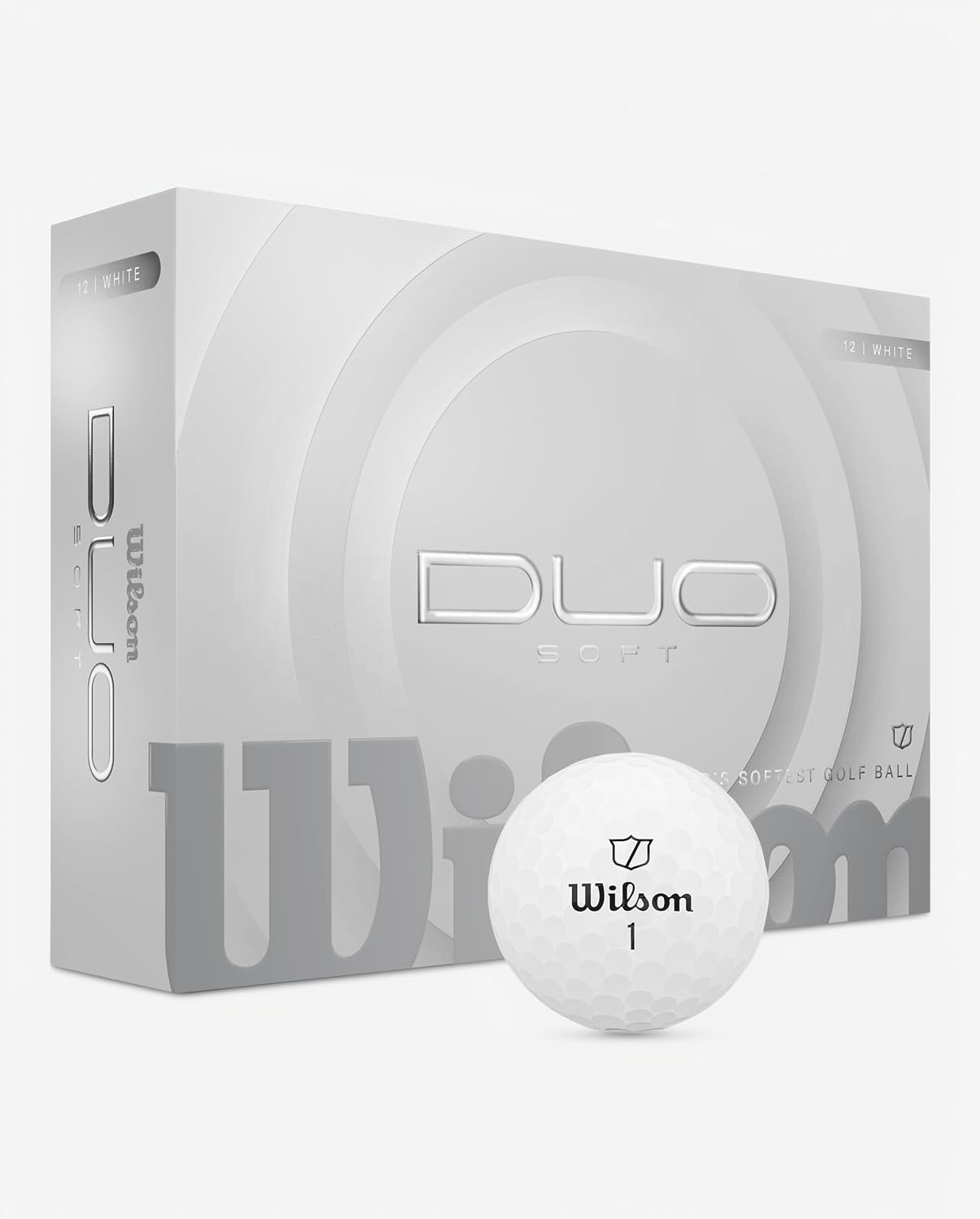
Compression 35 — genuinely the softest 2-piece ball on the market, softer than Supersoft, TruFeel, or Noodle. If you love the feel of the ball compressing under the clubface, this is the ball. Wilson has quietly built a real reputation in the cheap-ball category with the Duo family. Feel is subjective — some love the marshmallow-soft impact, others say it feels dead. Try a sleeve before committing to a dozen.
Best for: feel-first golfers under 85 mph driver. Compression this low needs a slow swing — faster swingers over-compress and lose ball speed.
Honest weakness: lower spin all around means less stopping power on approach and less curve control off the tee. “Feel and forget” ball, not a “shape shots” ball.
9. TaylorMade Noodle Long & Soft — Best Long & Soft Cheap Ball
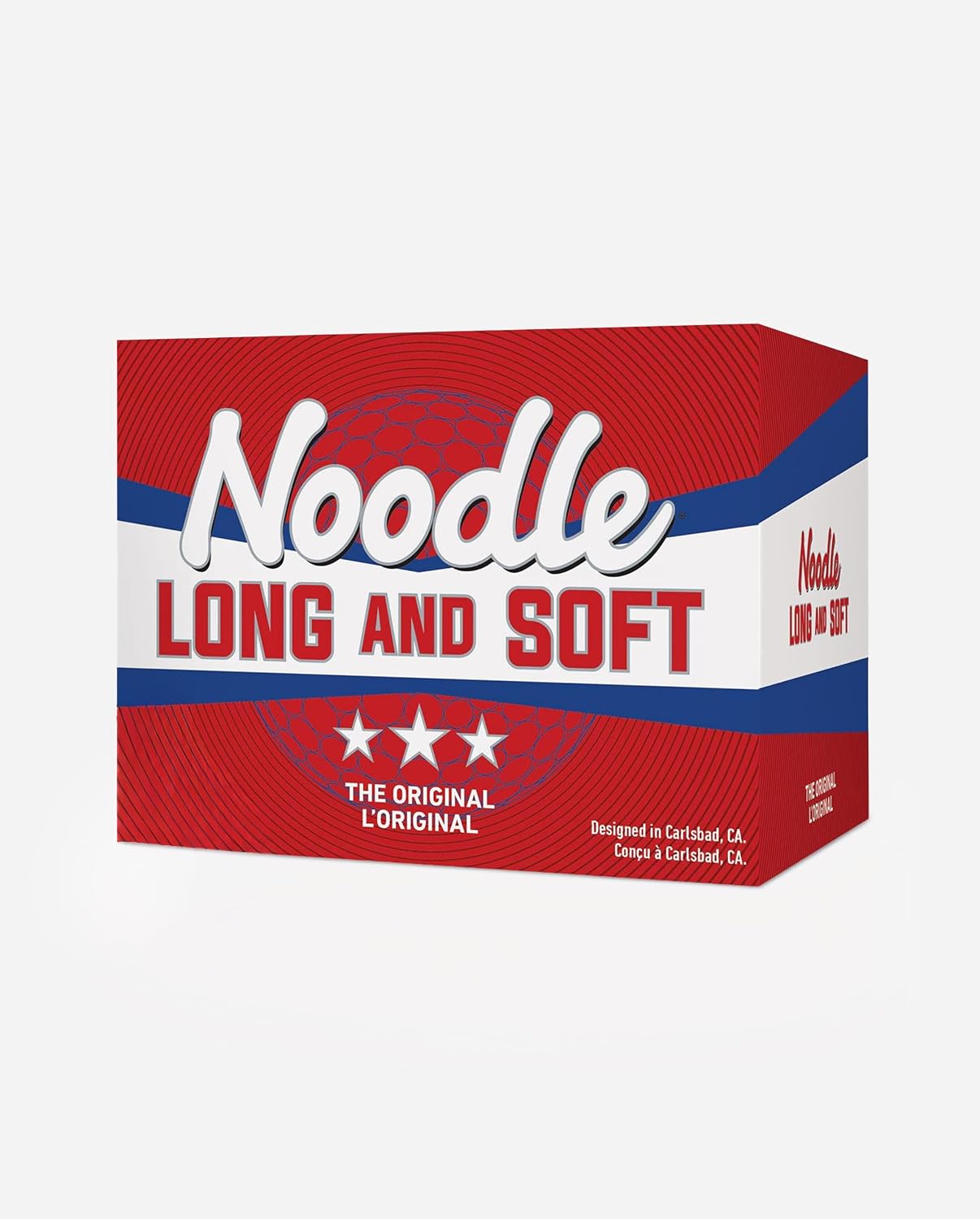
The Noodle has been on the market forever, comes in 2-dozen packs at Walmart and Amazon for around $25 (about $1 per ball), and remains one of the best pound-for-pound distance balls at the price. Compression 34 is very soft; TaylorMade’s Iothane cover adds a small amount of greenside grip. I have watched someone win a long-drive competition at a scramble event using a Noodle — a genuinely long swing plus this soft ball produced a bomb that beat a field of premium balls.
Best for: anyone who wants 24 balls for under $30, plays 80-100 mph driver, doesn’t need premium greenside performance. The default “grab a box and go golf” ball.
Honest weakness: pack-to-pack QC varies more than a premium brand. At $1 per ball you can absorb the occasional off ball.
10. Bridgestone e6 Soft — Best Cheap Soft-Straight
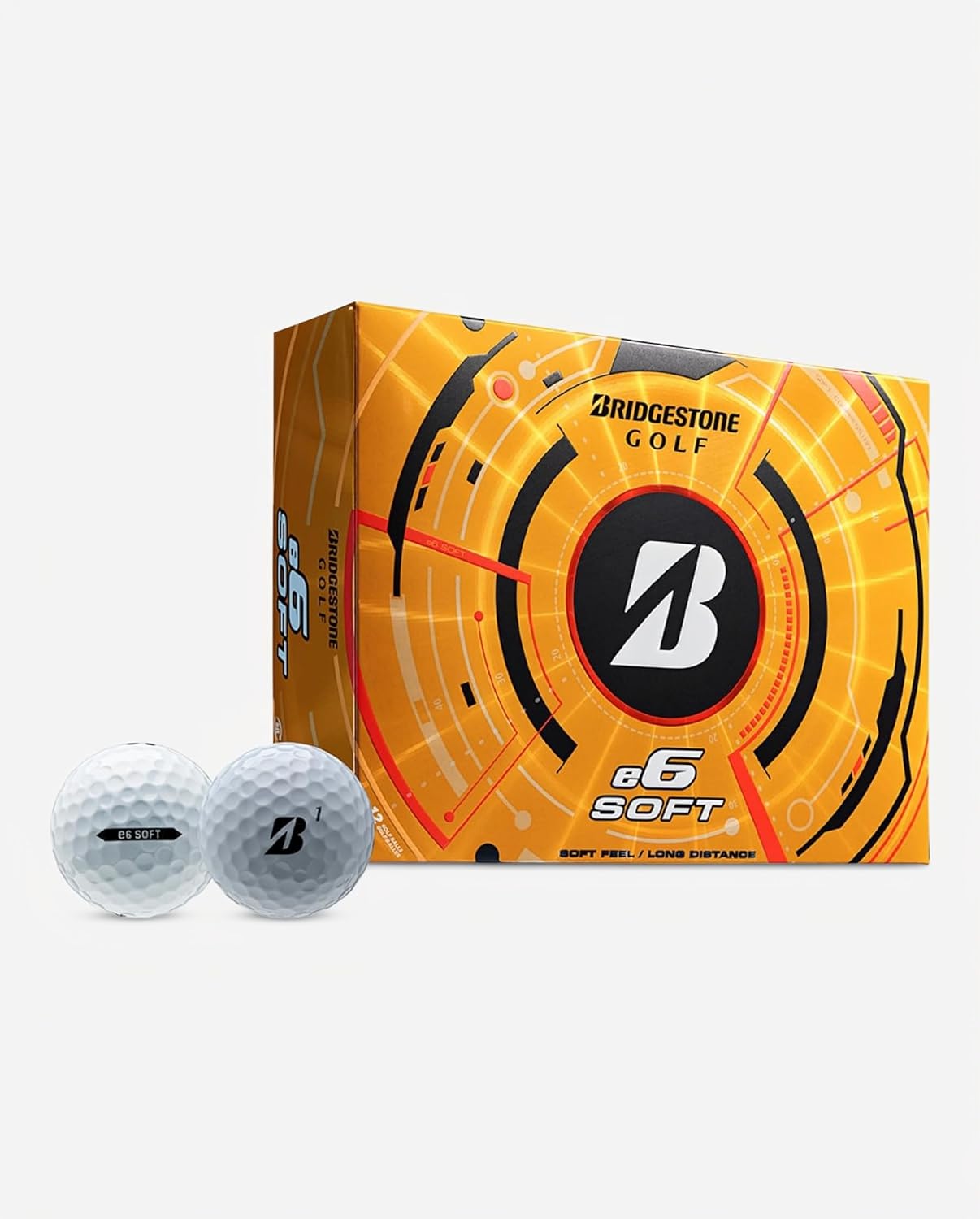
The softer sibling to the e12 Straight without the 3-piece premium. Compression 44, 2-piece ionomer, same anti-slice dimple engineering across the e-series. Vs Supersoft: slightly higher greenside spin (still low, but a notch above) and more pronounced anti-slice design. Vs Duo Soft: a bit firmer with more consistent ball flight for typical amateurs.
Best for: mid-handicap golfer who wants soft feel AND straighter flight without jumping to the 3-piece e12.
Honest weakness: $29 is at the top of the cheap band. For $4 less you can get a Supersoft, which is functionally close.
The Kirkland Question: Has the 2025 Refresh Fixed It?
Earlier versions of this article said Kirkland golf balls weren’t worth playing. That was based on hitting them against the Noodle and other cheap options on my simulator in 2022 and watching Kirkland come up short on distance. That opinion is out of date: the current Performance+ is not the same ball I disliked back then. What changed in 2025:
- Diameter consistency tightened. Independent audits in 2025 show current-generation Kirkland comparable to Vice and Snell — not Titleist-level, but no longer meaningfully worse than the mid-DTC pack.
- Distance caught up. Robot testing (My Golf Spy 2025, Todays Golfer) shows current Kirkland within 2-3 yards of Pro V1 driver distance at moderate swing speeds.
- Greenside spin is legitimate. The urethane cover produces the expected 9,000+ rpm on lofted wedges from clean lies.
If you saw my previous take and dismissed Kirkland, this is the update: the ball got better. Buy the current-generation Performance+ in-stock at Costco (not leftovers from 2022) and you’re getting a genuinely competitive 3-piece urethane ball at unmatched pricing.
Don’t Play With Other People’s Balls — OPB’s
One of the cheapest ways to acquire golf balls is to pick them up as you find them. Slice one into the woods and you might walk out with six balls. Fish one from the pond and now you have a bucket. Free is a hard price to beat.
If you’re going to play OPB’s, understand what you’re getting. A ball found in the woods might have been sitting a week or six months, might have absorbed moisture, might have UV damage on the exposed side. A ball fished from a pond has almost certainly absorbed water (see next section). And a ball that looks fine cosmetically might still be off-spec — you can’t inspect the internals with a naked eye.
My general rule: don’t pull it out of the water unless you watched it go in. If it’s a ball you hit into the pond in the last five minutes, fine. If it’s been sitting in the pond bottom with a hundred others of unknown vintage, leave it — it’s not free, it’s a compromise on quality that costs you strokes. For casual social golf where score doesn’t matter, none of this matters. For any round where the score matters to you, play a fresh ball.
Water Logged?
Yes, golf balls really do get water-logged, and it really does affect performance. USGA specifications state a golf ball must weigh no more than 1.62 ounces. I have a bucket of pond balls and nearly every one weighs over 1.62 ounces. Not by much — but enough to affect distance, especially at lower swing speeds. Here is a brand-new Vice on the scale, followed by a few random pond balls.
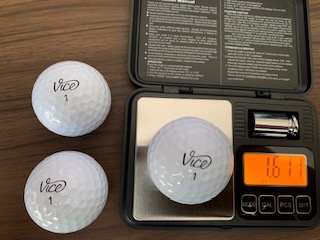
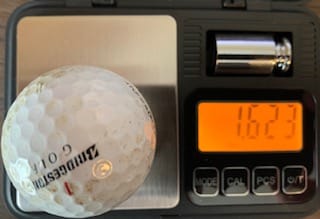
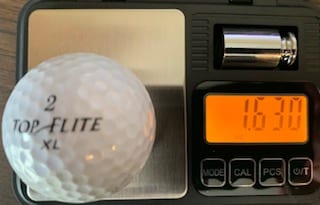
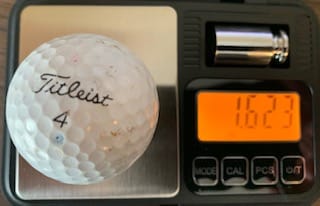
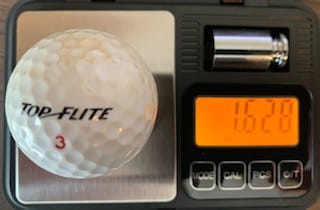
Every pond ball above weighs over the USGA maximum. Water absorption is a real physical process — the ionomer cover isn’t perfectly waterproof, and given enough time submerged, a golf ball takes on measurable weight. That weight costs distance, especially for slower swing speeds where you don’t have the club speed to overcome the extra mass. Physics, not a moral judgment.
Cheap Recycled Golf Balls
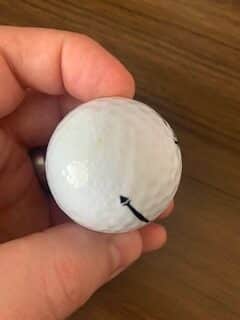
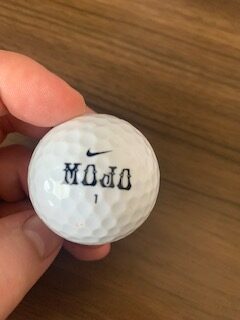
Recycled and refurbished balls are a different market than “new cheap balls.” Companies buy up pond balls, wash them, sometimes repaint the surface, and sell them in bulk. You can get Pro V1s and Chrome Softs for $1-$2 per ball this way. The problem is quality control. Here’s a “recycled” ball I pulled from a batch I ordered — one side looks like the paint was melted or overpainted, and dimples are missing from a section. That’s not a playable ball, it’s trash resold as a bargain.
At $2 per ball, if only 8 of 12 are playable, your effective price per playable ball is $3 — not that much cheaper than a new Kirkland. If you insist on buying used, use a reputable vendor with a grade system that actually means something. See our guide to buying used golf balls.
When to Move Up From Cheap Balls
Cheap balls are the right pick for most amateur golfers. Two clear signals it’s time to consider stepping up:
- Your wedge shots land near the flag but roll off. You’re leaving strokes on the table because the ball can’t grab. A $17 Kirkland is the cheapest urethane; a $30-$40 mid-tier (Maxfli Tour, Snell MTB Prime) is the deeper move.
- You’ve built up swing speed and your current ball is over-spinning or under-launching. Above 100 mph driver, a soft low-compression ball works against you. That’s the moment to look at Distance+, a mid-tier ball, or a low-spin premium option — see our low-spin ball guide.
Everything else — new to the game, working on contact, playing casual rounds, losing more than a ball per round — the cheap tier is where you belong. Play them without apology and use the savings for a lesson.
Frequently Asked Questions
Are cheap golf balls actually worth playing?
Yes, for most amateurs. Independent robot testing shows cheap balls like the Kirkland Performance+ come within 2-3 yards of Pro V1 driver distance at typical amateur swing speeds. Premium-ball benefits only show up meaningfully when ball-striking is clean and the short game can take advantage of urethane spin — on most shots for a mid or high handicapper, a $25 cheap ball plays essentially the same as a $55 premium ball.
What is the cheapest good golf ball?
Kirkland Signature Performance+ at Costco, effective ~$17.50/dozen in multi-dozen packs, is the cheapest genuinely competitive ball on the market — and it’s a 3-piece urethane, unheard of at that price. Vice Drive is close behind at ~$17 DTC. Wilson Duo Soft and TaylorMade Distance+ are both around $25 and easier to find in retail.
Are Kirkland golf balls actually good?
The current post-2025 Kirkland Performance+ is genuinely good — 3-piece urethane, tightened diameter consistency, driver distance within 2-3 yards of Pro V1 in independent testing, and greenside spin in the legitimate urethane band. Older Kirkland generations had real consistency issues and earned some of the negative reputation. Today’s stock is competitive with balls costing 3x as much.
Should I buy recycled or refurbished golf balls?
Only from a reputable vendor with a real grade system. Cheap recycled balls have serious QC problems — I’ve received dozens where multiple balls were unplayable — and the effective cost per playable ball ends up close to a new cheap ball. If you’re buying used, spend a bit more for AAAA-grade Pro V1 or Chrome Soft from a vetted seller, or just buy a dozen new Kirklands.
Are pond balls safe to play?
Physically safe, yes. But golf balls absorb water when submerged, and pond balls consistently weigh more than the USGA maximum of 1.62 ounces. Extra weight costs distance, especially at slower swing speeds. Fine for casual social golf; skip them when the score matters.
Noodle vs Supersoft — which is better cheap?
Different priorities. Noodle is the cheapest (about $1/ball in 2-dozen packs), rewards a smooth long swing, and has more pack-to-pack QC variance. Supersoft is $25/dozen, more consistent, comes from Callaway’s premium engineering pipeline. Want absolute cheapest and don’t mind occasional variance: Noodle. Want best-selling cheap ball with premium-brand consistency: Supersoft.
Final Thoughts
Cheap golf balls used to mean “hard, plastic-feeling, and short.” Not the current reality. In 2026 you can play a 3-piece urethane ball for $17.50, a Titleist for $39, or a soft-feel ball with real distance for $25. There’s no reason to spend $55 on Pro V1s unless your game genuinely rewards the extra performance — and for most amateurs, it does not.
Buy new. Buy consistently. Skip the pond balls unless you don’t care about the round. Use the savings for a lesson or range time — those buy strokes; a $55 ball rarely does at the amateur level.
Related reading: Best Golf Balls for High Handicappers | Best Golf Balls for Mid Handicappers | Best Golf Balls for Seniors | Best Low Swing Golf Balls | Best Low Spin Golf Balls | Best Places to Buy Used Golf Balls