
Last updated: September 4, 2026
⛳️ Our experts spend hours testing golf balls on the launch monitor, on-course, and reading every independent lab report we can find, before recommending anything. When you make a purchase through one of our links, we may earn a small affiliate commission, at no cost to you. Find out more about how we test products.
Quick Verdict: Best Ball for a Slow Swing Speed
A slow driver swing speed — generally under 90 mph — needs a specific type of ball: low compression, high launch, low driver spin. That combination lets your slower swing compress the ball fully, get it airborne easily, and keep sidespin from magnifying your miss. The picks below are all built for that reader. Every one of them fits the sub-90 mph swing band. And critically: none of them are tour-level premium balls — those are the wrong tool for a slow swing regardless of what the marketing says.
- Best Overall: Callaway Supersoft — 50 compression, hybrid cover, softest well-rounded pick
- Softest Feel on the Market: Wilson Duo Soft — 37 compression, ultra-soft
- Best for Getting Airborne: Bridgestone e6 Soft — 40 compression with high-launch dimple pattern
- Best Trusted Brand: Titleist TruFeel — Titleist quality at $30, alignment aid
- Cheapest Playable Slow-Swing Ball: Maxfli Softfli — 45 compression at $20
- Best for 85-90 mph (Upper End of Slow): Bridgestone e12 Straight — slight step firmer with slice-correcting flight
What NOT to buy if you have a slow swing: Pro V1, Chrome Tour, TP5, Tour B X, Pro V1x Left Dash. These are firm, low-spin, low-launch balls engineered for 100+ mph swings. Playing them at 80 mph costs you distance and control. Modern lab data has consistently shown that a slow swinger loses 5-10 yards of carry by playing a tour-level ball designed for a faster player.
What Counts as a Slow Swing Speed?
In ball-fitting terms, a slow swing speed is a driver swing speed under 90 mph. Some sources tighten that to under 85 mph; some widen it to under 95. The practical band that matters for ball selection is roughly:
- Under 75 mph: Ultra-slow. Beginners, some seniors, some golfers with mobility limitations. Ball choice matters most here — a wrong-fit ball loses meaningful distance at these speeds.
- 75-85 mph: Slow but competent. Most senior golfers, some casual weekend players. This is the median slow-swing golfer.
- 85-90 mph: Slower end of average. Fits the “slow swing” balls in this article, but you can also start looking at mid-compression options.
Above 90 mph you’re outside the slow-swing bucket for ball fitting. Look at the mid-handicap ball guide or the best distance ball guide for picks in your speed range.
Not sure what your swing speed actually is? Get it measured — any pro shop with a launch monitor can tell you in a few minutes. Or use the swing speed calculator to estimate from your driver distance.
The Two Mistakes Slow Swingers Make Buying Golf Balls
There are two opposite mistakes that slow swingers make consistently when buying balls, and one of them is worse than the other.
Mistake 1: Buying Tour-Level Balls (Pro V1, Chrome Tour, TP5)
This is the bigger mistake. Premium urethane tour balls are engineered for high swing speeds — the compression is high, driver spin is deliberately low, and launch is on the lower side. A 100+ mph swing player benefits from all three characteristics. An 80 mph swing player loses distance from all three:
- High compression won’t fully compress at 80 mph → less ball speed, less carry
- Low driver spin won’t stay airborne long enough for a slow swing to convert launch to distance
- Lower launch angle needs speed to overcome gravity — you don’t have the speed
The result: a slow swinger playing a Pro V1 gives up 5-10 yards of carry versus a correctly-fit slow-swing ball. The premium urethane greenside spin advantage doesn’t recover that distance — and most slow swingers aren’t landing wedge shots inside 10 feet consistently anyway, so the spin isn’t converting to strokes.
Mistake 2: Grabbing Any Soft Ball
The opposite mistake is only slightly better. “Soft” doesn’t automatically mean “right for a slow swing.” Some soft balls (like the Callaway ERC Soft) are designed for wider swing-speed ranges and don’t optimize for the specific slow-swing needs. Others (like the Snell MTB Prime Soft) are urethane-covered and share some of the tour-ball problems above at slow speeds.
What a slow swinger actually wants isn’t just “soft.” It’s:
- Low compression (under 60 catalog) — matches your clubhead speed for full compression at impact
- Ionomer or hybrid cover — the cover doesn’t need to be premium urethane at your speed
- Dimple design tuned for high launch — real design consideration built into slow-swing balls specifically
- Low driver spin — helps distance, reduces slice curvature
Every ball below hits those criteria. That’s what makes them slow-swing balls specifically, not just “soft balls.”
Best Golf Balls for Slow Swing Speeds 2026 (At a Glance)
| Ball | Cover | Compression | Price/doz | Best for |
|---|---|---|---|---|
| Callaway Supersoft | Hybrid | Ultra-Soft (50) | ~$25 | Best overall slow-swing pick |
| Wilson Duo Soft | Ionomer | Ultra-Soft (37) | ~$20 | Softest ball on the market |
| Bridgestone e6 Soft | Ionomer | Soft (40) | ~$25 | Best high-launch + slice correction |
| Titleist TruFeel | Ionomer | Soft (60) | ~$30 | Best trusted brand + alignment aid |
| Maxfli Softfli | Ionomer | Soft (45) | ~$20 | Cheapest playable slow-swing ball |
| Srixon Soft Feel | Ionomer | Soft (60) | ~$25 | Best budget name-brand + wind stability |
| TaylorMade Noodle | Surlyn | Soft (55) | ~$20 | Best cheap distance for slow-swing ball losers |
| Bridgestone e12 Straight | Ionomer | Soft-Mid (65) | ~$30 | Best pick for the 85-90 mph upper end of slow |
1. Callaway Supersoft — Best Overall Slow-Swing Ball
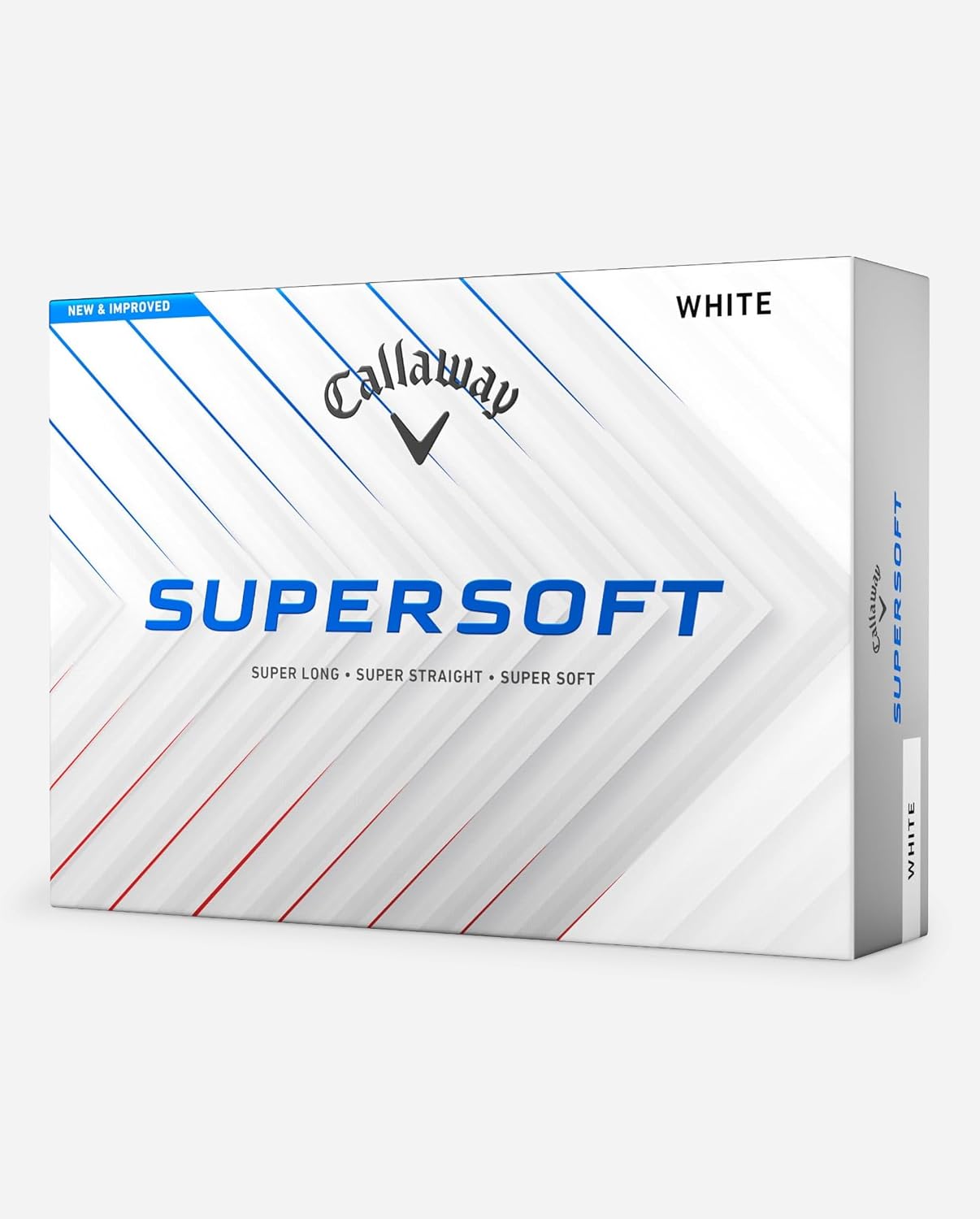
The Supersoft has been Callaway’s dominant slow-swing pick for years and the 2026 version continues the run. 50 catalog compression puts it firmly in ultra-soft territory, and the hybrid cover — a thinner ionomer with urethane-adjacent short-game behavior — is a real step up from pure Surlyn balls at the same price. For most slow-swing golfers (70-90 mph swing), this is the default recommendation.
Note what the Supersoft is NOT: a distance boost from the low compression. That’s a marketing myth the lab data has debunked for years — ball speed difference at slow swing speeds between “soft” and “firm” balls is under 1 mph in real-world testing. What Supersoft gives you is a soft impact feel and slightly higher launch, both of which help confidence and playability at slower speeds.
Best for: Driver swing 70-90 mph. Golfers who value soft feel and want a well-rounded slow-swing ball.
Honest weakness: above 95 mph swing, the ball over-compresses and loses distance. Wrong ball outside its speed window.
2. Wilson Duo Soft — Softest Ball on the Market
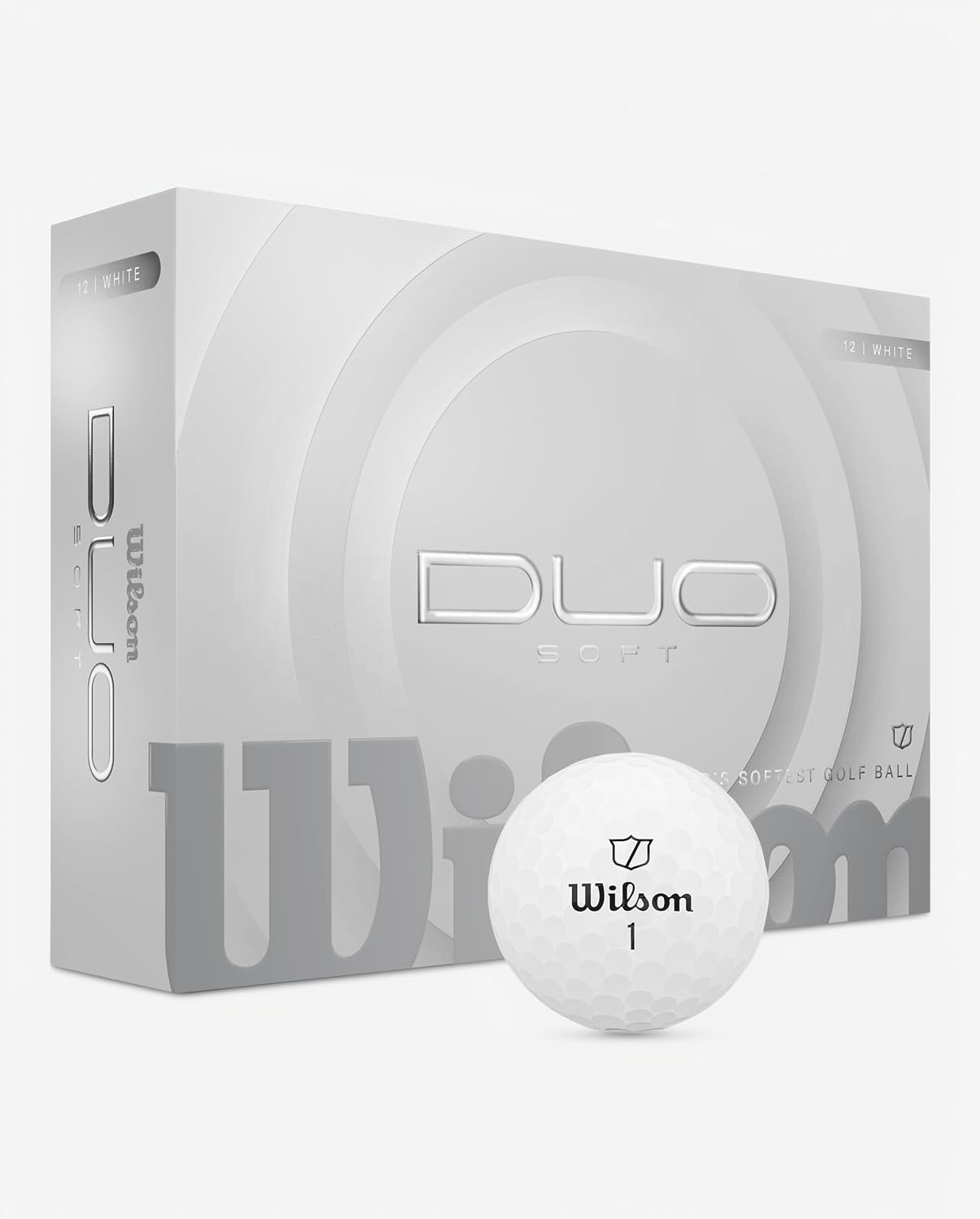
Wilson has marketed the Duo Soft as “the softest ball on the market” for years and the 37 catalog compression backs the claim. This is genuinely a specialty ball — at swing speeds under 75 mph it delivers a feel off the putter and wedges that no firmer ball can match. If soft impact is your priority above everything else, this is the ball.
Sub-75 mph swings tend to reward the Duo Soft the most because you can actually compress the ball fully at those speeds. Above 90 mph, you start over-compressing and giving up distance. This isn’t a wide-band ball. It’s for slow swings specifically.
Best for: Driver swing under 75 mph. Feel-first golfers, players with hand-strength or arthritis issues that make firmer impact uncomfortable.
Honest weakness: minimal greenside spin, wedge shots release forward. Wrong ball if you need to stop approach shots on firm greens.
3. Bridgestone e6 Soft — Best High-Launch and Slice Correction
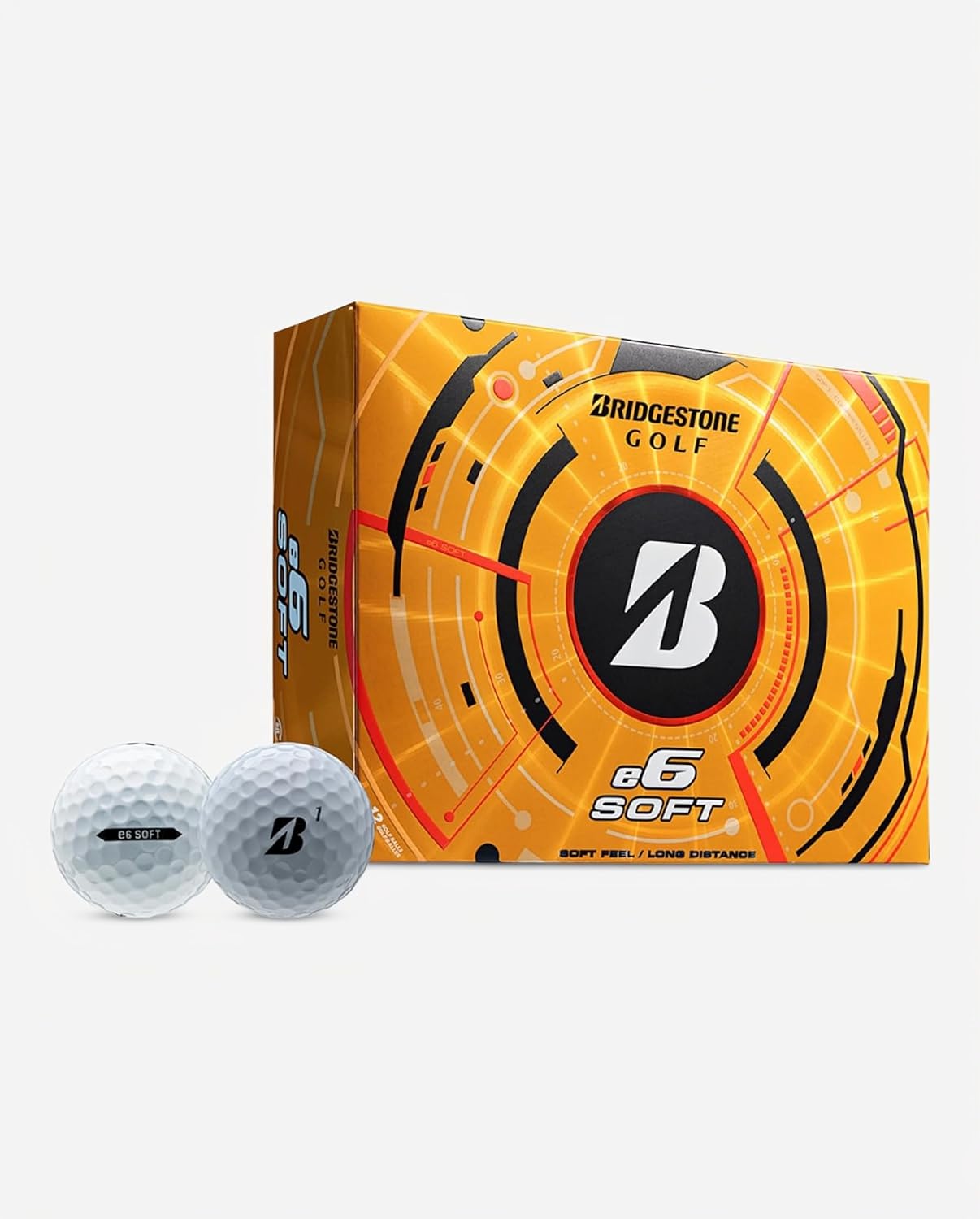
The e6 Soft is engineered around two ideas that matter more for slow swings than most golfers realize: high launch and reduced sidespin off the driver. High launch matters because slow swings need help getting the ball airborne to hit their full carry potential. Reduced sidespin matters because slow-swing misses tend to curve more (less spin axis stability from slower ball speeds), so a ball that fights curvature makes your bad shots less punishing.
The 40 compression rating means it feels soft at impact, and the ionomer cover keeps price down. This is Bridgestone’s designed-for-slow-swings ball, and it delivers on that promise more than most competitor picks in the same price range.
Best for: Driver swing 70-90 mph. Slicers. Golfers who struggle to keep the ball airborne consistently.
Honest weakness: ionomer cover means limited greenside spin. Not a “check up” ball on wedge shots.
4. Titleist TruFeel — Best Trusted Brand
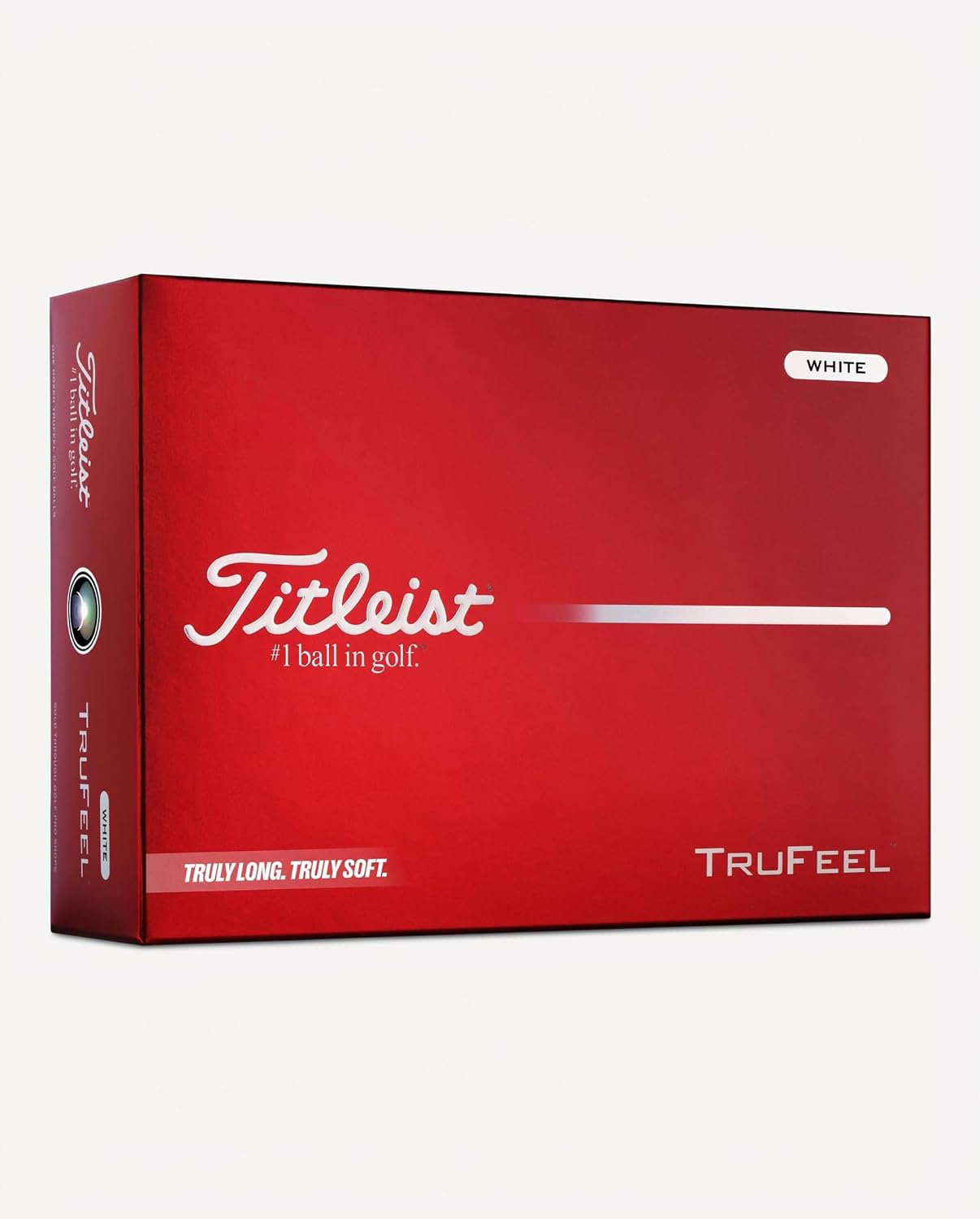
The TruFeel is Titleist’s answer for the slow swinger who wants the Titleist brand without paying Pro V1 pricing. 60 catalog compression is at the upper edge of the soft band — appropriate for 75-90 mph swings, less optimal below 75. The TruFlex ionomer cover feels noticeably softer than pure Surlyn around the greens, though it doesn’t grab like true urethane.
Two things make this ball worth the $30 price versus the $25 Supersoft: the alignment aid stripe (real on-course benefit for putters) and the Titleist quality-control track record (ball-to-ball consistency has always been strong for Titleist).
Best for: Driver swing 75-90 mph. Golfers who prefer trusted brands and want a visible alignment aid.
Honest weakness: at $30/doz it costs 20% more than the Supersoft or e6 Soft for the same functional performance tier. You’re paying for the Titleist logo.
5. Maxfli Softfli — Cheapest Playable Slow-Swing Ball
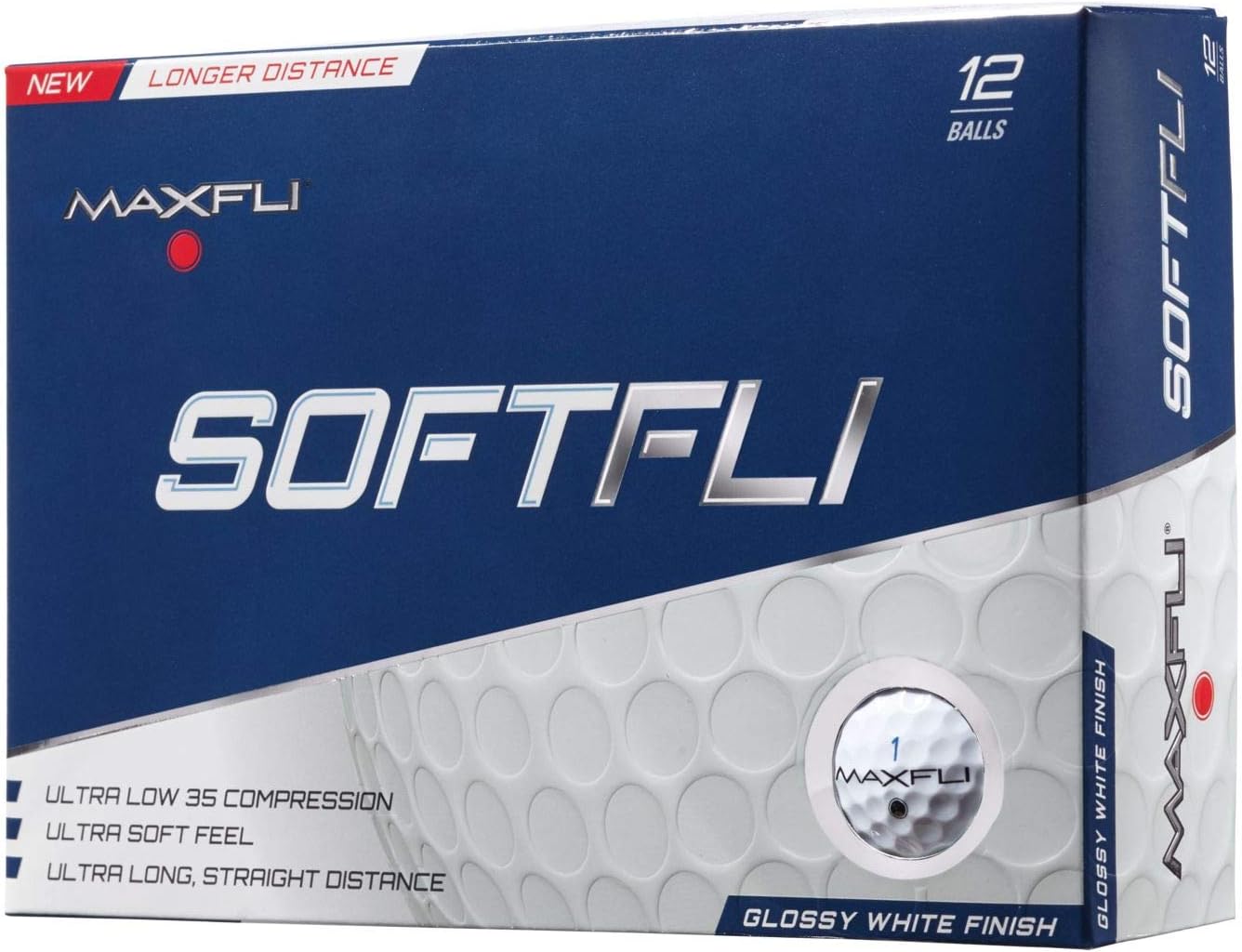
The Softfli is Maxfli’s low-compression answer for slow swingers on a budget. 45 catalog compression puts it in ultra-soft territory (softer than Supersoft, only slightly firmer than Duo Soft), and at $20 per dozen it competes head-on with Noodle and Warbird on price. Ionomer cover keeps durability strong.
What the Softfli is: a genuinely soft feel at slow speeds, respectable ball flight, competitive pricing. What it isn’t: a distance monster or a greenside spin ball. This is the ball you buy 2-3 dozen at a time if you play weekly and want to stay under $50 total on ball spend for the year.
Best for: Driver swing 70-90 mph. Budget-conscious golfers, high-loss-rate players (5+ balls lost per round).
Honest weakness: not a well-known brand. Distribution is more limited than Callaway or Titleist. Find it at Dick’s Sporting Goods, Golf Galaxy, and Maxfli’s own site.
6. Srixon Soft Feel — Best Budget Name-Brand
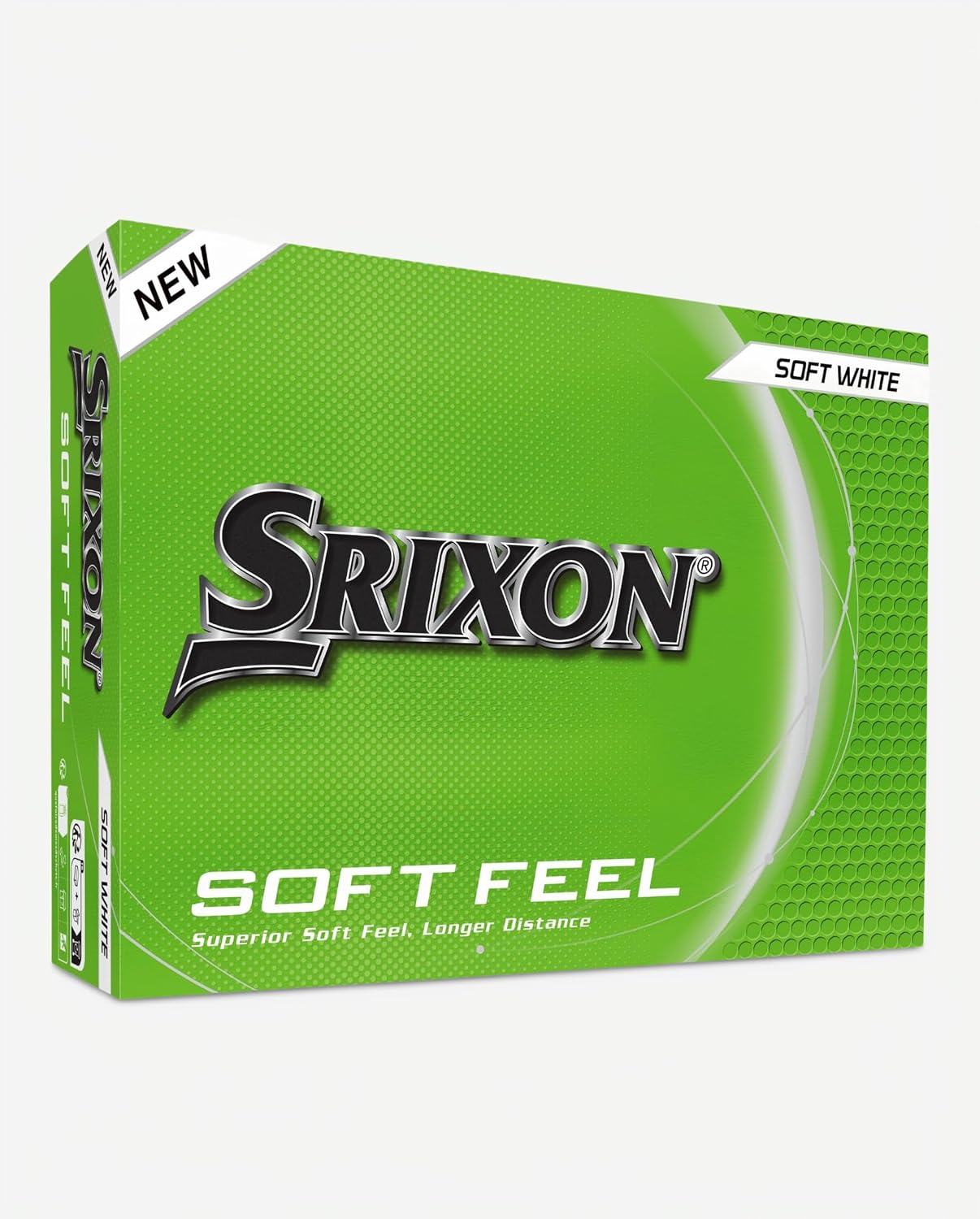
Srixon’s Soft Feel is one of the cheapest name-brand balls from a company that also makes tour-level products (Z-Star line). At $25 per dozen and 60 compression, it competes directly with Supersoft on softness while adding Srixon’s 338 Speed Dimple pattern — a design tuned for stable flight in wind.
If you play courses with exposed holes, the Soft Feel’s wind performance is meaningfully better than most $25 balls. This is where Srixon’s tour-level engineering trickles down to their budget lineup.
Best for: Driver swing 75-90 mph. Golfers playing windy or exposed courses.
Honest weakness: Soft Feel releases forward on greenside chips. Not a wedge check-up ball.
7. TaylorMade Noodle Long & Soft — Best Cheap Distance for Ball Losers
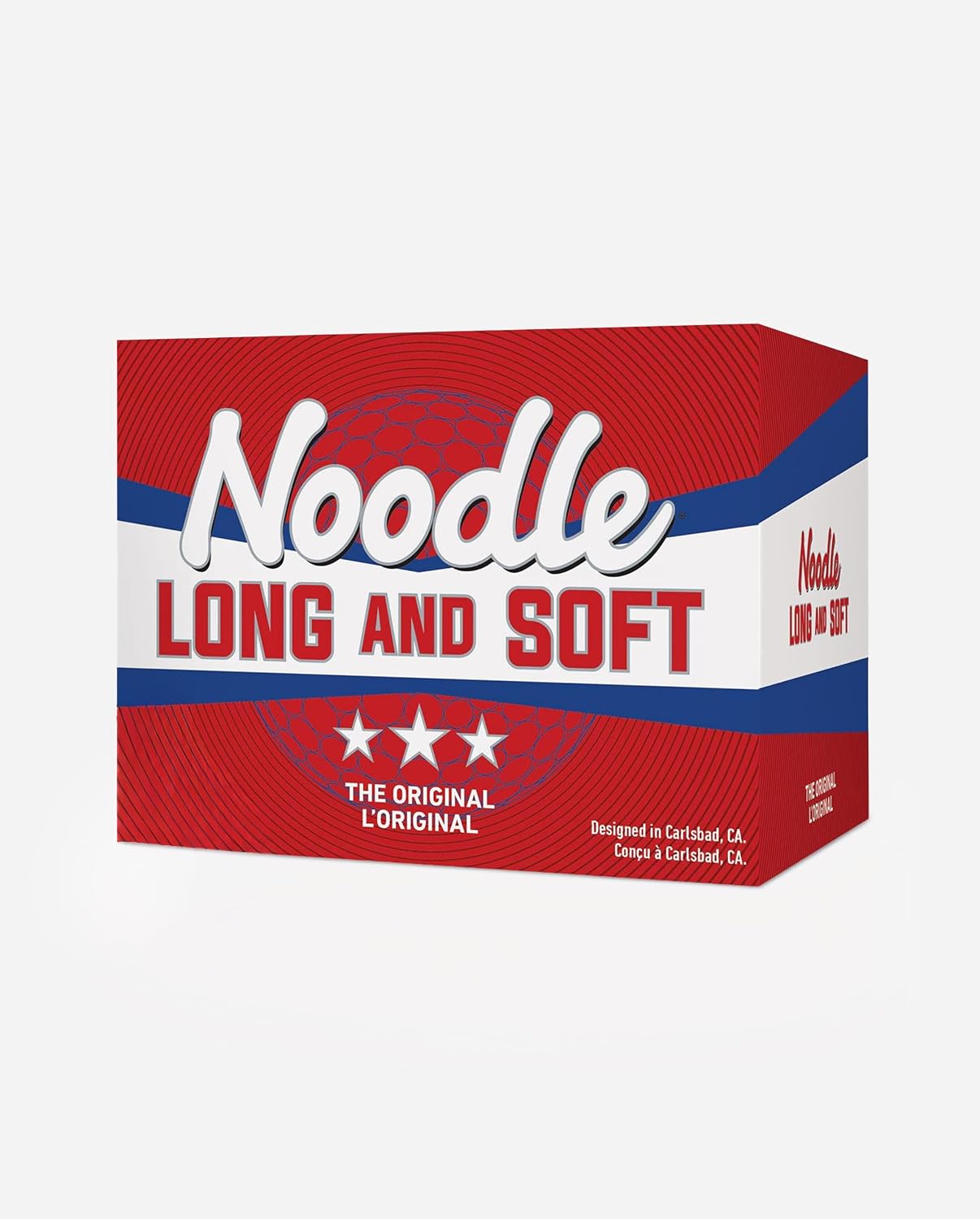
The Noodle is TaylorMade’s under-$20 slow-swing distance play. Aggressive 2-piece Surlyn construction, 55 compression, name-brand recognition. It’s the ball that never punishes you for a bad decision — hit it into a hazard and losing a $1.67 ball doesn’t sting.
The Surlyn cover means it won’t check on wedges — expect release-and-roll behavior on every chip. But for a slow swinger who also loses 3-plus balls per round, that trade-off can absolutely be worth it. The Noodle earns its place on this list specifically because losing them cheap doesn’t affect the ball-hopping-fitting problem: you can play the same ball consistently for a full season without breaking the bank.
Best for: Driver swing 75-95 mph. Ball losers, beginners, budget-first players. Anyone whose priority is “hit it long, don’t cry when I lose it.”
Honest weakness: zero greenside grab. If your short game is your strength, this is the wrong ball.
8. Bridgestone e12 Straight — Best for 85-90 mph Upper Slow-Swing

The e12 Straight is Bridgestone’s newer, slightly firmer sibling to the e6 Soft. Same slice-correcting flight-design DNA, but at 65 catalog compression it fits the faster end of the slow-swing band (85-90 mph) better than the softer e6. Today’s Golfer’s 2026 robot test rated the e12 series highly for tee-to-green performance across three swing speeds — that’s meaningful third-party validation.
Think of the e12 Straight as the “graduating” pick — if you started with the e6 or Supersoft and your speed is climbing (through training or just settling into a more athletic swing), the e12 gives you more ball speed without changing the slice-correcting flight you’re used to.
Best for: Driver swing 85-95 mph. Slow swingers whose speed is at the upper end of the slow band, or trending up.
Honest weakness: at swing speeds below 80 mph, the e12 Straight is a bit firm — the e6 Soft or Supersoft will feel better and perform equally well.
Compression-to-Swing-Speed Match for Slow Swings
Different balls fit different bands within the slow-swing range. Match compression to your specific speed:
| Your driver swing speed | Compression band | Best picks |
|---|---|---|
| Under 70 mph | Ultra-Soft (30-45) | Wilson Duo Soft, Maxfli Softfli |
| 70-80 mph | Ultra-Soft to Soft (45-55) | Callaway Supersoft, Bridgestone e6 Soft, TaylorMade Noodle |
| 80-90 mph | Soft (55-65) | Titleist TruFeel, Srixon Soft Feel, Callaway Supersoft, Bridgestone e12 Straight |
| 90+ mph | You’re not slow-swing | See mid-handicap ball guide |
Compression is a feel and fit lever, not a distance lever. Match it to your swing speed for the best impact feel, then pick within your compression band based on other priorities (soft vs firm feel, high launch vs straight flight, budget).
Want More Distance? Get More Swing Speed
Ball choice for a slow swing is a tuning lever, not a rebuild. If you’re chasing meaningful distance gain — 20+ yards — the honest answer is you need more swing speed, and no ball choice will get you there.
Speed training works. Most golfers who commit to a structured speed-training program see 4-8 mph of clubhead speed gain in the first 4-6 weeks, and 6-12 mph over 3-6 months of consistent work. That translates directly into distance:
- +5 mph of driver clubhead speed = roughly +10-12 yards of carry
- +10 mph = +20-24 yards of carry
- +15 mph = you’re no longer a slow-swing reader; you’re in a completely different fitting bucket
The main options for speed training:
- The Stack System — data-driven, app-guided training with overload + overspeed combined. My personal pick. I gained 7 mph with it (see the review). $299 investment.
- SuperSpeed — the original overspeed protocol. $149. Simple, effective, no app.
- Rypstick — middle-ground option with app + adjustable weights. $199.
- Full comparison in the Stack vs SuperSpeed vs Rypstick article.
If you’re 68 years old and OK with your current distance, don’t buy a speed trainer — buy the right ball, enjoy the game. But if you’re chasing distance you had 5 years ago, or you’re a golfer who lost speed to injury and is rebuilding, structured speed training will move the needle more than any ball choice ever will.
Frequently Asked Questions
What is considered a slow golf swing speed?
In ball-fitting terms, a slow swing is a driver swing speed under 90 mph. Some sources tighten that to under 85 mph. Most senior golfers, many beginners, and some casual weekend players fall in this band. The specific number matters for compression matching — under 75 mph benefits from ultra-soft balls (Duo Soft, Softfli), 75-85 mph fits standard soft balls (Supersoft, e6 Soft), 85-90 mph works with soft-to-mid balls (TruFeel, e12 Straight).
What is the best golf ball for slow swing speed in 2026?
For most slow-swing golfers (70-90 mph driver), the Callaway Supersoft at $25 per dozen is the best all-around pick — 50 compression, hybrid cover, soft feel, respectable greenside behavior. For sub-75 mph swings, the Wilson Duo Soft (softest ball on the market). For chronic slicers, the Bridgestone e6 Soft. For budget-first, the Maxfli Softfli at $20.
Should a slow swinger play a Pro V1?
No. Pro V1 is engineered for 100+ mph swings — high compression, low driver spin, lower launch. A slow swinger playing a Pro V1 loses 5-10 yards of carry compared to a correctly-fit slow-swing ball. The premium urethane greenside spin doesn’t recover that distance, and slow swingers typically aren’t sticking wedge shots close enough for that spin to affect scoring. Stick with a low-compression ball designed for your swing speed.
Do low compression balls give slow swingers more distance?
Not from the low compression itself. That’s a marketing myth. Modern launch monitor data shows ball speed differences under 1 mph between soft and firm balls at slow swing speeds. What low compression gives you is a softer impact feel and slightly higher launch, both of which improve playability and confidence — but neither is a 5-yard distance boost. Real distance gain for a slow swinger comes from swing-speed training, not ball choice.
How can I add distance if I have a slow swing?
The right ball choice can add 3-8 yards from better energy transfer and appropriate launch conditions. That’s real, but it’s a tuning gain, not a rebuild. For meaningful distance improvement (10+ yards), the answer is more swing speed. Structured speed training — Stack System, SuperSpeed, or Rypstick — reliably delivers 5-10 mph of clubhead speed gain over a few months. That translates to 10-24 yards of carry. No ball choice does that.
What compression should a slow swinger use?
Under 70 mph swing speed: ultra-soft compression (30-45 range) — Wilson Duo Soft or Maxfli Softfli. 70-80 mph: soft compression (45-55) — Callaway Supersoft, Bridgestone e6 Soft. 80-90 mph: soft to soft-mid (55-65) — Titleist TruFeel, Srixon Soft Feel, Bridgestone e12 Straight. Compression is a feel lever, not a distance lever. Match to speed for feel; pick within your speed band based on cover, launch, and price.
Final Verdict
The best golf ball for a slow swing is the one that fits your specific swing speed band, budget, and short-game priorities:
- Under 75 mph, feel-first: Wilson Duo Soft
- 70-90 mph, best all-around: Callaway Supersoft
- Slicer at any slow-swing speed: Bridgestone e6 Soft
- Under $20/doz priority: Maxfli Softfli or TaylorMade Noodle
- Trusted brand preference: Titleist TruFeel or Srixon Soft Feel
- 85-90 mph upper edge: Bridgestone e12 Straight
Whichever you pick, play the same ball every round for a full season. Ball fitting is done through consistency, not variety. Switching balls week to week means you can’t diagnose whether ball choice or your swing is what changed when your scores drift. Commit for a season, track your dispersion and stopping distances, and let the data tell you if a switch would help.
And if you’re chasing distance you used to have, remember: swing-speed training moves the needle more than any ball choice. Ball fitting is the tuning; speed training is the engine.
Related reading: Best Golf Balls for Seniors | Best Golf Balls for High Handicappers | Best Low Spin Golf Balls (different intent — for fast-swing over-spinners) | What Golf Ball Compression Actually Means | Estimate Your Swing Speed | Add Speed with the Stack System